Williamstown Housing Officials: CPA Grant Not in Conflict with Section 8 Needs
WILLIAMSTOWN, Mass. — Residents who attended or watched this year's annual town meeting may have gotten the impression that a town grant to support a Water Street apartment project is somehow in conflict with the needs of families who hold Section 8 vouchers from the Department of Housing and Urban Development.
But the officials who administer the Section 8 program said this month that they support the Community Preservation Act allocation as constructed and it does not negatively impact the federal program.
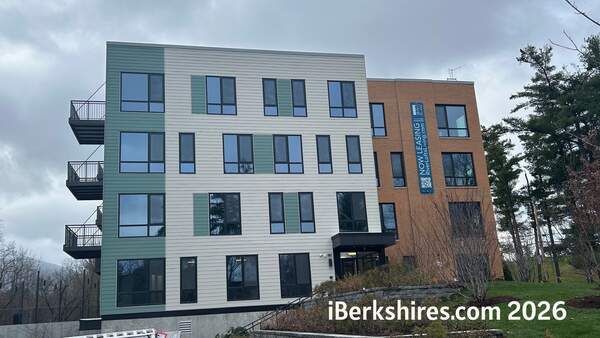
At issue at the meeting was a $400,000 appropriation of CPA funds to the developer of Cable Mills as it nears ground-breaking on the development's third phase. That phase is a planned 54-unit apartment building on the south end of the former mill property.
In order to apply for low-income housing tax credits, as it did with Phase 1 (the former mill), 250 Water LLC is setting aside half the units for affordable housing – 19 for families making no more than 60 percent of the area median income and eight for families making no more than 30 percent of the AMI.
From the floor of the meeting at Mount Greylock Regional School, a resident asked repeatedly if the income-restricted units would be "Section 8 eligible," implying that there was a gap in the warrant article because it made no specific reference to Section 8 recipients.
Nat Romano noted that at the start of the year there were 26 families on the town Housing Authority's waiting list for Section 8 vouchers.
Select Board member Jane Patton, who served on the Community Preservation Committee that vetted the grant requests last winter, explained to the meeting that the CPC agreed at the time that tying the Cable Mills units to the 60 percent and 30 percent AMI standards in perpetuity would ensure those populations always will be served by the project. On the other hand, the CPC felt that introducing a Section 8 component could impact the level of affordability at the project if HUD rules change down the road.
Under Section 8, voucher holders live in market-rate housing and pay the landlord the difference between the market rate and the subsidy the landlord receives from the government.
"In general, the family's income may not exceed 50 percent of the median income for the county or metropolitan area in which the family chooses to live," according to the HUD website. "By law, a [local housing agency] must provide 75 percent of its voucher to applicants whose incomes do not exceed 30 percent of the area median income."
Romano appeared unswayed by Patton's explanation, saying that the town shouldn't "denounce Section 8 because it's federally funded," before the question was called moments later. The article passed by an overwhelming majority on a voice vote.
Days later, Housing Authority Commissioner Steven Dew clarified that the reason Williamstown has a waiting list for Section 8 vouchers is that the program is underfunded at the federal level. Creating more units labeled "Section 8 eligible" will not change the number of vouchers allotted to the town.
"Unfortunately, that's not a way of conjuring up more vouchers," Dew said.
"Currently, there are 27 individuals and/or families on the waiting list for Section 8 vouchers [in Williamstown]. The waiting list is for vouchers, not vacant housing units, which enable the voucher holder to apply for eligible housing managed by third parties. Among the buildings that the Williamstown Housing Authority owns/manages, there is currently one vacancy, but there is already a new tenant lined up who will take up residence on July 1."
The need for more vouchers is long-standing and nationwide.
In his 2017 book "The Color of Law," historian Richard Rothstein cites a statistic that in 2015, about 1 million American families held Section 8 vouchers but 6 million more were eligible but unable to obtain one.
Dew, who occupies the Housing Authority's seat on the Community Preservation Committee, said he supports the allocation to Cable Mills and he discussed the project with WHA Executive Director Tammy Andrews back in the winter when the CPC was deliberating.
Andrews said last week that she did not think income-restricted units at Cable Mills or similar projects could have a negative impact on the town's supply of Section 8 vouchers or the families that use them. She said the local housing authority currently helps more than 75 households find housing in the region through Section 8 and other programs.
In addition to administering state and federal housing vouchers, the Williamstown Housing Authority is responsible for more than 50 units of housing at various sites in town.
Tags: affordable housing,