Local Organizations Unite to Address Food Insecurity, Chronic Illness
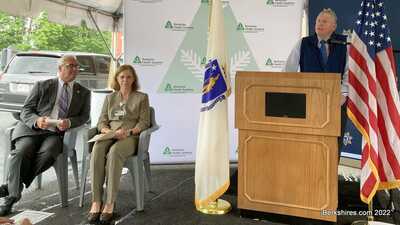 |
| BHS President Darlene Rodowicz and Sheriff Thomas Bowler listen as jail Superintendent John Quinn Jr. talks about the program. |
PITTSFIELD, Mass. — The Berkshire County Sheriff's Department, Berkshire Health Systems, and other partner organizations have teamed up to address food insecurity and chronic illness.
The Flexible Services Initiative is a free 10-week meal delivery and grocery program that aims to make a healthy diet accessible for everyone. Medically tailored meals are delivered to Berkshire County residents who suffer from chronic illness and/or struggle to put food on the table.
This is a MassHealth funded program through participating Accountable Care Organizations, which in this case is Berkshire Fallon Health Collaborative.
Since the program was established one year ago, its team has delivered 1,250 grocery bags and provided 2,500 meals to more than 200 members of the collaborative across the county.
"I always heard throughout the whole pandemic that Berkshire County was special. In Boston, they're always surprised at how quickly we can mobilize our resources. As limited as they are, we really focused on changing the lives of people in Berkshire County," BHS President and CEO Darlene Rodowicz said at a long overdue ceremony for the initiative on Monday.
"And I think this program is just an example of what that foundation is and much more that we can do when we put our minds together to lifting up everyone in our community and making Berkshire County an even better place to live and work and stay on a daily basis."
Community Health Programs and the Partnership for Health in the Berkshires also collaborated on its creation.
The meals are created by ServSafe-certified inmates at the Berkshire County House of Corrections on Cheshire Road and are packaged by Berkshire Fallon staff at the former jail on Second Street.
Sheriff Thomas Bowler said the program allows individuals with chronic medical conditions to eat a balanced, sustainable diet to help manage their illnesses while also improving the lives of inmates.
"The Flexible Services Program allows our incarcerated population to improve on their own insecurities. It helps them grow as individuals, building on their self-esteem by having more confidence in themselves," he explained.
"Our goal is creating stronger, healthier individuals inside our walls as well as a stronger and healthier community. That's what we strive for."
Jail staff reportedly saw opening the Second Street facility's doors to the initiative as a "no brainer." Planning started around four years ago.
"Being a part of this initiative means a great deal for those individuals to be able to give back to this community," Bowler added.
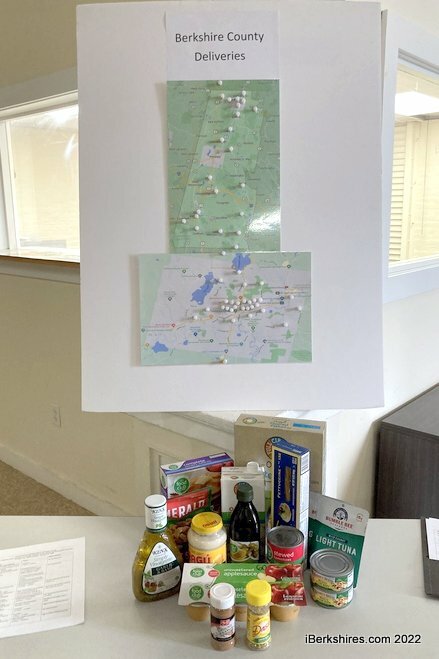
Participants receive 10 meals per week -- five lunches and five dinners -- for the 10-week duration and the grocery delivery program offers fresh produce and non-perishable goods valued at about $45 per week. Ingredients and groceries are sourced from Big Y and Marty's Local.
It also includes an educational component, as community health workers and dieticians offer coaching on nutrition, managing the individuals' conditions, and help connect them with additional supportive services.
"Food is medicine" is the Flexible Services Initiative's driving phrase.
Team member Susan Lampron finds the program enjoyable and rewarding.
"It's a very good program. It helps a lot of people, it touches a lot of people in the community," she said. "It's true, we are sometimes the only faces they see all week and I've learned a lot of life lessons along the way."
The drivers collectively traveled 8,000 miles in one year.
A survey showed that more than 90 percent of the participants rated the program "excellent." Data also showed that the meal delivery program reduced their food insecurity by 48 percent and grocery delivery is estimated to reduce it by 53 percent.
Superintendent John Quinn Jr. thanked everyone involved with the initiative and said the sheriff's office is very fortunate to be working with them.
"Very seldom do you get a group of people that when they go out, they're meeting people that a lot of people don't have contact with," he said.
"That just their friendly face showing up at the door, bringing food — and food will get you a lot of places— but to be able to stand there, come in, sit down, talk, go over what's going on every single day is absolutely outstanding."
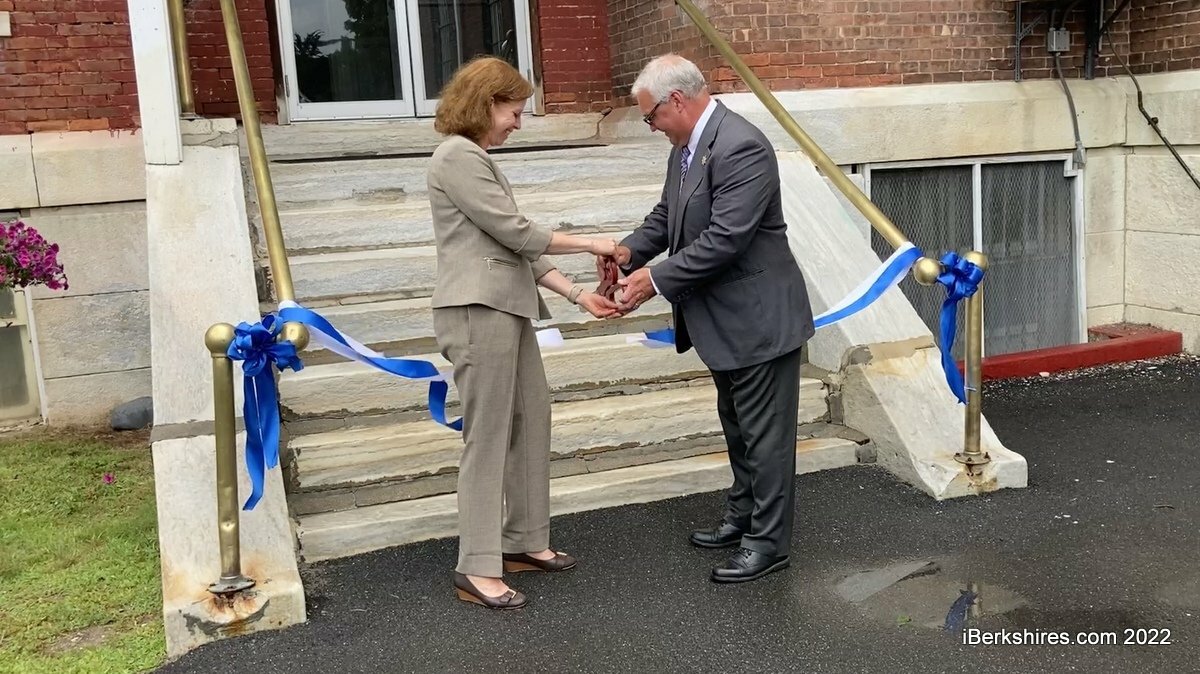
A ribbon-cutting ceremony was held at the Second Street facility. Mayor Linda Tyer, state Sen. Adam Hinds and state Reps. Tricia Farley-Bouvier and John Barrett III were in attendance to show their support.