image description
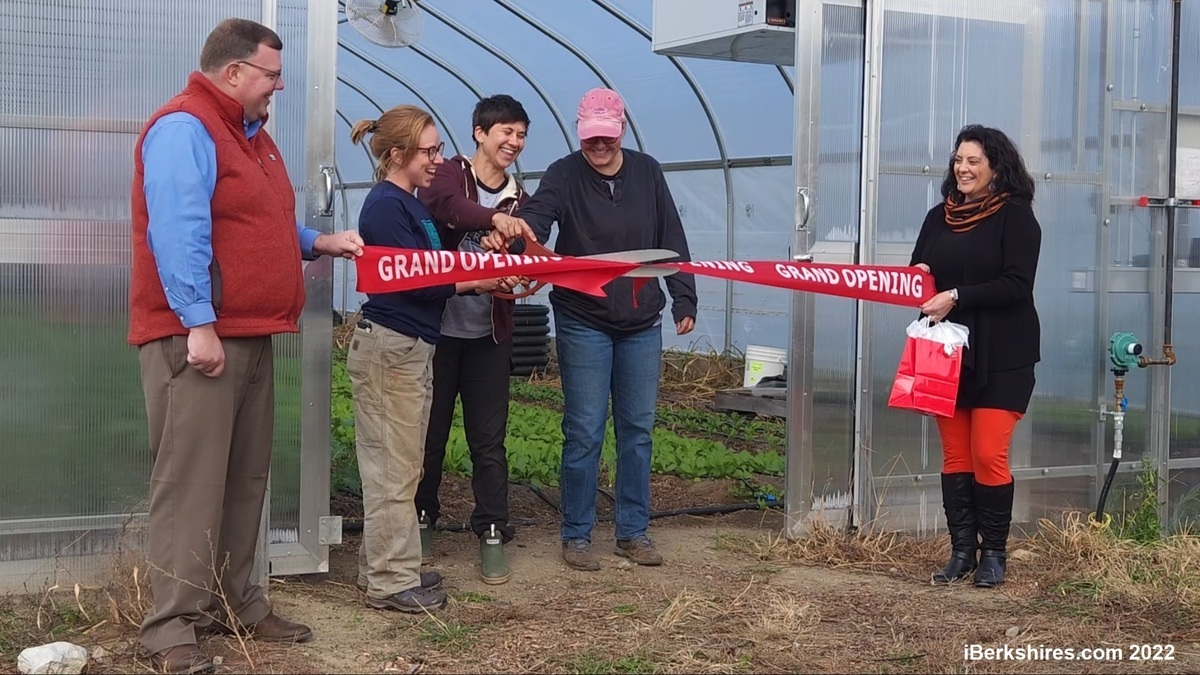
Town Administrator Jay Green and Selectwoman Christine Hoyt hold the ribbon to celebrate Full Well Farms thermal heat pump that will help it cut down on propane in its greenhouse.
image description
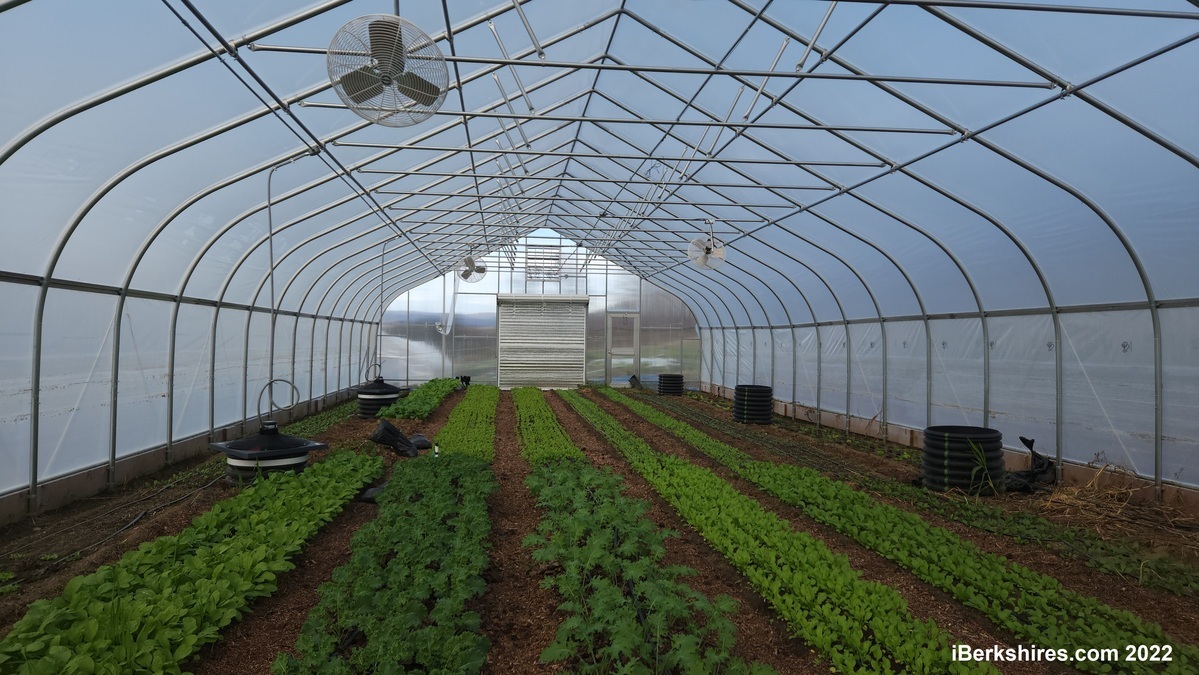
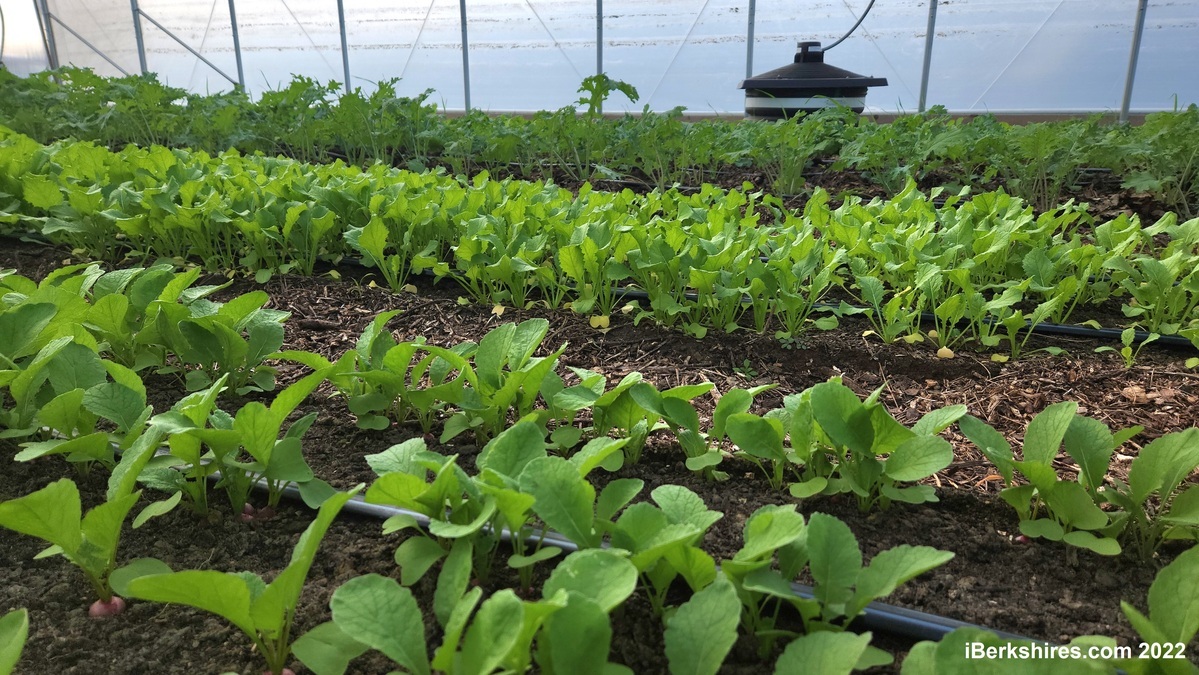
The new greenhouse uses the thermal mass of the soil below ground for heating and cooling.
image description
Currently, the greenhouse is growing spinach, radishes, hakurei turnips and kale.

Adams' Full Well Farm Celebrates 'Climate Battery' Greenhouse
By Brian RhodesiBerkshires Staff
Print Story | Email Story

Full Well opened on East Road in 2018.

ADAMS, Mass. — The town hosted a ribbon cutting for Full Well Farm on Halloweeen to celebrate the opening of its new "climate battery" greenhouse.


"We're super grateful to be farming in Adams and have the chance to celebrate with [the town]," said Meg Bantle, the farm's co-founder. 


Bantle and Laura Tupper-Palches founded the East Road farm in 2018 and currently manage three-quarters of an acre of permanent, no-till beds. The new greenhouse, which uses the thermal mass of the soil below ground for heating and cooling, was funded via grants and loans by the state, Berkshire Agricultural Ventures and the U.S. Natural Resources Conservation Service. 


"The greenhouse was a long time coming. We had been anticipating it for well over a year by the time we got the funding all together," Tupper-Palches said. " ... There was a lot of pieces that came together to make it happen. And now we'll be able to go produce year-round." 


The project, Bantle and Tupper-Palches explained, will allow the farm to use less propane in the winter when growing cool-weather crops like greens and kale. Currently, the greenhouse is growing spinach, radishes, hakurei turnips and kale. 


"The fans push air down through tubes that go under the ground, and the heat is stored in the ground under there, which is why it's called a climate battery; the storage battery is the ground," Tupper-Palches said. "And then when it's cold, we can draw the air back up as warm air."


Significant work, according to Bantle, went into creating the climate battery structure underneath the greenhouse. They don't anticipate needing to use propane until February, if not later. 


"We dug 8 feet down underneath the footprint of this structure," Bantle said. "So it's a big soil mass area that will be used in the cooler months to heat this, which will lower how much we have to rely on propane." 


Selectmen Vice Chair Christine Hoyt said the greenhouse is exciting for Adams and other groups that the farm services. Currently, the farm operates at the North Adams Farmers Market, the Indoor Winter Farmers Market and via its Community Supported Agriculture program. 


Town Administrator Jay Green thanked Bantle and Tupper-Palches for their work on the farm and the project. He reiterated that they and other businesses have the town's support.  


"I just want to highlight that there's so many unique opportunities in Adams that we don't know about," Green said prior to the ribbon cutting. "These are great opportunities to get to celebrate not just you, but what you add to Adams. These are great events because we go from small stores, small business; to something unique like this." 


Those interested in learning more about Full Well Farm can visit its website here.


Tags: agriculture,   farming,   
If you would like to contribute information on this article, contact us at info@iberkshires.com.

Letter: Progress Means Moving on Paper Mill Cleanup

Letter to the Editor

To the Editor:

Our town is facing a clear choice: move a long-abandoned industrial site toward cleanup and productive use or allow it to remain a deteriorating symbol of inaction.

The Community Development team has applied for a $4 million EPA grant to remediate the former Curtis Mill property, a site that has sat idle for more than two decades. The purpose of this funding is straightforward: address environmental concerns and prepare the property for safe commercial redevelopment that can contribute to our tax base and economic vitality.

Yet opposition has emerged based on arguments that miss the point of what this project is designed to do. We are hearing that basement vats should be preserved, that demolition might create dust, and that the plan is somehow "unimaginative" because it prioritizes cleanup and feasibility over wishful reuse of a contaminated, aging structure.

These objections ignore both the environmental realities of the site and the strict federal requirements tied to this grant funding. Given the condition of most of the site's existing buildings, our engineering firm determined it was not cost-effective to renovate. Without cleanup, no private interest will risk investment in this site now or in the future.

This is not a blank check renovation project. It is an environmental remediation effort governed by safety standards, engineering assessments, and financial constraints. Adding speculative preservation ideas or delaying action risks derailing the very funding that makes cleanup possible in the first place. Without this grant, the likely outcome is not a charming restoration, it is continued vacancy, ongoing deterioration, and zero economic benefit.

For more than 20 years, the property has remained unused. Now, when real funding is within reach to finally address the problem, we should be rallying behind a practical path forward not creating obstacles based on narrow or unrealistic preferences.

I encourage residents to review the proposal materials and understand what is truly at stake. The Adams Board of Selectmen and Community Development staff have done the hard work to put our town in position for this opportunity. That effort deserves support.

Progress sometimes requires letting go of what a building used to be so that the community can gain what it needs to become.

View Full Story

More Adams Stories