Dalton Historical Commission Updated on Town Hall Renovation Plans
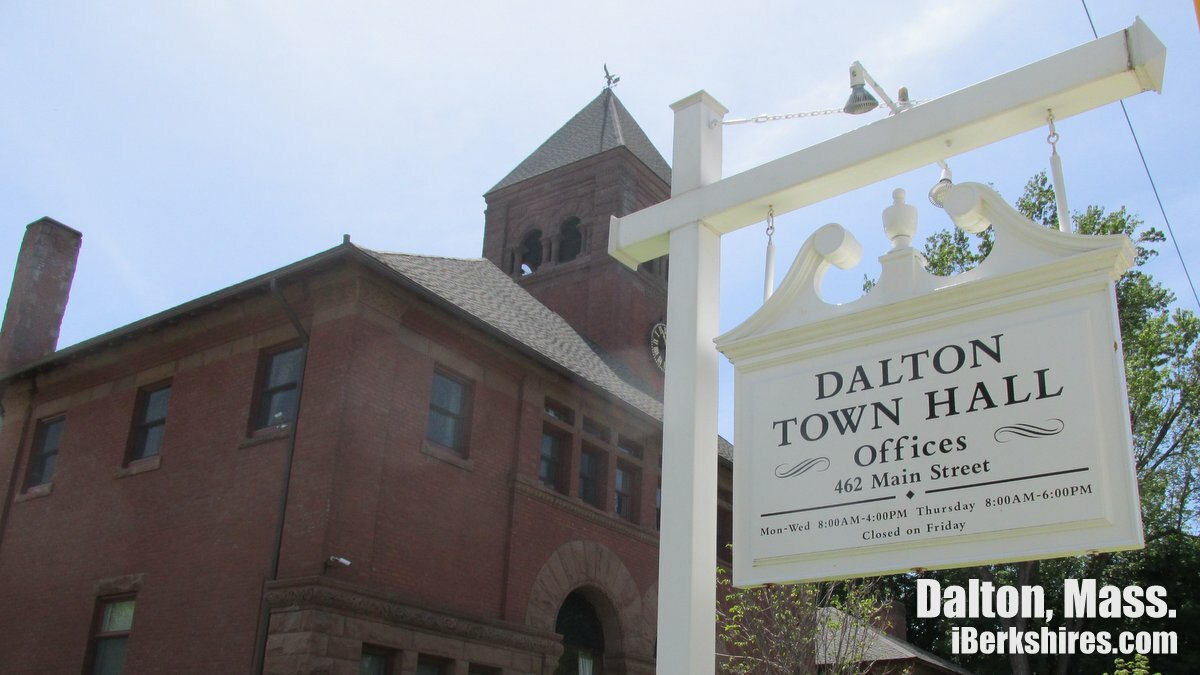
DALTON, Mass. — The Historical Commission is in support of the the more than $600,000 in renovations planned for the 1890 Town Hall building but also wants its historic features to be preserved.
"I think we definitely all of us want it to be brought up to the most efficient it can be brought up, modernized buildings definitely needs it," co-Chairwoman Louisa Horth said. "But what the Historic Commission would be concerned about is the look of the building."
The discussion came on Wednesday when commissioners were asked by Green Dalton Committee member Dr. Thomas Irwin their thoughts on the renovations to make the building energy efficient.
"What they're doing right now with the asbestos and all that is in preparatory work not provided over by grants," he said. "Once those grants are done, then we would move into a phase where we could actually do other modifications to the building."
The plans for the building include updating, replacing or relocating ceilings, electrical, lighting, smoke detectors and other wiring in the first-floor and opera house area on the third floor, install a new substructure in some areas and add flex ducts and insulation.
The commissioners asked how the building would be heated.
"Comparing gas to electricity, you're going to pay three times as much for the electricity as you would for gas for the same comfort level," Irwin explained. "We can't afford that so of course what you have to do to compensate for that is two things. One, insulate the building better and put in solar panels."
The age of the building may mean the heat can't drop below a certain temperature, which if gas is used will mean a furnace.
A more efficient design instead of steam would be circulating hot water so there would potentially be a modification to the radiators, said Irwin. This would impact the knobs on the radiators that the commissioners had previously expressed liking.
The solar panels would have to go on the south side of the building to be effective, which is not visible from the road.
The commissioners agreed that the panels would be acceptable as long as they are not seen from the street.
"We appreciate that and we don't want it to change but at the same time we realize that our arm is pretty badly twisted by climate change. And we ain't got much choice," Irwin said.
Grants will not fund solar panels at this point but the Green Dalton Committee is hoping they will support heat pumps, insulation, and maybe some architectural modification to support the installation, Irwin said.
He mentioned that when it comes time, the Historical Commission can choose the design of the insulated quilted curtains.
"There's three or four different styles you guys could choose. I don't care what style it is. It's all R-7, 8 but you can pick style and color if it was something of interest to you," Irwin said. "These are the old-style window coverings, which you might like in the library, that they had 200 years ago. This is the way they used to do it before they had the little double-pleated shades."
Some commissioners expressed concerns regarding how the curtains would make the rooms dark, however, the point of the curtains would be to preserve energy during the times the building is not in use. The curtains would be opened during business hours and closed when offices are closed, Irwin said.
As questions arise through this project, Irwin said he will come back to the Historical Commission to keep it updated.
In other business:
George White stepped down from his position as chairman due to some ongoing health issues that are hindering his ability to attend meetings. He considered taking over the position of vice chair but reconsidered due to the uncertainty of how many meetings he will be able to attend. He will remain a member.
The board voted to have co-chairmen, electing Louisa Horth and Debora Kovacs. Thom Snyder was elected as vice chairman.
The board voted for Carolina Galliher for the position of secretary and Mary Walsh for treasurer.
The commission is in the process of making the Fitch Hoose House brochures and hopes to cover the cost either from the town account or by using donations.
Horth said the commission may be unable to apply for grants through the Massachusetts Historical Commission for a second historic district this year. The commission does have money from the town's matching grant.
The commission hopes to have a representative from Mass Historical walk the district and see what is going on. This walk with the representative has to happen before applying for a grant, Horth said.
Tags: historical commission,