Pittsfield Disability Commission Supports PCTV’s Accessibility Efforts
PITTSFIELD, Mass. — The Disability Commission is aiding Pittsfield Community Television's effort to make its programming more accessible with closed captions on city meetings.
On Thursday, the panel voted to use $1,850 of its parking violation funds to support 500 hours of closed captioning on PCTV. This will cover roughly a year of boards, commissions, and committees.
The CityLink channel is currently captioned through a pilot program and, in the future, the local broadcasters would like to expand it to all PCTV channels.
"This has been discussed multiple times in the past but the cost was exorbitant," Chair Cathy Carchedi explained.
"But now with technology, it's improving and it's become very affordable."
She added that monies from the fund have not been used yet and this would be a "wonderful way to provide additional access in our community."
The commission also agreed to draft a letter to Spectrum because closed captioning from public access centers do not come through on cable boxes provided by the company.
PCTV's Executive Director Shawn Serre explained that this is creating an access issue and is actually illegal.
"And so that's kind of where we're stuck, in a bureaucratic limbo," he said.
The first step would be to communicate with the company with a letter asking to fix the issue from the commission and if that has no avail, to file a formal complaint.
Council on Aging Director James Clark also suggested putting this on the agenda for the Cable Advisory Committee.
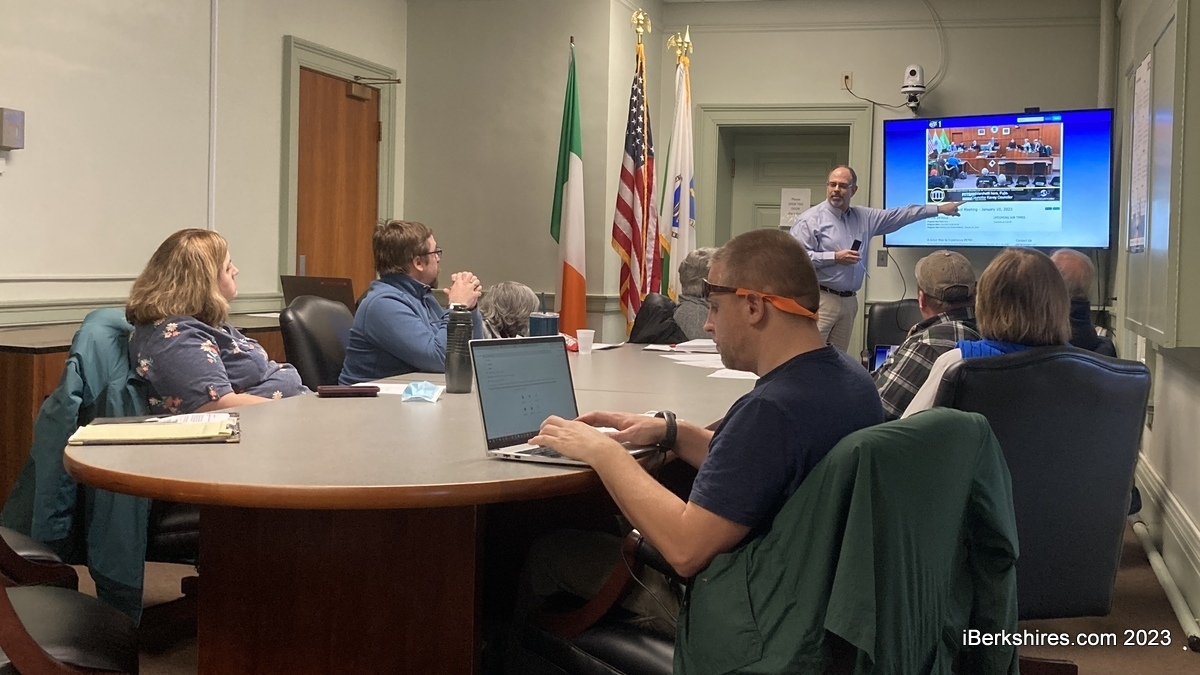
Serre gave the commission a presentation on the history of closed captioning services and PCTV's efforts.
"This is something that we've wanted to do with PEG access programming, which is public education and government programming, here in the city of Pittsfield for many, many years," he said.
In the early 2000s, he saw a demonstration for a system that would not require a live caption, or someone or a device manually typing the words as they are spoken on a television program.
In the last few years, the prices for that service have dropped due to artificial intelligence but it is still not free.
PCTV was one of the nationwide facilities that helped beta test a software rolled out last year and they bought into a pilot program that sells captioning by the hours or minutes.
Serre's first thought was that the most important meetings to cover are on the CityLink channel, which is the first to receive captioning. These give residents vital information about the city and its government.
PCTV hopes expand the service to its education channel and public channel, which would cost about $7,000.
"We did some tests last year and we were able to get the hardware and software to work internally and on our live stream and on the internet," he explained.
"But when we put it out to the cable company, we realized that the captions were not coming through people's cable boxes."
After some investigation, it was found that the problem was basically due to a corporate decision at Charter Spectrum to not have captions from public access centers come through.
Further investigation revealed that this is illegal because a cable company must pass on a caption if a channel providing them.
This led to PCTV seeking advocacy from the commission.
The first and friendlier option is to communicate with the company and explain that the captions aren't working and are not in compliance, which Serre said has not been very successful thus far.
Serre feels that a letter from the commission that is endorsed by Mayor Linda Tyer may be persuasive.
There is a requirement for public education and government access centers to be fully accessible if the budget is over $3 million. Though PCTV does not meet the budgetary qualification, they still want to be accessible to the entire community.
Tags: disability commission, public television,