Williamstown Fire District to Seek $25M for Station Project
WILLIAMSTOWN, Mass. — The committee that oversees the town's fire district Thursday approved warrant article language seeking authority to borrow up to $25 million to build a new station on Main Street.
That is the number officials will seek on Feb. 28 at a special district meeting at Williamstown Elementary School.
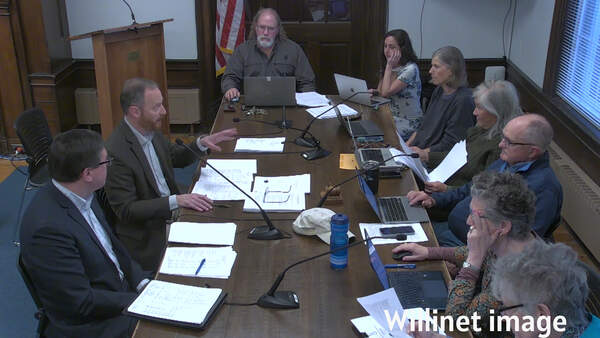
Three members of the five-person Prudential Committee attended Thursday's special meeting to sign off on the language.
Chair David Moresi was joined by Joe Beverly and Alex Steel for a brief hybrid meeting at the current fire station on Water Street.
The $25 million will be sought to cover the cost of "the design, engineering, construction and equipping of a new fire station to be located at 562-580 Main Street," according to the article's language.
The draft warrant article language the Prudential Committee members received referenced $25 million. At the suggestion of Jim Kolesar, a member of the district's Building Committee, the panel added the words "up to" to emphasize the district's continued pursuit of cost savings and alternative funding sources, like grants and gifts.
All registered voters who live in Williamstown will be eligible to participate in the meeting on Feb. 28 in the elementary school gymnasium, which has a capacity of 800.
Two-thirds of voters at the meeting would need to vote in favor of the bond authorization Proposition 2 1/2 override in order for the project to proceed.
If the project were approved at the $25 million level, that would be larger than Williamstown's share of the $64.7 million addition/renovation project at Mount Greylock Regional School. The town's share of that project (after contributions from the Massachusetts School Building Authority) came to about $22 million.
As a school building project, the Mount Greylock rebuild needed a simple majority for the debt override, but it passed in Williamstown by a margin of 2,226 to 351, with about 84 percent of voters saying yes.
On Thursday, Moresi said the Williamstown Fire District still is working on an analysis of how its building project would affect local property tax rates. He said the tax impact numbers would be available well before the Feb. 28 meeting.
The Prudential Committee also discussed its continuing outreach to educate residents in advance of the decision, again referring members of the public to telecasts the district did in conjunction with the town's community access television station, Willinet, viewable on the station's website.
Tags: fire station, prudential committee,