Kelly Hathaway of Pittsfield pleaded guilty on Friday to two counts of animal cruelty in Central Berkshire District Court as part of a plea agreement. Following the plea agreement, she was ordered to have a mental health evaluation and follow any after care as instructed by the court.
She was placed on two years probation and ordered to perform 50 hours of community service. She is not allowed to possess any animals and was ordered to surrender any she has in her care. She is also prohibited from volunteering with any animal groups.
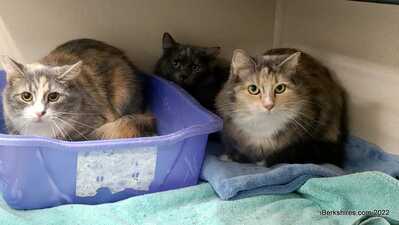
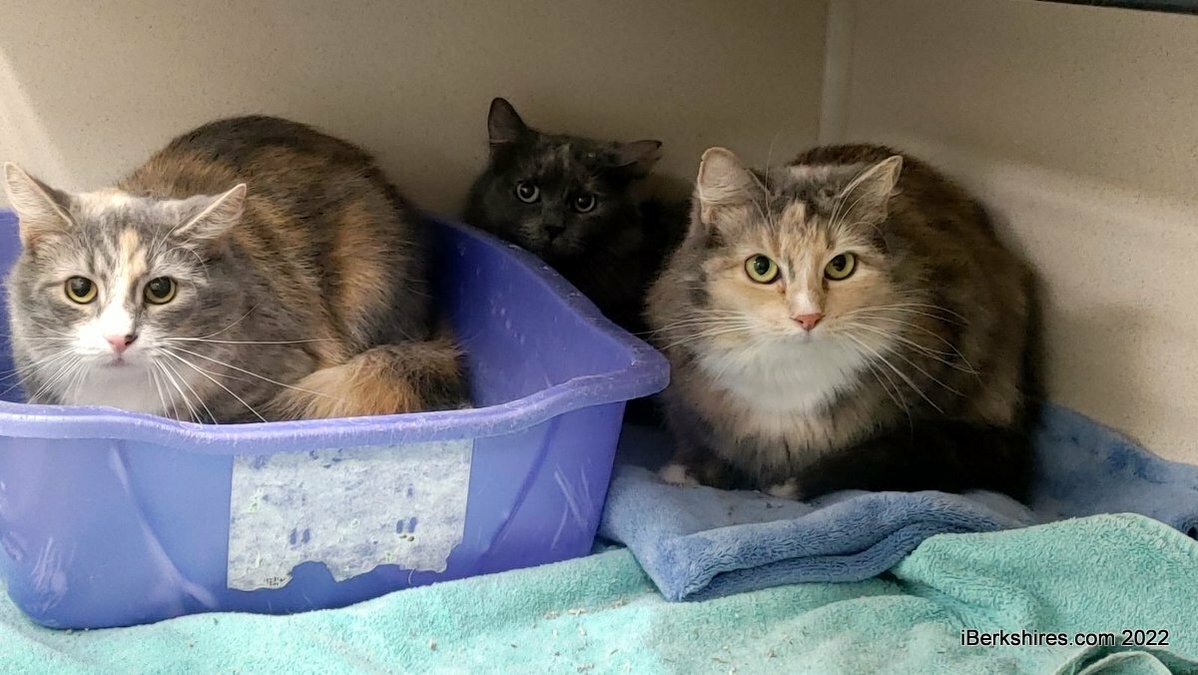
Hathaway and another defendant were charged last March with abandoning 15 cats on back roads in Richmond and Lanesborough after an investigation by Lanesborough Police, Lanesborough Animal Control and the Massachusetts Society for the Prevention of Cruelty to Animals.
Two of the cats died, possibly from exposure, and another was never found. Temperatures ranged from about minus-6 to 28 degrees on the weekend of Jan. 28 and the cats found in Richmond were undernourished and dehydrated.
According to the police report, Hathaway said her landlord had told her to remove the animals because of the smell.
The cats were discovered by a motorist on Jan. 31 and he, animal control, volunteers and the Berkshire Humane Society worked to get the cats to safety. They were later adopted out by the Humane Society.
The animal cruelty charges could have meant fines of up to $5,000 and time in jail or prison.
The case was prosecuted by Assistant District Attorney Aleah Fisher and Megan Rose.
The Berkshire District Attorney's Office thanked the agencies involved for the assistance in the investigation, including the State Police.
"We are very pleased that we can bring this case to a resolution. MSPCA was very pleased with the outcome as we took into consideration the defendant's intellectual disability and willingness to accept responsibility," said Rose. "Thank you to the Berkshire Humane Society for their assistance with finding homes for the abandoned animals."
If you would like to contribute information on this article, contact us at info@iberkshires.com.
Your Comments
iBerkshires.com welcomes critical, respectful dialogue. Name-calling, personal attacks, libel, slander or foul language is not allowed. All comments are reviewed before posting and will be deleted or edited as necessary.
No Comments
Berkshire Towns Can Tap State Seasonal Communities Resources
BOSTON — Governor Maura Healey announced that 18 additional municipalities across Massachusetts have been designated as Seasonal Communities, opening up new tools, support and grant funding to help them manage seasonal housing pressures.
Created as part of the historic Affordable Homes Act signed into law by Governor Healey in 2024, the Seasonal Communities designation was designed to recognize Massachusetts communities that experience substantial variation in seasonal employment and to create distinctive tools to address their unique housing needs. The law also established the Seasonal Communities Advisory Council (SCAC).
All municipalities in the counties of Dukes and Nantucket;
All municipalities with over 35 percent seasonal housing units in Barnstable County; and
All municipalities with more than 40 percent seasonal housing units in Berkshire County.
To identify additional communities, the Executive Office of Housing and Livable Communities (HLC) reviewed available data, specifically focusing on cities and towns with high levels of short-term rentals and a high share of second- or vacation homes.
In Berkshire County, Egremont, Great Barrington, Lee, Lenox, New Marlborough, Richmond, Sandisfield, Sheffield, West Stockbridge and Williamstown have been designated.
"Our seasonal communities are a vital part of Massachusetts' cultural and economic fabric, but they're also home to essential workers, families, seniors, and longtime residents who deserve a place to live year-round," said Governor Healey. "That's why we're committed to supporting these communities with innovative solutions like the Seasonal Communities designation to meet their unique needs, and I'm thrilled that we're offering this opportunity to 18 additional communities across the state. Everyone who calls these places home should be able to live, work and grow here, no matter the season."
As with the statutorily identified communities, acceptance of the designation for municipalities is voluntary and requires a local legislative vote. HLC will open an application for newly eligible communities that haven't accepted the Seasonal Communities designation to request consideration.
The Affordable Homes Act created several new tools for communities who accept the Seasonal Communities designation to be able to:
Acquire deed restrictions to create or preserve year-round housing
Develop housing with a preference for municipal workers, so that our public safety personnel, teachers, public works and town hall workers have a place to live
Establish a Year-Round Housing Trust Fund to create and preserve affordable and attainable housing for year-round residents
Create year-round housing for artists
Allow seasonal communities to develop a comprehensive housing needs assessment
Permit tiny homes to be built and used as year-round housing
Permit year-round, attainable residential development on undersized lots
Increase the property tax exemption for homes that are the owners' primary residence
Disrepaired houses at 154 Francis Ave. and 224 Fourth St. will be demolished as part of the city's yearly efforts to address condemned properties. click for more
Our Friday Front Porch is a weekly feature spotlighting attractive homes for sale in Berkshire County. This week, we are showcasing 100 Northumberland Road.
click for more
The Select Board signed the sale on the last of what had been known as the Bardin property Monday even as a handful of residents demanded the right to speak against the action. click for more