One Book, One Community Read Explores Intimate Violence
Trigger warning: This article contains language about intimate violence.
PITTSFIELD, Mass. — More than 20 groups across the county learned the story of a woman who breaks the stereotype of an intimate violence survivor during the third One Book, One Community read.
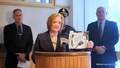
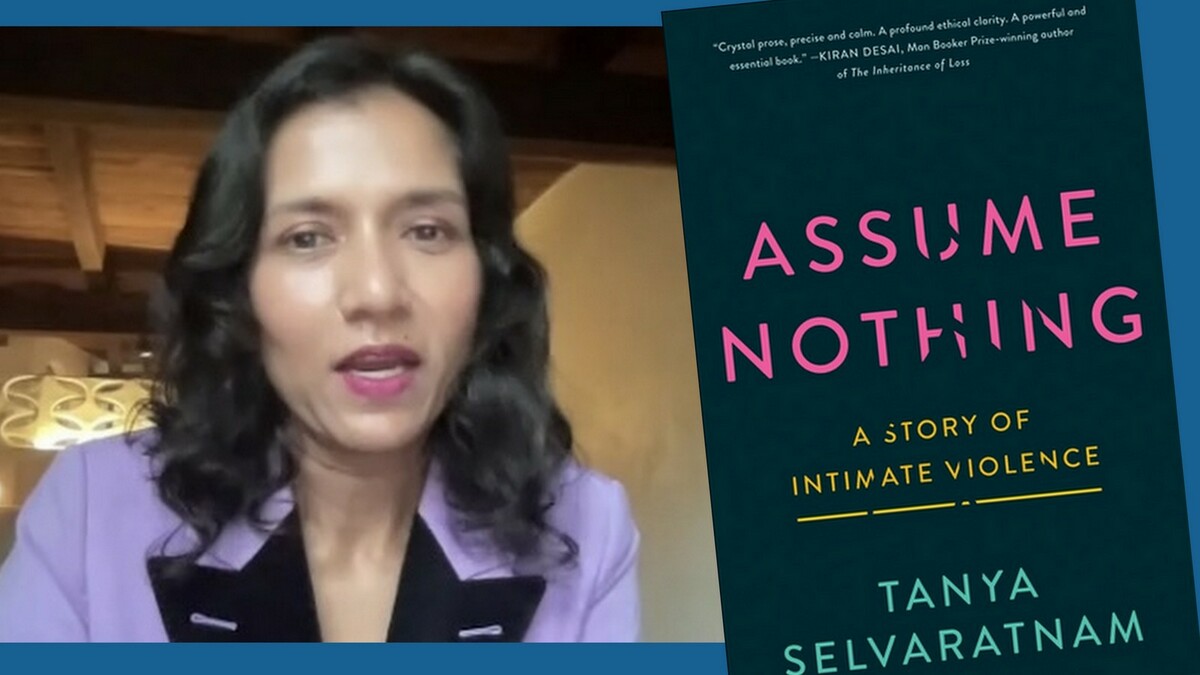
The Berkshire Domestic Violence and Sexual Task Force's annual event culminated this month with a webinar featuring writer and producer Tanya Selvaratnam, author of "Assume Nothing, A Story of Intimate Violence."
Selvaratnam spoke out about being abused by former New York Attorney General Eric Schneiderman in 2018, which led to his resignation. At the time, he was publicly prosecuting celebrity film producer Harvey Weinstein for sexually assaulting his employees.
"After I shared my story, when many friends told me about their own experiences, it was comforting to feel that I wasn't alone but also disheartening to be aware of so many painful stories. Our storytelling felt like a collective bloodletting. I saw more clearly capable, independent women become ensnared. Even fierce women get abused," she said.
"Until I experienced intimate partner violence, I didn't understand completely what it was that it takes many forms, not just physical but also verbal, emotional, digital, economic, legal. Even after I started going through it, it took me a while to name it and to get help. I learned a lot about how to deal with abuse, how to come forward."
For the past seven months, 21 groups spanning from Sheffield to North Adams have met and discussed the book as well as the issues around sexual assault in the context of intimate relationships and other issues pertaining to domestic violence.
"Our hope is that these conversations will contribute to making the Berkshires a zero tolerance community when it comes to gender-based violence," task force member Lorena Dus explained.
"Assume Nothing" combines a memoir, reporting, and research to tell the story of Selvaratnam's abusive relationship with Schneiderman and how she found the strength to leave.
An Ivy League graduate and producer, she is said to fall outside of the stereotype of a person who experiences intimate abuse yet at the same time, she was born in Sri Lanka and witnessed her father abusing her mother while growing up.
Selvaratnam provided advice to people who are being victimized that she wishes she had been given.
"Document what is happening. Include dates and correlate with supporting material like email exchanges and photos. Tell someone, ideally more than one person whom you trust not to tell anyone else. Figure out whom you can speak with, who will know what to do. Know that you are not alone. And you are not crazy," she advised.
"It's OK to feel traumatized. But please don't feel ashamed if your partner is not willing to acknowledge the problem and get professional help. Get away. Your partner is probably not going to change. Don't worry about your abuser. Focus on yourself. You are the most important part of this equation."
She also encouraged bystanders to be "upstanders" if they see a loved one in an abusive relationship.
"The first step is to be nonjudgmental because it's hard when you're in the abusive relationship, as was the case of me, to see out of it," Selvaratnam explained.
"You're so ensnared, you're so entangled so to those who are close to the person in an abusive relationship, I would say be nonjudgmental, be a good listener, and just be there for your friend, and ask questions that might elicit answers that will give you clues because you never know when your friend or loved one might be willing to talk and that was the case in my story."
Selvaratnam met her abuser in 2016 and experienced entrapment, isolation, control, demeaning, and abuse in the relationship. She said Schneiderman threatened to kill her if she left.
Because her story was thoroughly investigated by the New Yorker, which published the silence-breaking interview, there were subsequent legal investigations.
What catalyzed her to come forward was knowing that she was a part of a pattern and not the first.
"The thing about abusers is that they're very skilled at making you think that you are responsible for the abuse, and also that you're the first one they have abused and they don't even recognize it as abuse. You've done something wrong to cause it," she explained.
"But then when I found out after I got out of the relationship that I was one of many, then I felt I had no choice. For me, it was less about courage than it was about conscience. I couldn't have a conscience that there were other women who might have the same memories that I do now because no one should have those memories."
Selvaratnam was asked when it hit her that she was being abused and at what point did she think it would turn fatal.
"It's impossible to anticipate what an abuser will do when they snap and when you're in that situation, it's difficult to know, to identify the amount of danger that that you, yourself, I, myself might experience," she said.
"So there had been threats made, such as if we break up I'm going to have to kill you, and because he was the top law enforcement official in New York State at the time, I knew that he had the power to follow through on his threats."
While her situation was unusual, Selvaratnam said there are many people trapped in abusive relationships with power dynamics. She was fortunate to have her work and her own apartment to escape to but many people stay in such situations because they have nowhere else to go. This, she said, is another reason for bystanders to be upstanders.
The author revealed that after the book was published, her mother told her that she gave birth in Sri Lanka because Selvaratnam's father had kicked her out. This is where she believes the generational cycle of violence began.
"For me, it began when I was in the womb and I think that is analogous to many, if not most people that were born into trauma, and we grow up accepting trauma, and then we normalize it," she said.
"So one of my missions is to break that generational cycle of violence and that is going to involve introducing peace and kindness very young because it starts from the time we're born. It increases when we start going to school when competition and scarcity mindset starts to set in and we're conditioned that if a boy teases us on the playground, it means he likes us."
Selvaratnam feels that sex education needs to include healthy relationship training and that when people see a political party before a human, everyone loses.
"It's a construct to separate us and, for me, I believe that by going to people where they are and speaking to them and wanting to listen that you're more likely to have a conversation," she said. "So see human before political party because so much of what's happening in this country is people voting against their best self-interest because they're voting for their political alignment."
Schneiderman's 2019 interview during which he pledged to make amends with his victims was highlighted and Selvaratnam spoke about the concept of redemption.
"I believe in restorative justice, I believe in rehabilitation, I believe in second chances but second chances come after a lot of hard work to out the abusive behavior and an abuser is not willing to either acknowledge the harm and do the hard work to out root behavior that caused them to harm people and or done the time if they've committed a crime," she said.
Doing the time can be through a restorative justice program, can be through rehabilitation. For example, there have been some jurisdictions that have mandatory violence prevention training for abusers. In my books, I examined some of those programs and show how, where there was no enforcement of attendance of those programs, that the abusers tended to drop out. There was an attrition rate but when you institute a kind of penalty system for not attending, then the attendance rate stayed up."
She said there needs to be a comprehensive look at the ecosystem that facilitates abuse as well as the ways that laws and policies are enacted and enforced.
The 24/7 hotline for domestic and sexual violence is (866) 401-2425. More information on resources can be found at elizabethfreemancenter.org.
Tags: domestic violence,