Pittsfield Board of Health Considers Looking Into Housing as Public Health Issue
PITTSFIELD, Mass. — The Board of Health is down two members and, when fully staffed, would like to tackle housing conditions as a public health issue.
On Wednesday June 7, the panel discussed its path forward in finding new recruits and in areas of effort.
Members recognized recent discussions about the city's deteriorating housing stock and code noncompliance as an important item to address.
"If people lose this housing or if people are displaced, there are so few opportunities right now to access other housing because it's so incredibly expensive," said board member Brad Gordon, the executive director and staff attorney for Berkshire County Regional Housing Authority.
"We've seen increases over the last three years that range from 25 to 75 percent rental increases. It's dramatic so we've really got to maximize our existing stock, a lot of which is substandard just because I think it's about 70 percent of our housing stock was built prior to 1980."
Chair Bobbie Orsi reacted to data that Gordon sent out pertaining to the issue.
"Some of the wage and the housing costs are just so mismatched," she said.
This has been a prevalent issue in Pittsfield, with the city last year allocating $500,000 in America Rescue Plan Acts funds to establish an Affordable Housing Trust.
The board is welcome to a new member with experience in real estate management to provide insight into the issue.
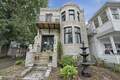
Member Dr. Jeffrey Leppo said it always seems like a bad thing when the city has to tear down a building as opposed to having it addressed before it gets to that point. He cited a discussion at the last BOH meeting about city houses going downhill and complaints about apartments.
"It sounds like those would obviously impact public health and we should try to be more proactive and it would be good to have people who want to help on that," Leppo said.
When the board is a five-member panel again, he said it would interesting to follow up on the issue of housing and health.
Gordon suggested having a cross-section presentation to get a holistic view of the many issues involved, pointing out that it would be educational to hear what the city and other organizations such as the Affordable Housing Trust are doing to address housing needs and how BOH can be involved.
"I feel like there's a connection between all of this kind of stuff," he said.
"I think one of the things that is helpful for us is just to be thinking about. It could be in those small groups but sometimes it's also for public education too so we can be educated in the public can be educated at the same time by inviting people in and hearing about the good work."
Director of Public Health Andy Cambi agreed, adding that the department's role has been mostly signing off on demolitions rather than exploring other options.
He offered to have a member of the code enforcement team and possibly a person from the office of community development join the conversation.
Models that can be used to incentivize property owners away from letting structures decay such as Community Development Block Grant funding and systemic code enforcement.
Cambi was asked to bring a visual map of houses on the demolition list over the past few years to see a visual representation of the impact.
"I don't necessarily know what the right answer is and what to do," Orsi said.
"So I kind of count on the housing folks to maybe give us some suggestions around when we need to send letters or when we need to support processes that are moving forward but I think we're all very willing to do that."
Tags: housing,