North Adams School Building Committee Nixes New Brayton Option
NORTH ADAMS, Mass. — One option for the proposed school project is now off the table.
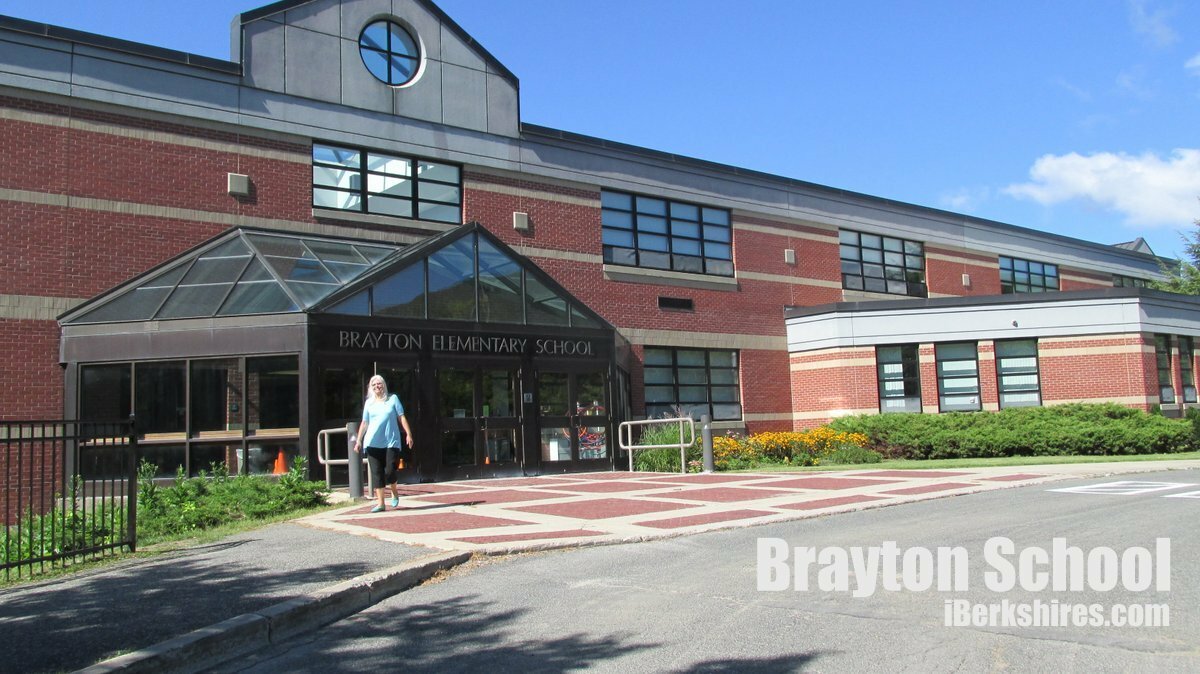
The School Building Committee on Tuesday voted to eliminate the idea of a new building for Brayton Elementary School. It also discussed the process for deciding the grade structure for the project.
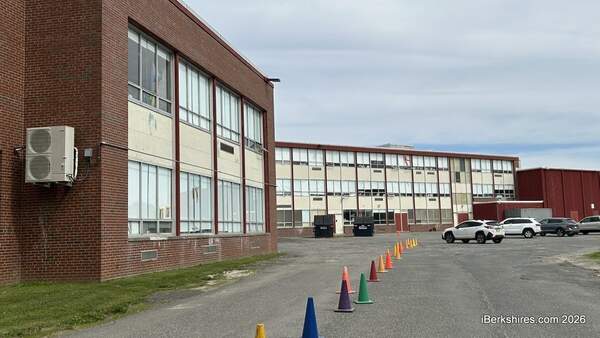
The committee had been presented with four building options back in April: an addition/renovation or new build at Brayton or Greylock.
"We are interested in focusing the options down to three, which we then can develop further and receive more detailed cost estimates relative to those options prior to selecting the preferred option," said Jesse Saylor of TSKP Studio, the project designer.
Saylor's team had recommended against a new school on the Brayton site for several reasons, including that the school itself is less than 30 years old, its demolition would require finding space elsewhere for the students during construction, it would encroach on Notch Brook and it would limit any future additions.
Building out on the slope to free up space was a creative idea, Saylor said, but it also means a three-story school "which seems to us to be a weakness especially as you compare to the other options on the table."
It would improve circulation and the outdoor connections, he continued, but he felt the addition/renovation could do that as well.
"So I don't think there's anything here in letting go of this option that you'd be losing. That's from my perspective," Saylor said.
Committee member Richard Alcombright said he wasn't "enthused with anything at Brayton at this point."
However, he wondered if the committee should delay the vote because four members were absent — Lisa Blackmer, Tara Jacobs, Benjamin Lamb and David Moresi.
"Could we reschedule a meeting same time next week where we really insist that people show up?" Alcombright asked. "Maybe I'm wrong, but I think this is probably the most important decision we've made yet as a building committee."
Mayor Jennifer Macksey said she'd prefer to proceed, noting the agenda was posted enough in advance for absent members to submit comments and none had.
"We can't satisfy everyone's schedules, especially at this time of year," she said, adding that it was also a matter of narrowing down options, not choosing a school.
Other members had no issues with proceeding and voted unanimously to delete a new Brayton. This leaves a new Greylock or an addition/renovation at either school to be further explored.
Superintendent Barbara Malkas took the committee through the timeline for determining grade structure. The project will either be kindergarten through Grade 6 or K-2 or 3-6.
"All members of the community would be encouraged to participate in the survey that would run throughout the month of July," she said. "Then we would have two community stakeholder engagement focus groups."
These public meetings would be held on Aug. 8 and Aug. 22 at a time and place to be announced. The Policy Committee would make a recommendation vote on Aug. 24 and School Committee would be expected to vote on Aug. 29.
"Then from there in your timeline, we would start to have some accelerated School Building Committee meetings in order to start to take up the issue or site whether it would be the Greylock site or the Brayton site," Malkas said. "We would have a stakeholder engagement focus group regarding site location on Sept. 28."
The School Building Committee would expect to vote on a preferred option on Oct. 12 and five days later a joint meeting of the committees would vote to submit the preferred option to the Massachusetts School Building Authority.
"We take the month of July off for School Building Committee meetings while the survey is going on, and that gives all of you some opportunity to really think about everything that we've talked about," said Macksey. "We wanted to lay out the timeline so all of you could really be prepared as far as how the dialogue is going to go from this point forward."
Alcombright wanted to ensure the community was aware of the grade configuration discussion and the meetings.
"I think anything that you can do, whether it be social media, mailers, home sometime early August or late July, really promote those meetings," he said. "I really think it's important that we get as many people involved in that as we possibly can, first of all from just from a community perspective, but I know MSBA really wants to see good solid community involvement."
He also encouraged school officials to find a "nice, easy English way to explain what this is" prior to the meetings.
Malkas said the district's outreach coordinator would start pushing information out through social media, that informational items would be built into the survey and that it would also be posted on the district website.
"I'll have a webinar where I will walk through the advantages of each model up for consideration basically using the language that we've already outlined in our educational plan that has been submitted to the MSBA as part of our feasibility," she said.
In other business, the committee approved contracts for geotechnical and hazardous site testing at both schools.
Tags: brayton/greylock project, school building committee,