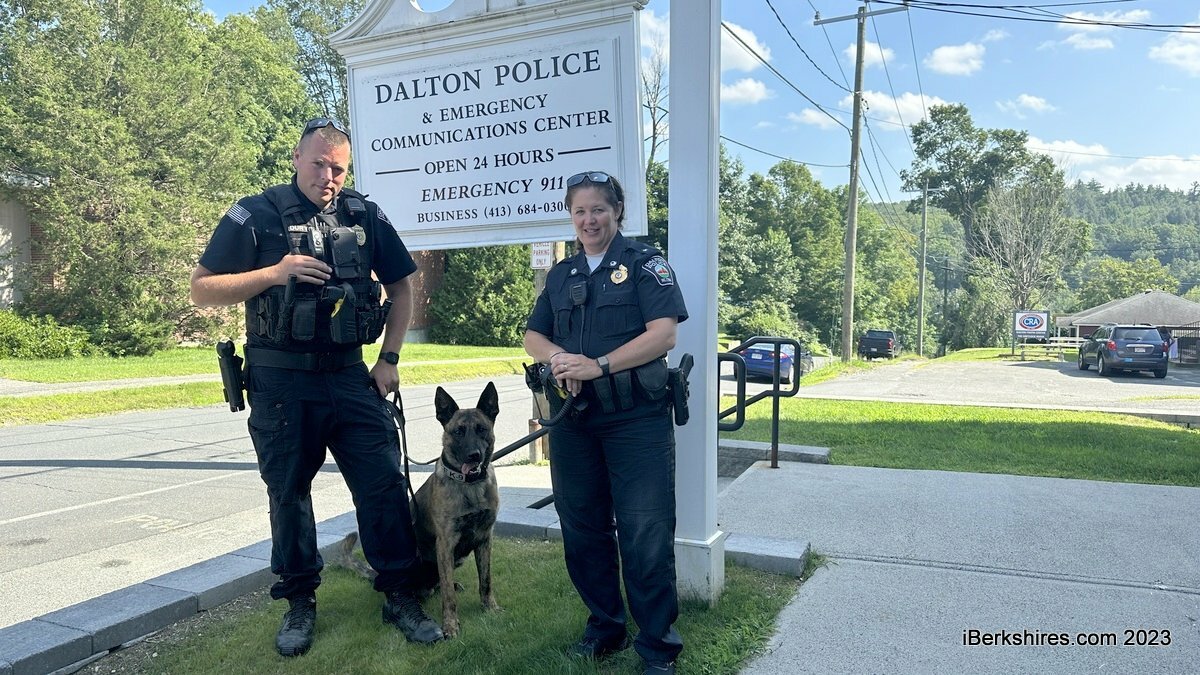
Dalton Police Welcome New K9 to the Force
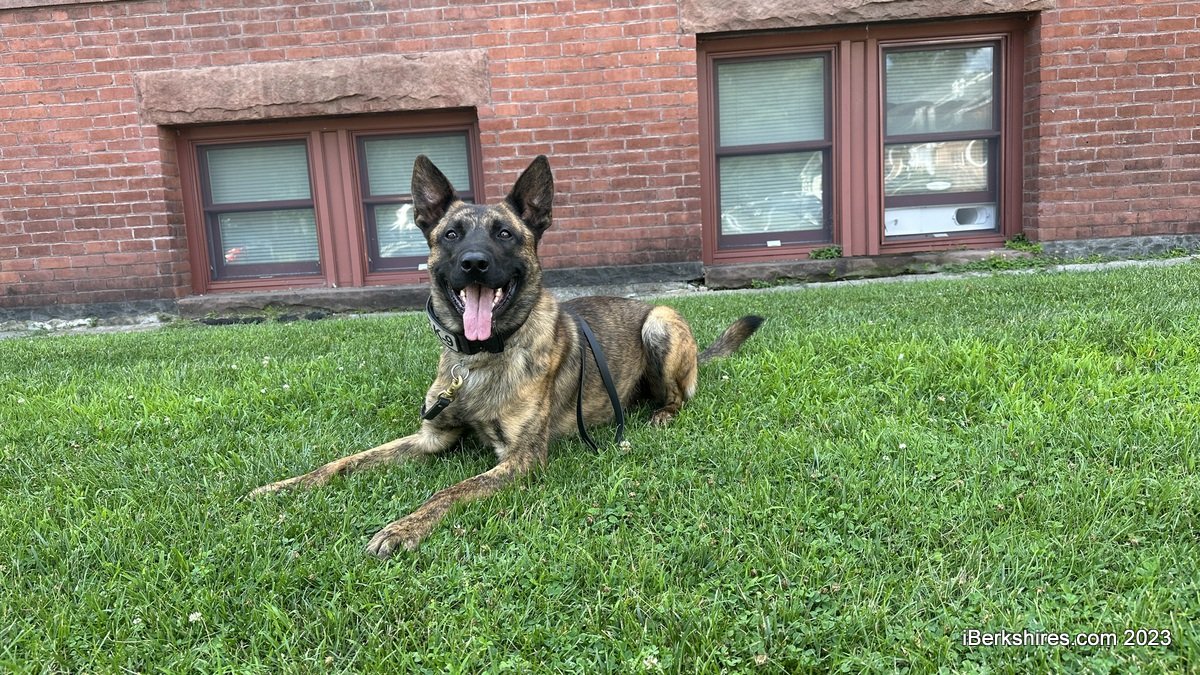
Xander, a Dutch shepherd, is trained in search and drug detection.
The department was awarded an $8,000 grant from the Massachusetts Vest-A-Dog to cover the cost of the dog and his training.
The 20-month-old Dutch shepherd was acquire for approximately $1,000 from Shallow Creek Kennels, located in Sharpesville, Pa. Shallow Creek Kennels obtained Xander from a breeder in Budapest, Hungary.
After looking at around 15 dogs, Sgt. James Duryea settled on Xander because of his nature.
Many of the dogs that he saw were very driven but were very energetic, which could be difficult to control, he said.
Although Xander is also energetic, Duryea noticed while watching him complete drills that he was meticulous when searching and had a calm demeanor.
Using the remaining $7,000 of the grant funding, Xander and Duryea completed a 12-week basic K9 patrol school run by Berkshire County Sheriff's Office accredited Master Trainer Dwane Foisy.
Xander and Duryea are now certified in K9 patrol through the North American Police Work Dog Association and are members of Massachusetts Police Work Dog Association.
Xander is certified in patrol work; obedience, building search, article search, area search, tracking, felony apprehension and officer protection, Duryea said.
Although training for all the canines in the Berkshires is every Tuesday, fate had another idea on Tuesday, July 18, marking that day as Xander's first call.
Xander and Duryea had to miss training that day due to a separate program the department was doing.
While all the other canines were in New York training, Xander and Duryea were called to Becket to help track an individual with two warrants who fled into the woods after crashing his vehicle in a police chase.
Although they were unable to find the driver, they did successfully track down his likely last location.
After trudging through two swamps, Xander led searchers to a road where the fugitive likely called a ride and took off, Duryea said.
Xander is following in his predecessor's footsteps by specializing in narcotics detection. He is currently undergoing narcotics detection training to detect the odors of heroin, cocaine, meth and ecstasy.
The department decided to retire 11-year-old black German shepherd, Maximus ("Max"), when his health started to rapidly decline, Duryea said, with an eye to replacing him in time for the next training with Foisy.
Max had served on the force for nine years and was unable to jump into the cruiser like he once could because of his aged legs, Duryea said.
The department acquired Max in 2013 through a grant from the Stanton Foundation, which covered all the startup costs including the dog, canine cruiser, kennel, and other supplies.
Max will remain in the care of his handler, Duryea, who took over for his former handler Officer Matthew Mozzi, who left in 2017 for another position.
Max has been loving his retirement, Duryea said. He lounges with his DIF Kong toys on his orthopedic bed, donated by K9s of Valor of Canton, Ohio, and next to a fan to stay cool.
"He's loving it. He's just lounging out. He's doing pretty good. His old age is catching up with him pretty quickly but he is doing good," Duryea said.
Having a K9 within the department not only improves officer and community safety but also aids in community outreach, he said.
And, he said, just having a K9 on a call can help de-escalate a situation because an individual who would otherwise be aggressive and confrontational may back down upon hearing the dog bark.
Another advantage is that a K9 can be called back once deployed and cannot be used against the officer, unlike other gear that officers carry, he said.
People love the police canines and get excited whenever they see them, Duryea said.
"I typically do around a dozen or more canine demonstrations a year and I usually have a huge turnout," he said.
Unlike Max, Xander is a lot more personable, Duryea said. When residents approached Max he would growl but Xander welcomes the attention.
Tags: K9,