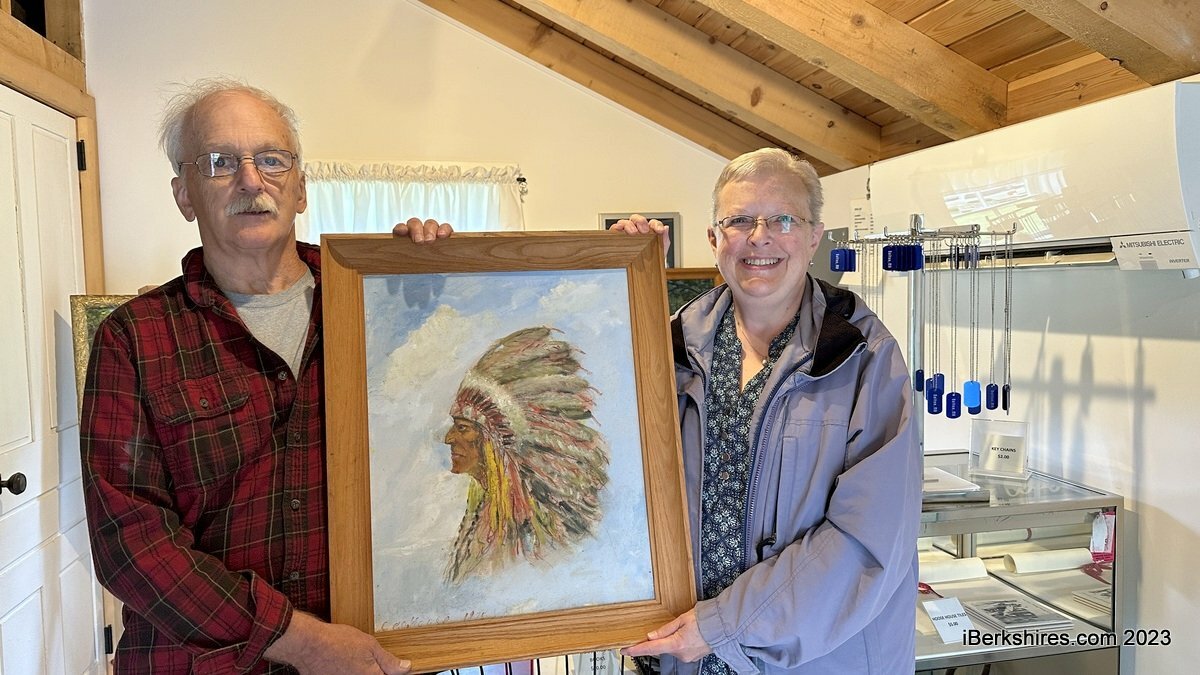
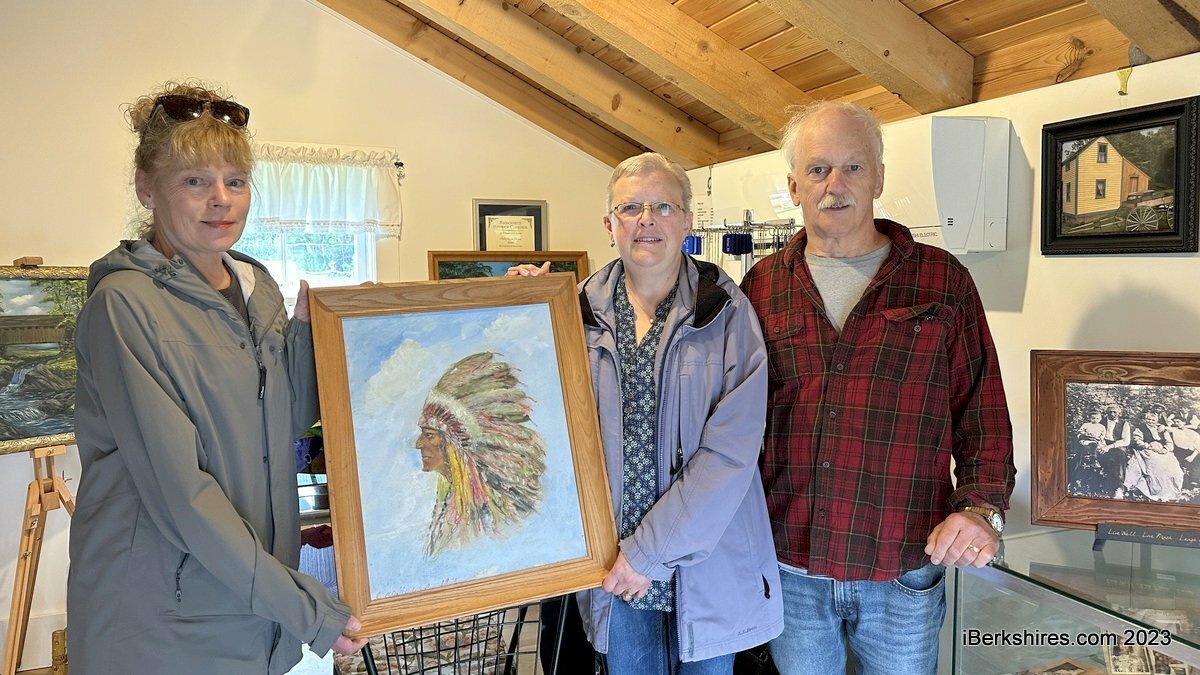
Painting Donated to Historic Fitch-Hoose House
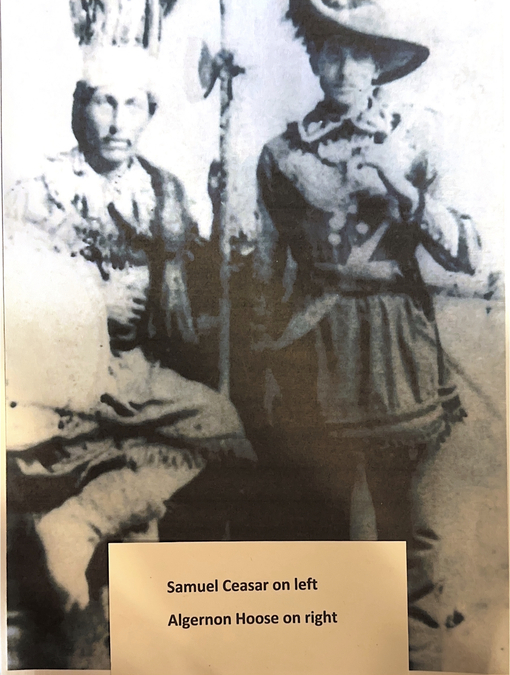
George Hoose's Indian head paintings are thought to be modeled on in-law Samuel Caesar, who claimed to be of native descent and wore a headdress.
George Hoose died in 1977 at age 80. He was a prolific painter and was known for the "Indian Head" painting on Gulf Road that has long since been painted over and weathered away.
The donated painting is believed similar to that lost artwork.
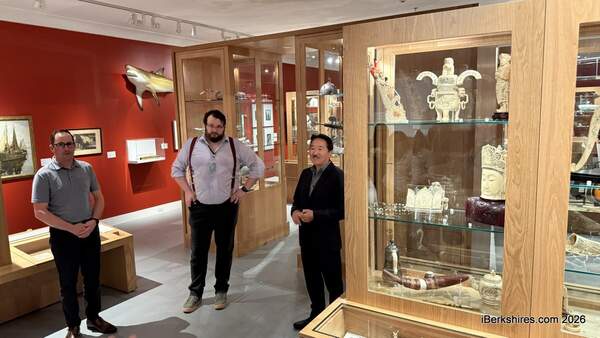
"[The painting] is just one more wonderful piece that helps us be more connected with the Hoose family. It's very exciting," Historical Commission co-Chair Debora Kovacs said.
The painting of an "Indian Head" was donated by Robert and Kathleen Walsh after hearing of the art month the museum is having through September.
Next year, the Historical Commission wants to host a bigger exhibit so it can display more of Hoose's paintings but needs to find a safe way to do it.
This donated painting may be based on one of the Hoose relatives — Samuel Caesar, who married Algernon Hoose's sister Hannah, Kovacs said.
It is believed that Caesar was half Native American and half African American, she said. He can be seen wearing a headdress in some pictures.
According to the Walshes, George Hoose was a lifelong friend of Robert's grandfather Harold Oles Sr.
Hoose and Oles were boyhood friends and shared similar interests in Native Americans and how it all connected with slavery and the Underground Railroad, Kathy Walsh said.
"I'm really not too sure but I understand that it is almost an exact copy of the Indian that was painted on the rock on Gulf Road," she said. "George Hoose must have gotten his inspiration for this painting from the rock because they used to hike up there all the time."
Hoose and Oles enlisted together in World War I and were separated when called up for active duty.
Oles was sent to France, where he was assigned to the artillery, and Hoose made it as far as Connecticut but was never sent overseas because the armistice was signed.
Upon Oles' return, the duo's friendship was back on track, Walsh said. Hoose gifted the painting to Oles around 1976 and it hung in his house on Park Circle Drive in Dalton until his death on June 7, 1985.
The painting was then moved to the basement by his son Harold Oles Jr. (Robert Walsh's uncle), where it stayed until the son's death on Feb. 9, 2007.
While clearing out the basement, somebody in the family discovered the painting and intended on throwing it away but was saved by the Walshes and it hung in their home for close to 10 years.
Since the museum was renovated in 2014, the commission has brought and continues to bring to life its scattered history, Kovacs said during a previous interview, and the museum has reunited members of the Hoose family with their ancestry.
The Historical Commission hopes that as more light is shined on the history of the Hoose family more residents will step forward with stories or items to share with the museum, Commissioner Thomas Snyder said.
Tags: historical museum, museum, painting,