image description

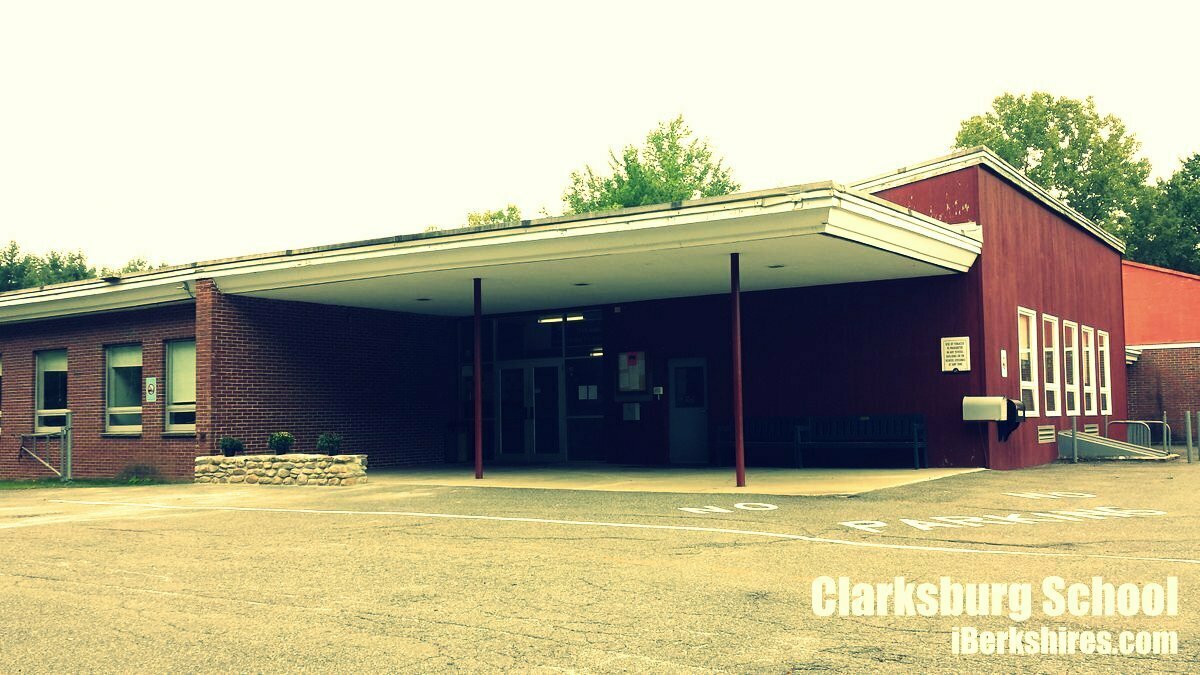
Clarksburg School Applying for Safe Routes Grant
By Tammy DanielsiBerkshires Staff
Print Story | Email Story
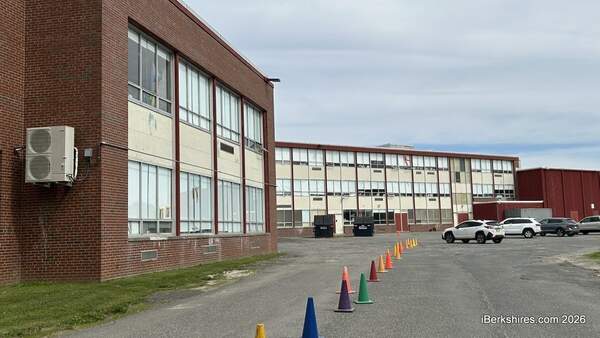
CLARKSBURG, Mass. — Clarksburg School is applying a for a half-million Safe Routes to School grant to improve safe access to the Community Center. 
 
"Essentially what we're proposing is a safe route from the school to the town field and a crosswalk to the senior center," said Assistant Superintendent Tara Barnes. "That's the evacuation plan ... not that we would ever want an evacuation to happen but if it were to happen, we want the safest possible route for the students to get out."
 
The Community Center is the town's designated emergency center and is located within walking distance of the school. 
 
However, there are a number of safety considerations in moving children to the center. 
 
The students can now reach the town field through a rough path in the woods and walk the field until crossing the road or walk along the sidewalk-free Cross Road, a heavily traveled way with no shoulders. 
 
Superintendent John Franzoni said Barnes had provided pictures that show "how narrow and dangerous" the road is. 
 
"It's a really a well-traveled road that vehicles sometimes go too fast on and and people are walking on that road," he said.
 
The school is a town hub and the goal is to make it more pedestrian and bicycle friendly, Barnes said. "The project is intended just to create more accessibility between resources for everyone."
 
The Select Board has signed off on the application and Barnes said she included some of the work being done by Municipal Vulnerability Committee in its planning for the town field. 
 
She said the school's contact with Safe Routes has been helping with shepherding the application through and, should it be rejected, they should get some feedback on preparing for the next grant round.
 
Franzoni also alerted the School Committee to a potential issue regarding school choice students and tuition. A reading by the Department of Elementary and Secondary Education is that schools are responsible for the K-12 education of children who school choice in. 
 
This does not create a problem for small schools in regional districts or school systems that already educate Grades K-12. But for independent schools like Clarksburg that only educate up to Grade 6 or 8, it could cause financial issues. 
 
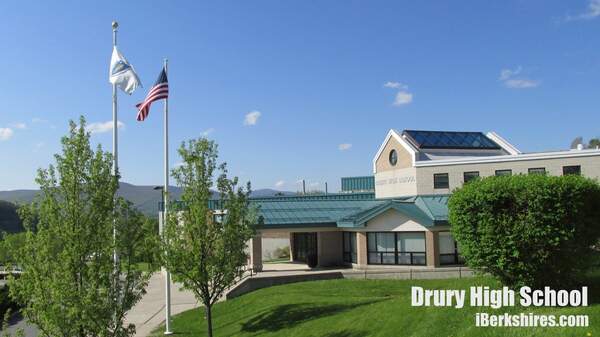
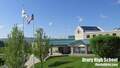
For example, Franzoni said, if an Adams student attended through school choice and wanted to attend Drury, Clarksburg could be on the hook for their tuition. This might be a rare instance, since the majority of the children who school choice into Clarksburg are North Adams residents.  
 
The superintendent said it was something he wanted to bring up with the School Committee and that it will be discussed further at the next meeting.
 
In other business: 
 
Principal Sandy Cote said the school has received its Massachusetts Comprehensive Assessment System rating results. The administration is reviewing the data but, overall, she said, "we are making moderate progress ... we're pleased with that."
 
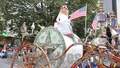
• She also noted that the school's float in the Fall Foliage Parade received the Mayor's Award and that the annual Haunted Hayride at Clarksburg State Forest is next weekend. "We're keeping an eye on the weather."

Tags: Clarksburg School,   safe routes to school,   

If you would like to contribute information on this article, contact us at info@iberkshires.com.

Why the Massachusetts Art Community Is Worth Continued Investment

By James BirgeGuest Column
How do we quantify the value of art on society and culture? Even eye-popping figures, like the $100 million estimate for the jewels stolen from the Louvre, or the record auction last fall that saw a piece by Gustav Klimt sell for more than $236 million can't fully account for the value of the history, stories, and emotions behind the creations themselves. But beyond that, there is a measurable financial, cultural and social benefit of the arts that is often taken for granted. 

Closer to home, arts and cultural production in the Commonwealth of Massachusetts totals nearly $30 billion annually, representing more than 4 percent of the state's economic output, according to the Mass Cultural Council. All told, more than 130,000 jobs are spread across the commonwealth creating a vibrant and thriving artistic community for us all to enjoy. 

Despite the obvious impact, these figures are under threat. A recent survey by MassCreative compiled recent federal cuts to the National Endowment for the Arts, the National Endowment for the Humanities and the Institute of Museum and Library Services and identified 63 grants canceled and $4.2 million in grant funding rescinded across New England so far this year. 

The dollars, of course, are important. But they also only scratch the surface on what they bring to the community. Today, we risk losing part of the culture and identity many now take for granted. 

While others choose to look past these less tangible, but just as vital benefits, we're doing the opposite. Massachusetts College of Liberal Arts is all in to ensure the next generation retains their access to works of art, while also being empowered to create themselves. 

Last fall, MCLA officially broke ground on the new Campagna Kleefeld Center for Creativity in the Arts, which will serve as a new hub for the campus and the local community for arts programming. When complete in fall of 2027, our students will benefit, but so will all of Berkshire County and artists in the surrounding area. 

This exciting new facility is just one of the many forthcomings our region can enjoy in the coming years. Just a few miles away, anticipation builds for the Fall 2027 anticipated opening for the Williams College Museum of Art. Years in the making, the museum likewise grows from an enduring commitment to the arts, both in curriculum and in practice. Exciting times are also underway for the Clark Art Institute with the construction of a new facility to house a collection of 331 works of art, including paintings, sculptures, drawings and other works. Their wing is scheduled for completion in 2028. And listeners will no doubt enjoy the sounds and melodies from Mass MoCA Records, the latest endeavor to foster creativity and artistic pursuits through music launched in October as well. Of course, many are also awaiting the reopening of the Berkshire Museum anticipated this summer, after a tremendous renovation process to rejuvenate the experience for visitors. 

So much time, energy, and yes, dollars, have already been invested in taking these facilities from ideas and sketches and making them reality. But they represent much more than new buildings. They represent new opportunities to cultivate and accelerate the thriving arts community in Massachusetts and the northern Berkshires. 

Art, regardless of the medium, is a reflection of who we are, where we've been, and what we aspire to be. It can be inspired by hopes or fears and chronicle collective triumphs as well as tribulations. The goal of art is not only to document history, but to inspire those positioned to change it and to feel something new or even to provoke us to revisit our own assumptions or misconceptions. 

As unfathomable of a number as $30 billion can seem, boiling down the impact to any number inherently discounts the unknowable downstream effects our graduates will bring to the community and the broader world after they leave our institutions. Likewise, rescinding $4.2 million now removes a huge chunk of that growth potential.  

Justification for making these investments today when simply boiled down to dollars and cents still places us on solid ground strictly from a financial perspective that forgoes all of the intangible, but no less valuable, benefits as well.  

The arts are still worth our support. And our community will be richer for it. 

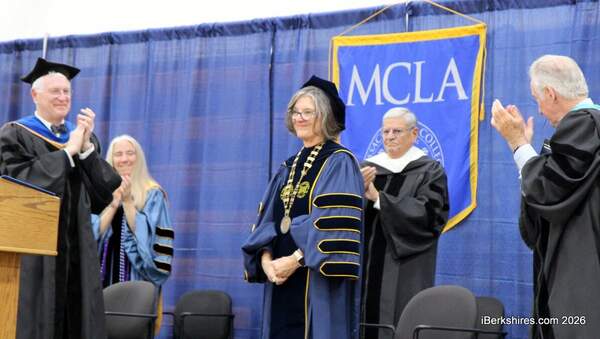
James Birge, PhD, is president of Massachusetts College of Liberal Arts in North Adams.  


View Full Story

More North Adams Stories