Dalton OKs More ARPA Allocations
DALTON, Mass. — The town has more money left in its American Rescue Plan funds than it previously anticipated.
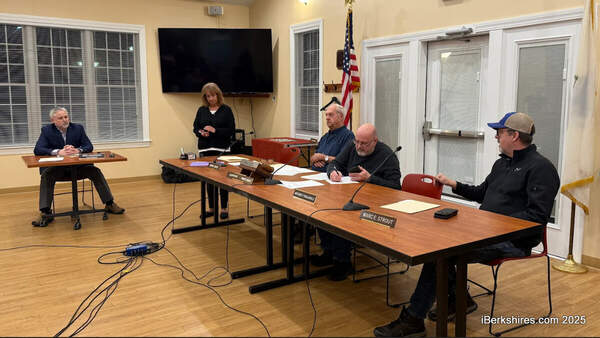
The town had previously decided to allocate $380,000 for sewer repairs but it was announced during the Select Board meeting on Tuesday that the sewer rehabilitation bids came in substantially lower than what was projected.
The board voted to allocate some of the remaining funds to cover the cost of repairs for the town garage overhead door and an initial expense for a police accreditation system.
After approving these allocations the town has approximately $137,000 left in ARPA funds. The Select Board will discuss how it should utilize the remaining funds in the future.
Town Manager Thomas Hutcheson has been a strong proponent of spending it on infrastructure, especially paving.
The board voted to allocate up to $12,000 to repair the town garage overhead door before the cold weather sets in.
They also approved allocating $13,619.50 to cover the cost of the initial expense for the police accreditation system. This is a one-time startup with a 50 percent discounted rate through public safety policy management firm Lexipol.
Lexipol helps police departments with their accreditation process and is anxious to get into the Massachusetts market, Hutcheson said.
In 2020, Gov. Charlie Baker signed a police reform legislation that requires police departments to meet all newly established policy standards and requirements needed to achieve the certification.
Certification is required to obtain accreditation status through the Massachusetts Police Accreditation Commission.
"So, certification and accreditation is part of the reform bill. There's no timeline on a deadline when it has to be completed, but I like to be ahead of these things before we're put up against the wall to do it," Police Chief Deanna Strout said.
Original cost estimates to meet these standards have increased significantly because the department will have to utilize more advanced policy and procedure softwares capable of monitoring for updates on changes of best practices and case, state, and federal laws.
"Without the appropriate software, tracking and managing our policy and procedures as required by the certification standard will be almost impossible," Strout wrote to Hutcheson.
If the department were to work on completing these standards in house it would require increasing staff because of the amount of work and time it involves. There is not enough time to do it as part of their regular shift, Hutcheson said.
Finance Committee Chair William Drosehn supports outsourcing the work using the Lexipol software because it is cheaper than hiring additional staff, Hutcheson said.
Lexipol is offering introductory prices for those who come in early in order to help establish its market share, Hutcheson said. This offer ends at the end of October. The town has another meeting with the firm at the end of the month.
Rather than hiring additional staff, the Lexipol software allows the department to assign a sergeant as its accreditation manager.
The accreditation manager will work with and receive guidance from Strout and MPAC. They will also receive "significant additional outside guidance from staff and software provided by Lexipol."
"Lexipol staff and software will assist us with initial development of all 159 required policies and procedures to achieve a certification level. They will help us in our transition from our existing policies and procedures to new ones," Strout wrote to Hutcheson.
"With this assistance, we can be certain the new policies and procedures are consistent with state certification and accreditation standards."
Once the department has been certified, it will no longer need professional services support from Lexipol so the annual cost will decrease to approximately $8,134 to continue using the Lexipol software.
The annual cost may increase annually to accommodate normal annual inflation cost increases pertaining to the supporting software each follow up year.
The department is going to get rid of its current software that costs $2,250 annually so this line item for the Police Department budget should only increase by approximately $5,800, Stout said.
There is also an annual MPAC membership fee of $2,340 that the department has already budgeted for because it is already part of MPAC.
During the meeting, Strout clarified that Lexipol is a software program that aids departments through the certification process. There is not actually someone in the building that they work with but they do work with the department individually to help them through the certification process.
"It's a great opportunity for us because it's three to four hundred hours minimum just to get through the policy, and this is going to substantially make that much better for us," Strout said.
Tags: accreditation, ARPA,