Governor Touts Billions in Housing Efforts at Morningstar Apartments
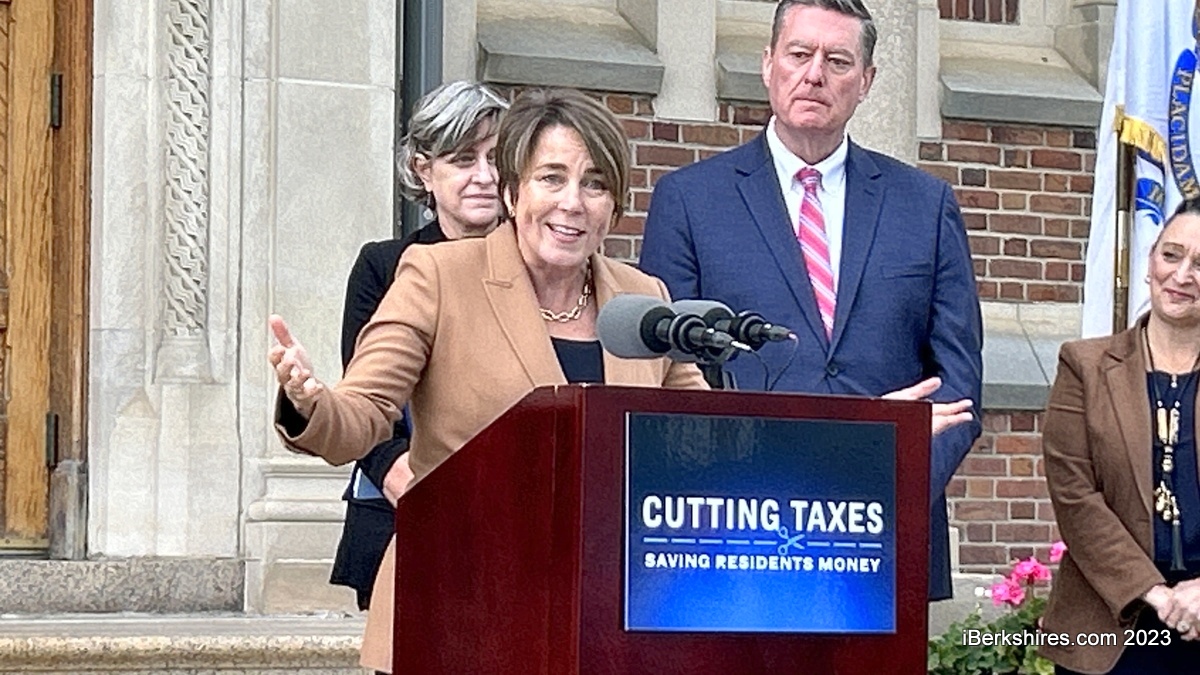
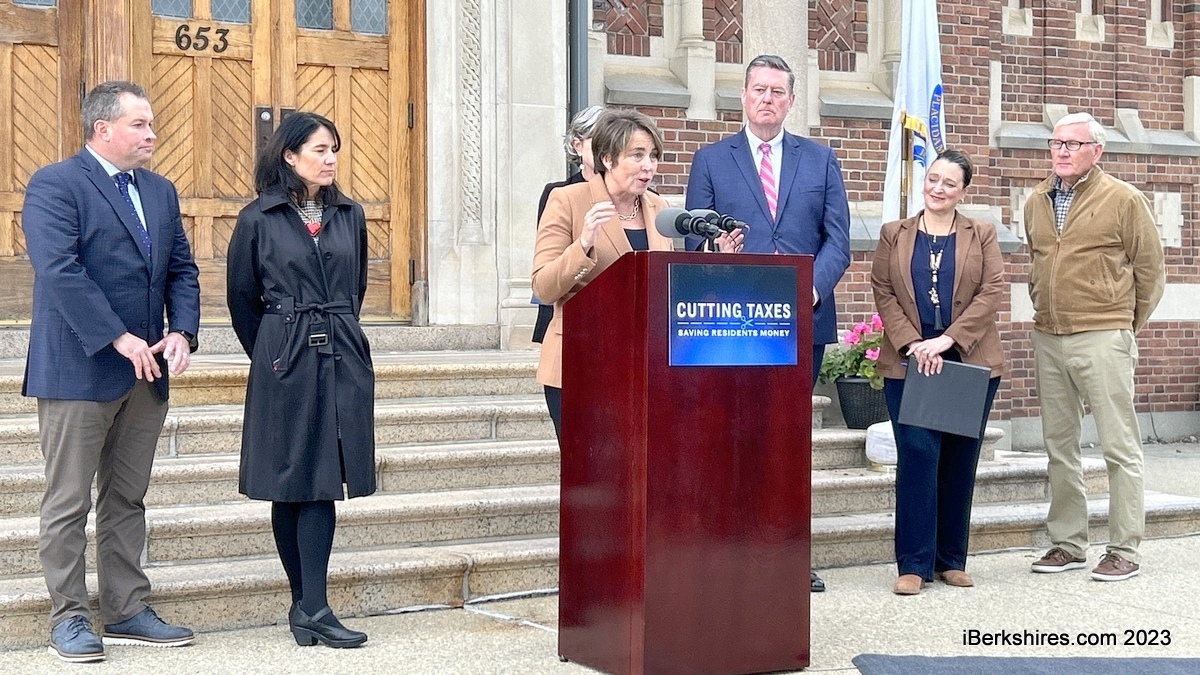
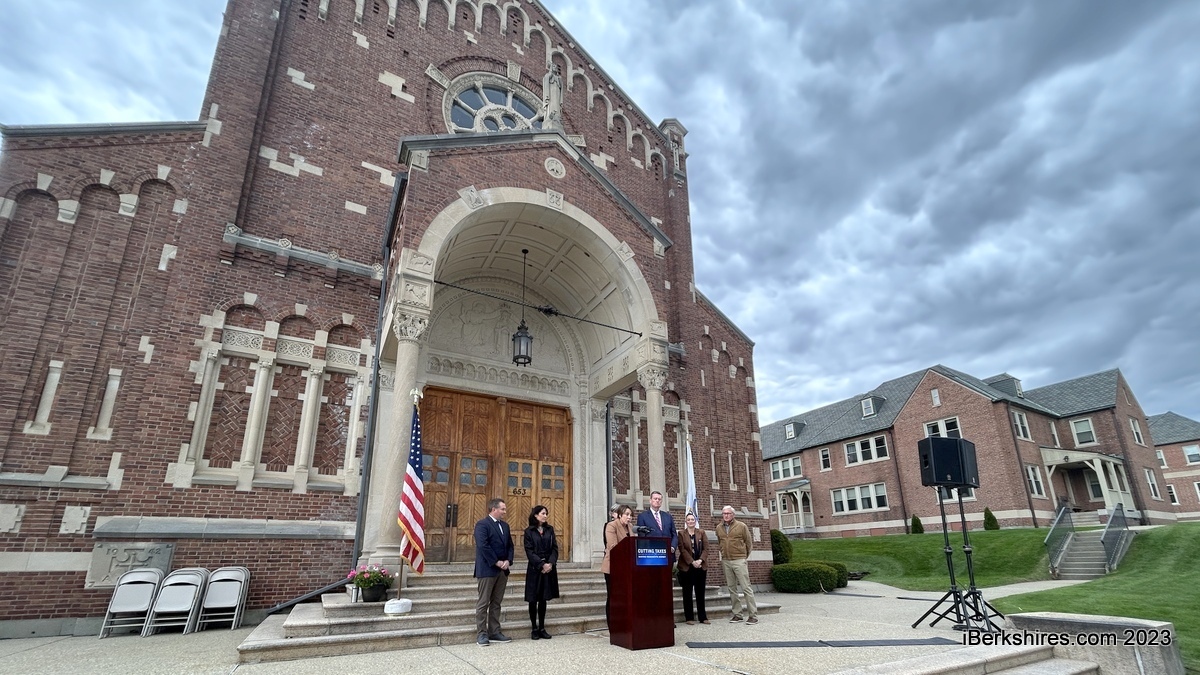
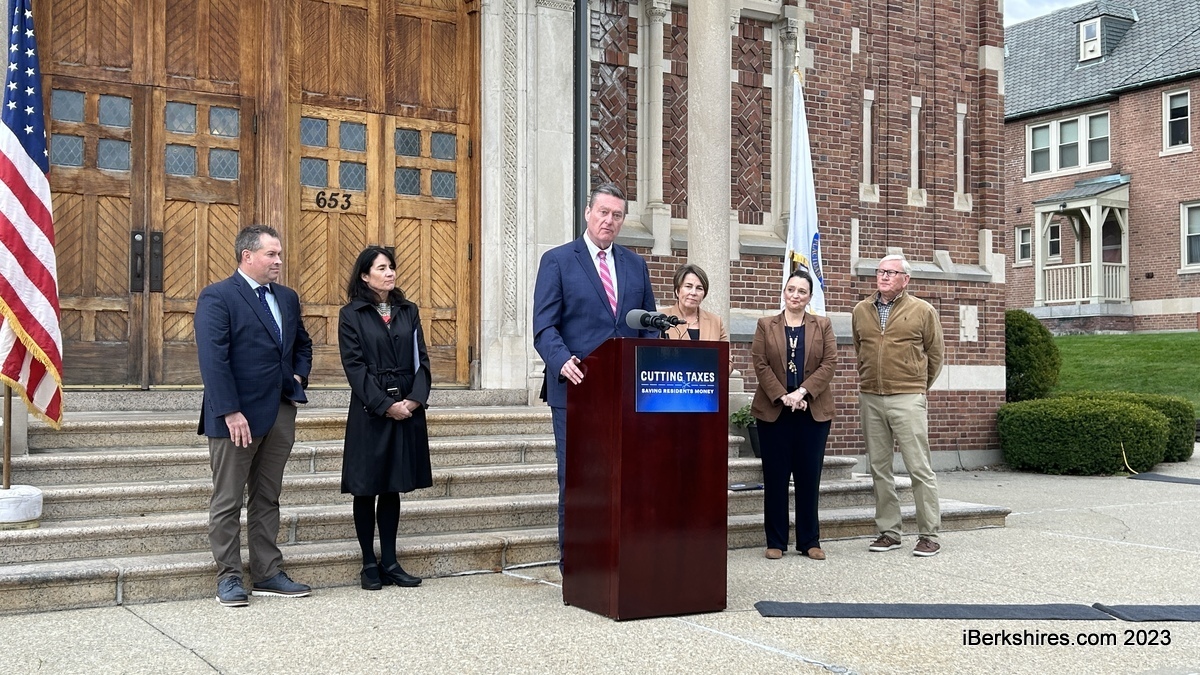
PITTSFIELD, Mass. — Gov. Maura Healey touted her administration's fight against the housing crisis at the Morningstar Apartments on Wednesday.
"As you know, housing costs are maybe our greatest challenge in the state. It's an issue no matter where I go, certainly here and in Northern Berkshire County, but honestly, across the entire state it's housing," she said on the steps of the converted church.
"And whether you're looking at the vacancy rates, which right now I think are among the lowest in the country, or home sales here in Massachusetts, which are the 13-year low, the vital signs are not very good for where we are in terms of housing here in the state and population has outpaced what is available in terms of housing.
That morning, the administration announced the Affordable Homes Act, a $4 billion plan to jumpstart the production of homes and make housing more affordable in the state. The package combines spending, policy, and programmatic actions.
Housing & Livable Communities Secretary Edward Augustus reported that this is the most significant housing legislation proposed in 50 years. Along with the creation of housing, it aims to address the root causes of housing unaffordability and make progress on the state's climate goals.
Combined with the $1 billion tax relief package signed by Healey early this month, the act is expected to create 12,000 homes for middle-income households, rehabilitate 12,000 homes for low-income households, support more than 11,000 moderate-income households, and fund accessibility improvements for 4,500 homes.
Mayor Linda Tyer said Pittsfield was proud to be the first community in the state to have a designated Housing Development Incentive Program zone. The HDIP provides two tax incentives to developers to undertake new construction or substantial rehabilitation of properties for lease or sale as multi-unit market-rate residential housing and the annual cap was increased from $10 million to $57 million in the tax package.
Tyer said gateway cities like Pittsfield rely on these state aid programs to support developments like the Morningstar Apartments, which were built in the former St. Mary's church and outbuildings on Tyler Street by developer David Carver.
HDIP has also allowed vacant commercial spaces on the upper floors of downtown buildings to be converted into new rental apartments, which Tyer said has brought in new residents who stimulate economic growth.
"When I first took office in 2016, saving St. Mary's was a top priority," she explained.
"For those of you who might remember the history, St. Mary's was on the verge of becoming a Dunkin Donuts but I could not stand by and neither could the neighbors, and neither could other community members stand by and let this beautiful historic property be lost. I knew that there was so much more potential but I needed an experienced developer, a partner someone who shared a passion for neighborhoods, for history, and for architecture. I knew just who to call."
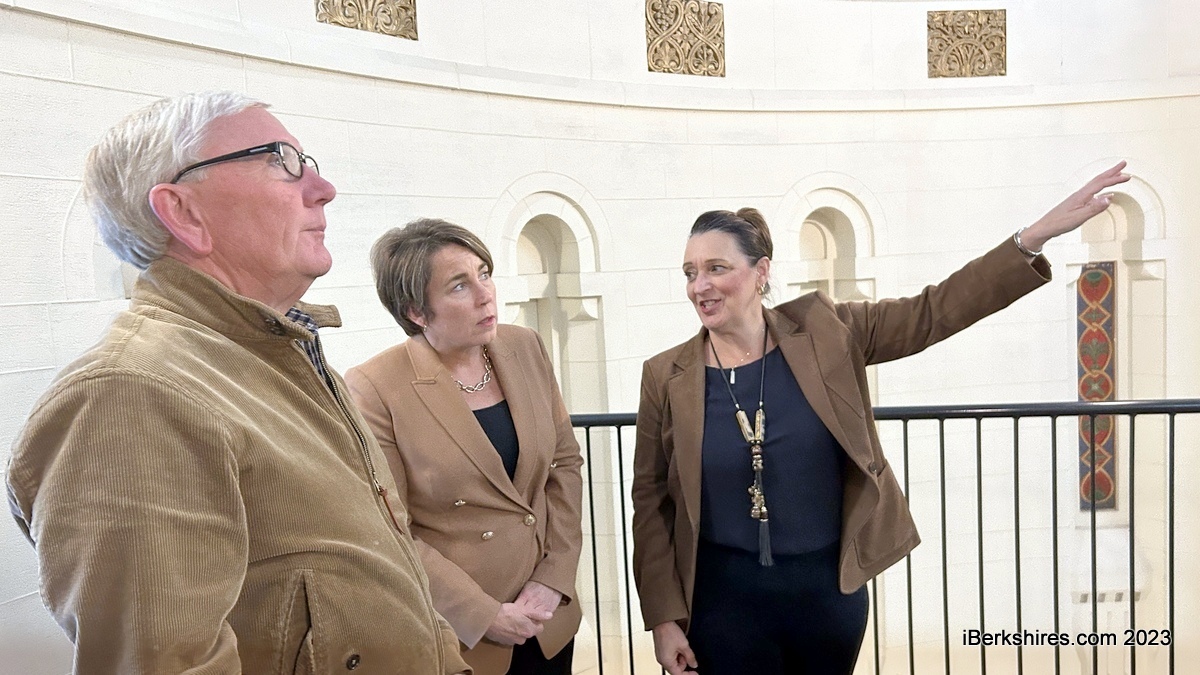
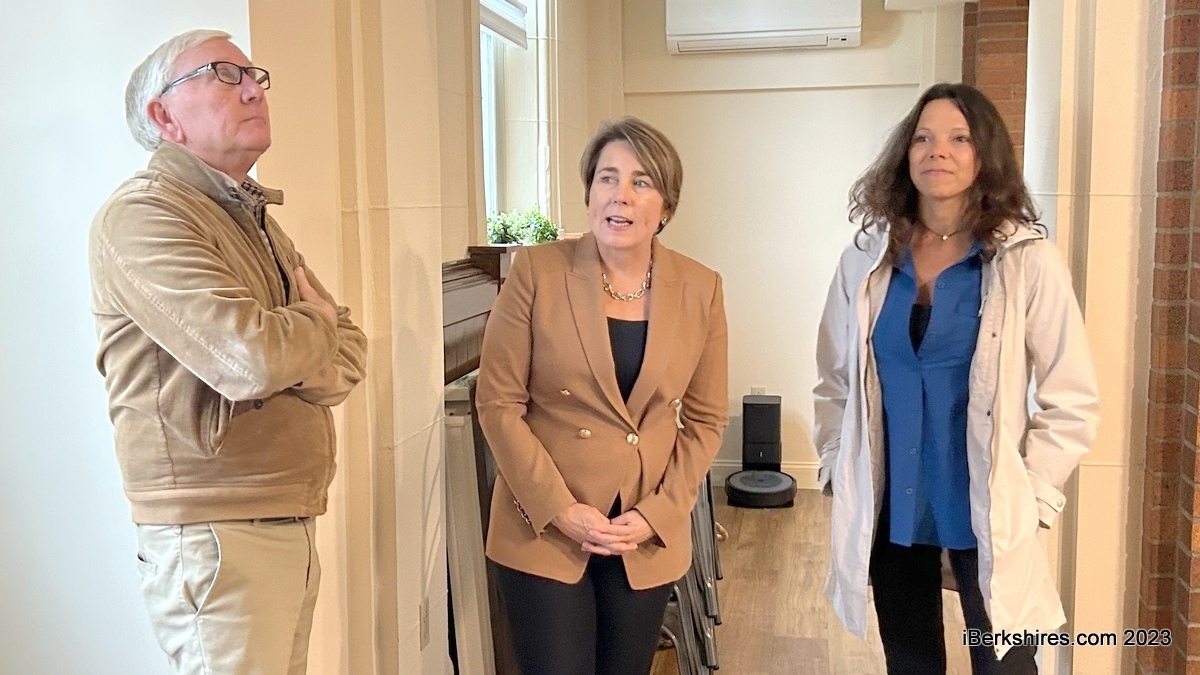
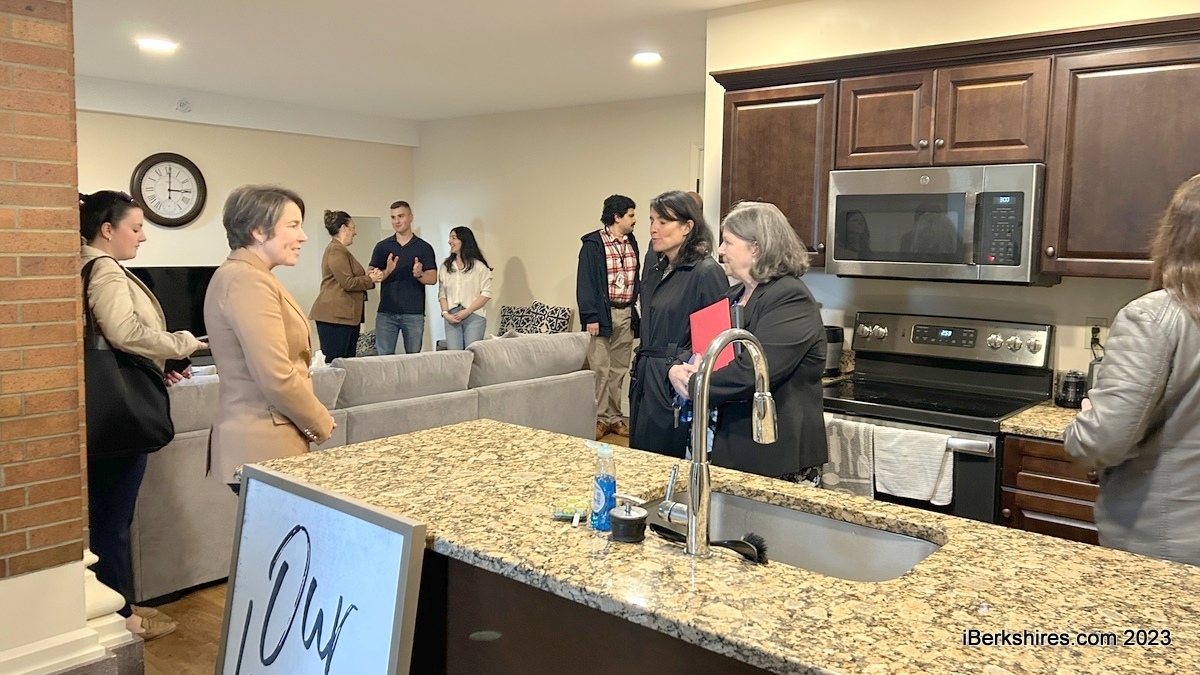
Healey joked that there are places to build a Dunkin Donuts and there are places for beautiful housing such as the Morningstar Apartments. The administration took a tour of the main apartment building that was converted from the parish.
"Anyone who thinks for a minute that historic preservation and housing access, housing production are opposing forces just needs to come here and see what's possible," she said.
Within the Affordable Homes Act, $1.6 billion would be allocated for the repair, rehabilitation, and modernization of more than 43,000 public housing units in the state, including $150 million to begin decarbonizing public housing through the installation of heat pumps and electric appliances.
Another $200 million would go toward the Housing Innovations Fund to support alternative forms of rental housing for people experiencing homelessness, housing for seniors and veterans, and transitional units for persons recovering from substance abuse.
The policy initiatives include a local option of adopting a real estate transaction fee of 0.5 percent to 2 percent on the portion of a property sale over $1 million and an option for homeowners to build an accessory dwelling unit on their property.
Another $1.83 billion would go toward housing production and preservation, supporting a variety of trust and stabilization funds as well as programs.
Healey pointed out that the act includes tremendous capital authorizations for 18 different housing programs; some of these are existing programs and some of these are new, innovative programs.
Augustus said this was an audacious move to address one of the most significant challenges in the commonwealth.
"We know the challenges you face here in many ways are similar to the rest of the state but you have some unique struggles also. Despite the relatively lower cost of rents and cost of purchasing homes here, the cost to build here is exactly the same as everywhere else and that makes the challenge even more daunting," he said.
"As a former city manager of a gateway city, I understand how important housing growth is. In Worcester, we needed both market-rate housing and affordable housing to revitalize neighborhoods to provide people with safe, attractive, affordable places to live."
He said the increase in funding for HDIP will do this for gateway cities, explaining that adding more housing keeps the prices under control and helps drive the local economy by putting more people in downtowns and neighborhoods where they can support small businesses.
"What we saw today is a testament to the types of creative housing solutions that are made possible with this program," he said.
Augustus pointed out that there are 28 policy changes laid out in the act that give communities the tools they need to create more housing where they need to.
Pittsfield's Director of Community Development Justine Dodds said housing is what builds community.
Along with limited inventory and skyrocketed prices, the city struggles with an aging housing stock. Some 43 percent of homes were built before 1939 and 83 percent before 1978 in contrast to the state average of 71 percent.
"This makes the preservation of the housing we have one of our most important strategies for creating more affordable housing opportunities," Dodds said. "And it has been a focus of the Community Development Department for the last 30 years."
Berkshire Housing President Eileen Peltier said the act is another "exciting reason for hope" after the tax bill.
"Unfortunately, with the tough economic times of today and so few homes available, too many of our neighbors here and across the commonwealth are struggling to maintain basic needs like food and shelter," she said. "As a housing provider, I know all too well that too many deserving families are waiting for their name to come up to the top of the list for an apartment or waiting for a voucher. Those fortunate enough to receive a voucher are faced with an effectively 0 percent vacancy rate."
Healey said this act does a lot more for particularly vulnerable populations including those who are experiencing homelessness, housing insecurity, people with disabilities, and veterans.
Augustus explained that authorizations will directly support those experiencing homelessness: funding for single-room occupancies and unique housing situations and funding for supportive housing units.
"From the perspective of both the business community and also speaking as the regional economic development organization for the Berkshires, we can confidently say that the housing crisis is our number one current economic challenge," President and CEO of 1Berkshire Jonathan Butler said.
"Homelessness and housing insecurity continue to jeopardize people's ability to enter the workforce and take back control of their lives. A shortage of desirable affordable housing continues to plague all sub-regions of the Berkshires from North Adams to Pittsfield to Great Barrington and with the average sale price of a home in the Berkshires having increased by nearly 80 percent over the past three years, we are now also faced with a significant shortage of market-rate housing inventory that is pricing out our existing population, limiting our ability to attract new residents and professionals to the region, and creating even more downward market pressure on our most economically distressed populations."
He said the initiatives from the administration will provide key resources to rehab existing housing stock, increase the quality of affordable housing, and potentially move more market-rate developments forward through the HDIP program, which he would love to see expanded across the county through a similar program.
Healey's administration began the day in Chelsea with an announcement of the act, traveled to MGM Springfield in the afternoon, and Lt. Gov. Kim Driscoll was to attend the Gateway Arts' 50th Anniversary Celebration in Boston in the evening.