North Adams Airport to Look into Reported Low-Flying Aircraft
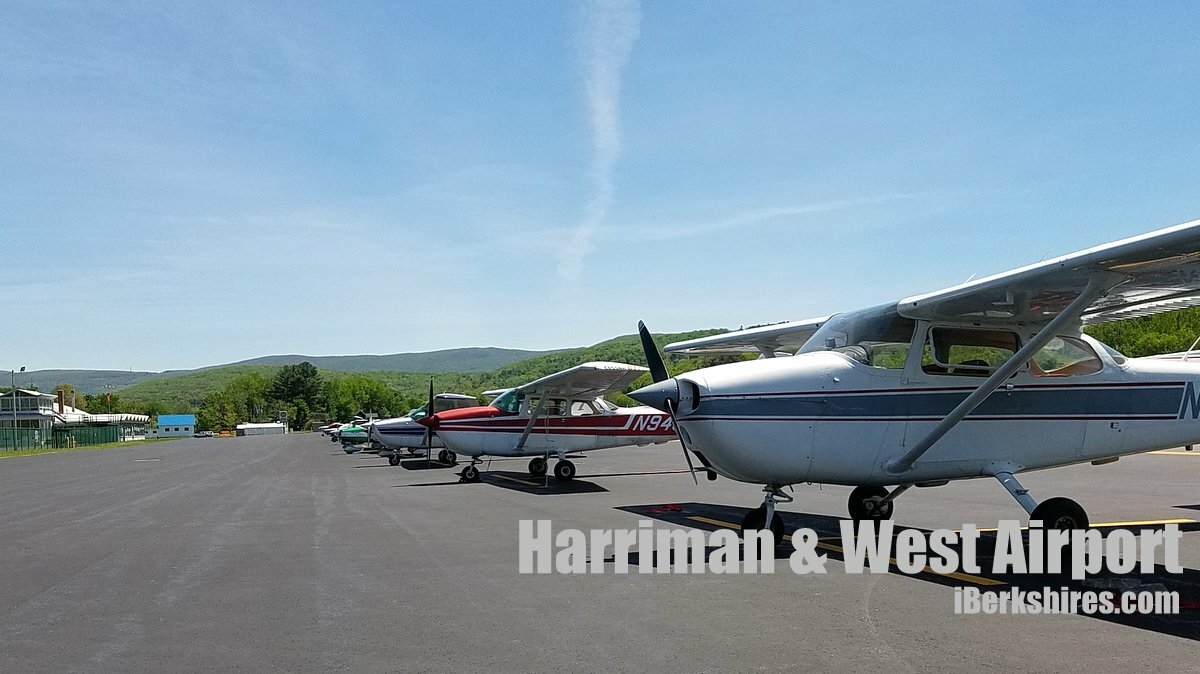
NORTH ADAMS, Mass. — The Airport Commission heard from a resident who lives east of the airport who had concerns about an uptick in low-flying aircraft.
The airport's engineer, Peter Enzien of Stantec, suspected that the planes were flying lower because the airport recently underwent some obstacle removal and cut some large trees impeding the proper landing at runway 29.
He said with obstacles removed, planes are simply landing properly now.
"If the trees were there before, it was an obstruction, so the planes had to land a little bit longer or higher as they approach," he told the commission on Tuesday. "They can now come in a little bit lower based on where they will land on the runway. They aren't doing anything they shouldn't be doing. Just now the tree isn't there. Now they have more room which is why we did the tree-clearing project, to make a safer landing for the pilot."
He said the approach is determined from a threshold placed on the runway that was determined in 2010. This threshold has not changed but the height of the trees surrounding the runway has. This means in order to maintain the correct slope for landing, the trees needed to be cut.
"We had to cut the trees that had grown back so that we have a clear approach," he said. "Nothing changed it was the cutting of the trees that were in the original protected surface. Pilots are trained to hit threshold markings when they are landing so you can't tell someone not to hit the marks."
A resident from the neighborhood understood that the pilots were likely doing nothing wrong but said she felt the planes were too low and at times frightening, disrupting life and causing a safety concern.
Enzien said he understood the neighborhood's concern but noted that planes are probably not as close as they look and it is a trick of perspective.
"I think it is a different perspective when you are sitting there looking up at them when you are next to a tree or house. Looking up they do seem quite a bit closer than they are," he said. "Once you get out and are watching an aircraft land, there is a big separation. But every approach is a little different. Everyone comes in a little different."
The resident said she wished the commissioners could witness a fly over and hopes to be a be able to film a plane for an upcoming meeting.
Enzien said there may be some remedies to help notify pilots. He said there is a note on the AirNav website noting there is a neighborhood near the approach that was recently added. He said they can consider different lighting and visual instruments to warn pilots.
He said the FAA would likely not favor moving the thresholds and added that he would bring materials to the next meeting to better explain the approach as well as possible options.
In other business, Enzien said the northeast hangar project is still moving along with the new large door completely installed and awaiting electricity.
"Once there is power to the door they can get it operating and make needed adjustments," he said.
He said electric work has begun and will take about three weeks. This work includes new outlets and lighting.
The commission also approved the airport's Yearly Operational Plan. The plan, which goes out five years, outlines how the airport will manage vegetation.
"The plan outlines the on and off airport vegetation maintenance, and the techniques employed if clearing vegetation," Enzien said.
The plan will now go before the North Adams and Williamstown conservation commissions.
Tags: airport commission,