Dalton Trucking Business Requests More Hours
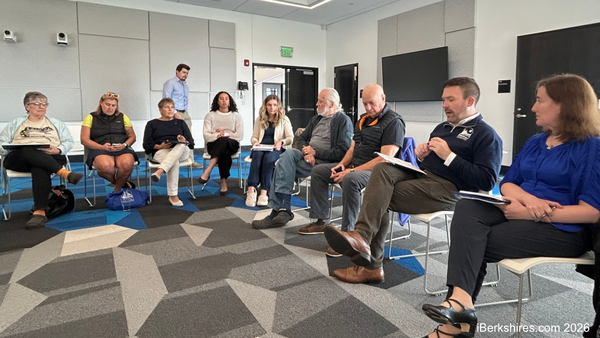
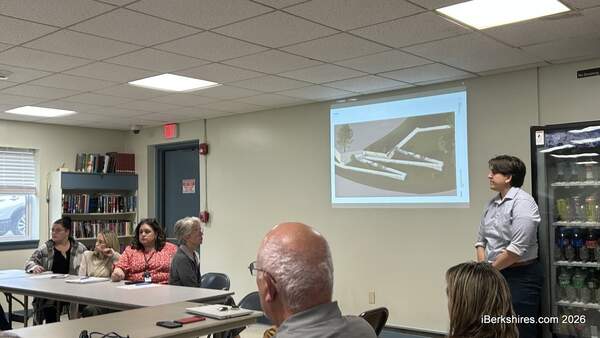
DALTON, Mass. — Residents and community members from surrounding areas filled the Callahan Meeting Room at the Town Hall last Wednesday to discuss the future of Ray Robert Excavation & Trucking.
The excavation and trucking company has requested a new special permit to improve clarity and extend its operating and crushing hours.
The board approved a 90-day extension for Robert's current special permit so that the work surrounding the new special permit request does not interfere with the excavation and trucking company's current operations.
Robert's current special permit allows his business to continue the manufacturing use as long as he abides by the lengthy conditions regarding hours of operations, noise limitations, environmental stipulations and boundary specifications.
The new special permit would grant heavy industrial use in the Planned Industrial Development district and have a compliance review every three years.
The Schnopp family requested that the new permit not be granted and that the business maintain the requirements of the current permit and to review compliance every year rather than every three years.
Taking up a majority of the conversation was the request to increase Saturday's hours of operation, including earthen materials processing operations, i.e, screening, separating, and crushing, from 8 a.m. until 1 p.m. to 7 a.m. until 4 p.m.
A majority of the noise complaints stemmed from the building of a wall, a portion of which was delayed due to the pandemic, and legal issues surrounding the location of a portion of the wall, and finances stemmed from the legal issues, Robert's attorney John McLaughlin said.
A portion of the wall had to be dismantled, moved, and now needs to be rebuilt in its original location due to survey mistakes.
Some residents who abut the excavation and trucking company expressed that since the construction of the wall noise and dust concerns have greatly decreased.
"I hear such minimal noise while Ray works in the back, often it seems he is not even there working. Also, the dust is kept down with the planting of trees that he has completed. As far as I am concerned, Ray has done a good job by creating this barrier," resident Vinny Bahl said.
Others, including the Schnopps, said they can still hear the work happening and have concerns surrounding extending the hours.
McLaughlin said it can be hard to differentiate where the noise is coming from due to there being multiple businesses on the property, including trucking and an automobile company
Robert said these extended hours will allow him to better serve his customers because in the past he had to turn them away and refer them to other businesses in the area.
"I see my customers at another business right down the road, right up on Division Road at Dr. Lahey's Garden on Saturday afternoon at 2:30 getting loaded with topsoil and I can't toad that customer. That's a little that hurts," Robert said.
"Then I see them at Whitney's up the road and I have to send them there. I send my customers there because I can't load them and that's not really American to me."
McLaughlin also noted that when the residents purchased their property they knew it was an industrial district and is still in industrial use, which is reflected in the price of their homes.
Cathy and Greg Schnopp's attorney Alexandra Glover said her clients are not against Robert running his business. They just want him to work within the time restraints set by the current permit in an effort to protect the neighborhood in "the minimal way."
"Other permits that this board has issued have been very strict and frankly much stricter about hours," Glover said.
Although opinions on whether to approve these increases were mixed, a majority of people in attendance agreed that the term "maintenance" needs to be better defined.
Robert wanted to clarify what work he is allowed to do after hours. McLaughlin noted that he should be allowed to do repairs and maintenance after hours.
Neighbors want the permit to stipulate that maintenance on the property after hours prohibits the use of heavy machinery, except in cases where plowing is needed in the winter.
The board will continue this public hearing and make a decision during its next meeting on Nov. 15 at 7 p.m. in the Callahan Meeting Room at Town Hall.
Background:
The board determined last January, following site visits by the town's building commissioner/zoning enforcement officer, that the local trucking company was in compliance with its special permit despite complaints from the Schnopps, who are located adjacent to the business.
There were also multiple noise complaints from other neighbors about work being done outside the allotted hours which seemed to have been resolved when the board clarified the terms of the special permit with Robert.
During the January meeting, the board clarified that the stipulation to cease "all operations" after business hours included "every work-related activity on the property, whether loading or unloading a truck, moving piles, use of heavy equipment, or other assorted tasks related to the operation of the manufacturing use," the notice of decision stated.
It noted, however, that the current permit allows "for work-related vehicles to enter the property after hours, but only to park the vehicles."
The vehicles have to wait to be loaded or unloaded until the following day when business hours resume.
Tags: noise, special permit,