Berkshire Immigrant Center Welcomes Three New Members
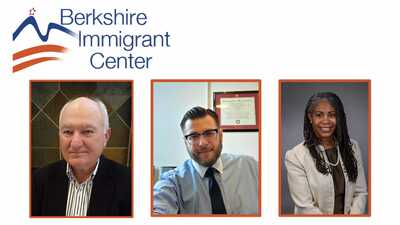 |
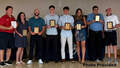
PITTSFIELD, Mass.—The Berkshire Immigrant Center (BIC) welcomes three new members to its Board of Directors: Roberta McCulloch-Dews, David Russell and Joseph Zlatnik.
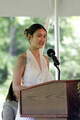
Roberta McCulloch-Dews is Vice President of Marketing at Greylock Federal Credit Union. Born in Kingston, Jamaica, Roberta immigrated to the US when she was two years old. Growing up in the Bronx, Roberta observed – and took to heart – her family's strong work ethic, commitment to education, and service. A communications professional with more than 20 years of experience, Roberta began her career as a newspaper journalist, and later transitioned to marketing communications and public relations. Roberta serves as a Trustee on the board for the Norman Rockwell Museum and is also on the board for the Girl Scouts of Central and Western Massachusetts, and the Samuel Harrison Society. She is
also a youth mentor with the Rites of Passage Empowerment Program (R.O.P.E.). Roberta graduated from New York University (NYU) with a bachelor's degree in print journalism and earned a master's degree in social and public policy from SUNY Empire. Roberta and her husband, Warren Dews, Jr., have three children, Warren III, West, and Kennedy.
David Russell of Dalton was born and raised in the Midwestern US. David served in the US Air Force, including attendance at the AF Academy. He graduated from Michigan State University with a Bachelor of Science degree in Civil Engineering. His career included nearly 30 years with Procter & Gamble as a Project Manager and Program Manager, three years managing a sizeable portion of the project portfolio at Yale University as a Director, and multiple years consulting in the field of project management. David served as the President and Chair of the Board for the Southwest Ohio Chapter of the Project Management Institute (PMI) and was active with PMI until his retirement. He currently serves on the Finance Committee for his church and is the Chair of the Facilities Committee for Barrington Stage
Company. David and his wife, Debra Miersma, enjoy travelling abroad and developing an appreciation for cultural differences. David has two children and five grandchildren, all living in Cincinnati, Ohio.
Joseph Zlatnik was born in Kiev, Ukraine, and immigrated to the US 1989. He was raised in Queens, New York. Joseph's childhood experiences with immigration left an indelible mark on him, and motivated his desire to join the board of BIC. He received his Bachelor's Degree in Legal Studies from the John Jay College of Criminal Justice, and his Juris Doctorate from Boston University School of Law. He moved to Berkshire County in 2011 to join family who had moved to the area, and to work at the Berkshire District Attorney's Office. Subsequently, Joseph worked as an associate attorney at Hochberg Law Offices inPittsfield. Joseph currently operates his own private law practice in Pittsfield, and is a member of the Board of Directors of the Berkshire Bar Advocates, an agency responsible for providing public criminal
defense services to indigent defendants in Berkshire County Courts. Joseph is thrilled to join the Board of Directors of the Berkshire Immigrant Center to assist in furthering its goals of aiding the immigrant constituents of Berkshire County.
Since 1997 BIC has been dedicated solely to serving the unique needs of local immigrants. BIC became an independent nonprofit in 2021 after 25 years of fiscal sponsorship. BIC is a 501(c)(3) charitable organization and a proud member agency of the Williamstown Community Chest, with additional support from foundations and organizations including the Barr Foundation and the Jewish Women's Foundation of the Berkshires, and from individuals and local businesses.