Composting Company Talks Bettering Municipal Waste at BEAT's Green Drinks
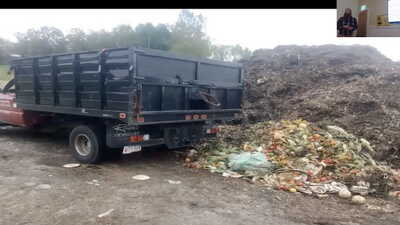 |
| A screenshot from the presentation. |
WILLIAMSTOWN, Mass. — Is composting the answer to municipal waste? John Pitroff of Second Chance Composting believes so.
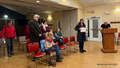
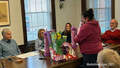
Earlier this month, community members dove into the world of composting during an event hosted by the Berkshire Environmental Action Teams' Berkshire Green Drinks, which brings in a guest speaker on the second Wednesday of each month. The hybrid presentation was given at The Barn of the Williams Inn with a virtual option.
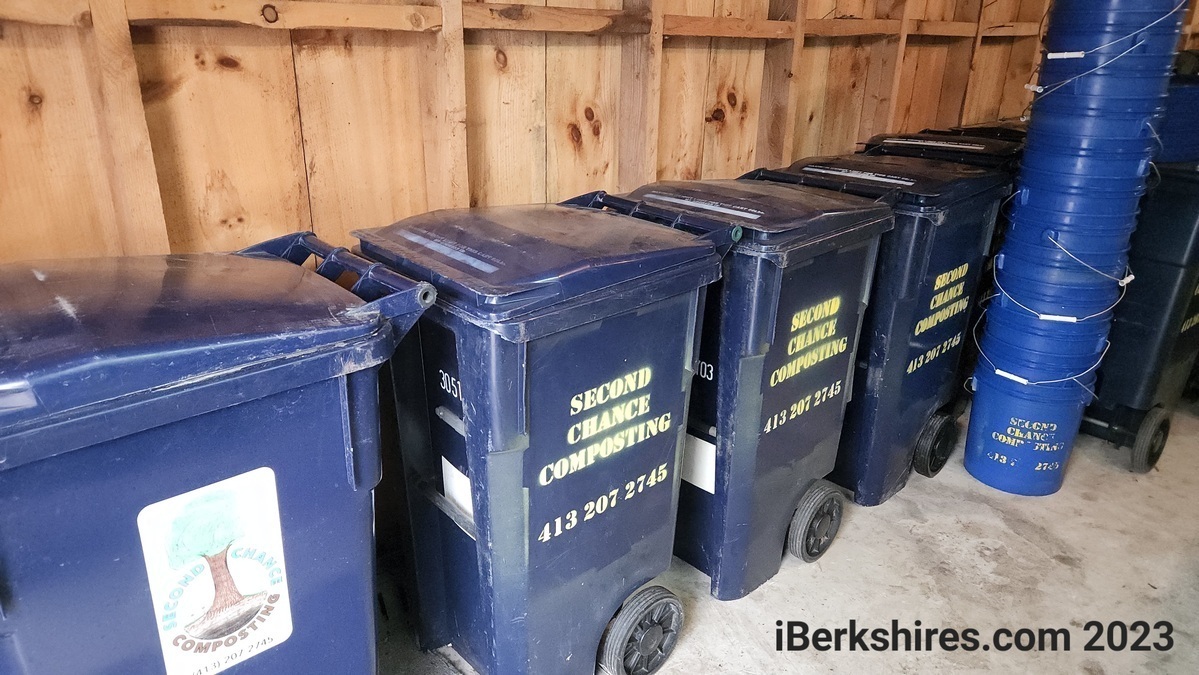
Second Chance Composting picks up food scraps and other organic matter and processes it into compost, covering the Berkshires and parts of Southern Vermont. The company has a facility in Stamford, Vt. that is certified through the state's Agency of Natural Resources and a main facility in Cheshire that is certified through the Massachusetts Department of Environmental Protection and the town's board of health.
Pitroff reported that 3,000 to 6,000 pounds of material are moved per week. In 16 months, his company has diverted over 370,000 pounds of material from the landfill.
"The U.S. Composting Council defines compost as the product manufactured through the controlled aerobic biological decomposition of biodegradable materials," he explained. "Aerobic just means air. It needs air to break down properly and in the systems that are used to create compost, it's done in a controlled manner. I mean compost happens in nature as well but the way we do it is controlled."
Second Chance offers a residential community composting program with drop-off locations in North County and soon in Pittsfield as well as commercial composting that is picked up weekly. This is done in totes and is said to be no less work than typical garbage disposal — just different.
Since founding the business a couple of years ago, Pitroff has also worked to spread awareness about composting through community events.
To put it simply, he explained that "You can compost anything that was alive." This includes organic matter, animal mortalities from farms, paper and some cardboard, certified compostable materials, and even human bodies (though the company does not compost them).
On the commercial level, the company composts all food scraps and certified compostable material through large piles that are hot enough to break everything down in the proper amount of time. Residentially, it is recommended to leave out meat and possibly dairy products due to the smaller size of the pile.
"At the residential level, we only take food and food scraps. We don't take anything else from people's homes," Pitroff clarified.
"So if it's a food it goes in there. If it's not, it doesn't. Everybody eats, everybody knows what food is so we try to keep that very simple. Therefore, you don't even need to have any knowledge about composting whatsoever to work with a company or to start really."
More than 50 percent of waste from a home is compostable, 65 to 75 percent of municipal solid waste is compostable, and 60 to 80 percent of restaurant waste is compostable.
Pitroff pointed to efficiency and environmental concerns with trash hauling, as local garbage is sent to a landfill near the Canadian border in New York. According to the U.S. Environmental Protection Agency, food is the largest category of material placed in landfills, which he called "pretty tragic."
"Our local garbage has to try to travel all the way to a landfill near the Canadian border in New York, which is 354 miles round trip or six hours and 42 minutes so that travel costs a lot," he said.
"We were talking earlier about trucking cost, fuel manpower, energy, and time, and who ends up paying for that? The customer pays for that so we can keep expenses down because everything is local here. Everything stays local comes here and goes back out local."
Composting also puts resources back into the local soil that contributes to the ecosystem, making more high-quality soil, cutting down on plant disease, and increasing water retention capacity.
But for Pitroff, it goes deeper than that. For him, it is also about a way of living that contributes to a better future.
"This is a little bit more of a spiritual idea of why we're doing what we do. We've been given a lot in our lives and we want to share that love that we've been given with other people and we feel like when you plant things into good soil, good things come of that," he said.
"You can't plant into bad things and good things out of it so the soil that we have both on a real level and kind of like a symbolic level is important. It's not just about food scraps and wood chips and leaves, it's a way of thinking and living. It's about believing in the future. We wouldn't do all the hard work we do if we didn't actually believe that this is something that's going to mean something in the future."
The presentation was well received by attendees, some of whom asked additional questions about the process such as "What do I do in the winter?"
Composting can be done in cold weather, Pitroff explained, as long as temperature is monitored.
"Composting happens year-round," he said. "If your pile is big enough, it's going to be warm enough to break down properly so we still operate all year. The piles will not be as hot as in the summer but when you open our piles up in the winter, it's just steam everywhere."
Pitroff was the 2023 Massachusetts Recycle Award winner, is a 2022 Graduate of the Vermont Compost Operators certificate program, and is an alternate Adams commissioner for the North Berkshire Solid Waste Management District.
The full presentation can be found on YouTube.
Tags: BEAT, recycling,