Pittsfield Historical Commission to Weigh In on Wahconah Park
PITTSFIELD, Mass. — The city's Historical Commission will take on a conversation about Wahconah Park following an ask from the state Historical Commission to preserve its original structure.
Last week, it was announced that the Massachusetts Historical Commission "encourages consideration of project alternatives that would preserve the historic grandstand." ?
"I think that they perhaps didn't have enough context and the ability to really absorb the feasibility study, which is a very large document which detailed in a really robust way a lot of the structural issues that have been spoken about and how we've arrived at this alternative and sort of all the historical context we're trying to bring to this new design," Park, Open Space, and Natural Resource Program Manager James McGrath told the commission on Monday.
"So we're really looking to have a more thoughtful conversation with them around the whole full context of this project."
Planners were taken aback by the correspondence, as a raised and elevated option had been endorsed months ago, and Epsilon Associates was hired to guide these conversations.
"I think it's unreasonable to expect that the grandstand is going to be kept in any way," Commissioner Matthew Herzberg said. "For me, I mean, looking at this and knowing it as I do, that seems like a non-starter."
Though Herzberg did have criticisms of the $26.3 million design, such as its brick exterior and the pedestrian way from Wahconah Street that requires patrons to cross vehicular access.
"I questioned why brick is being used here and certainly being used in the volume that it is," he said.
"And I have nothing against brick in and of itself but this community doesn't necessarily have a strong brick-making tradition. This isn't Georgia. It's not Maryland. What we do have here is a history of wooden, steel grandstands."
Architect Salvatore Canciello explained that when the committee first had discussions about building materials, there was a preference for brick because felt it evoked the nostalgia for baseball that would last the next 100 years.
Steve Fellmeth, also of the design team, explained that it was also thought to be the northern anchor of the downtown and bring in brick elements from North Street.
The two gave a presentation of the process that led to the present day, outlining the history, conditions, and future vision for the park.
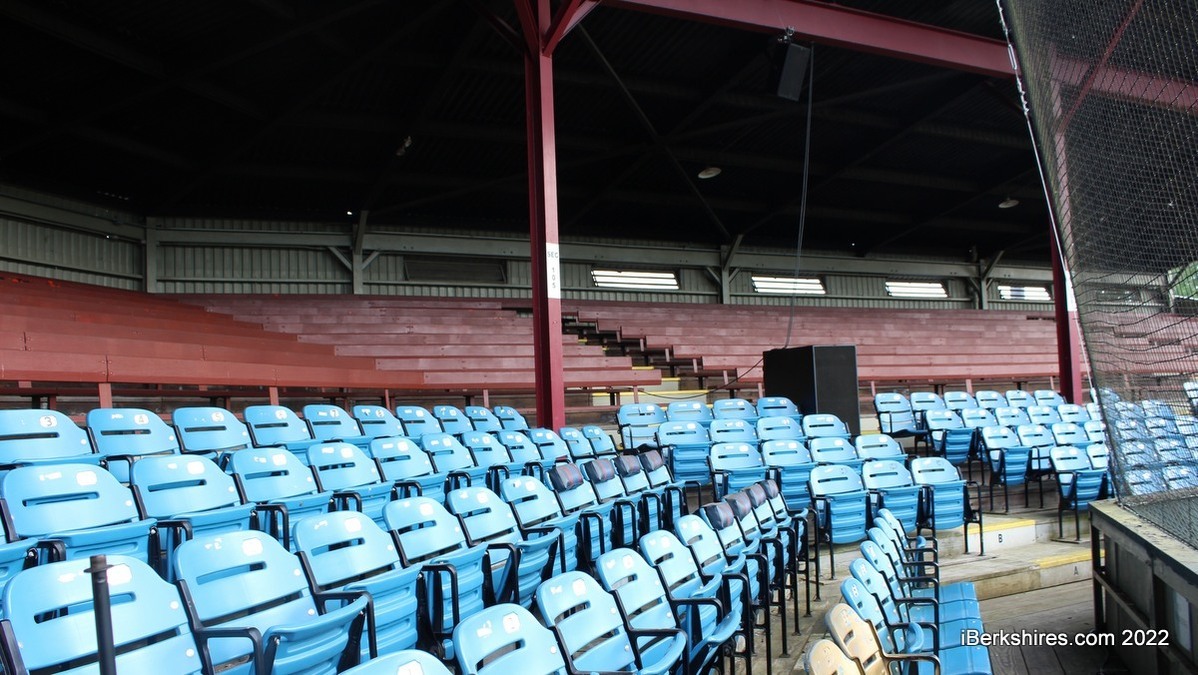
The current grandstand was constructed in the 1950s and was the fourth iteration. It has been condemned due to safety and structural issues, with asbestos in the metal panel cladding and roof and the steel needing remediation and repair.
The ballpark is not fully accessible and the press box and restroom do not meet the current code. Additionally, the existing interior program space is located within the flood plain. ‘
Canciello said as they looked at the renovation option, it really became clear that it was very difficult to do.
The team wants to replace the grandstands within the current footprint, reusing the current deep foundations and rebuilding it in the same configuration but adjusted slightly to meet the code and allow for more of a market use of the grandstand.
"One of the things that was talked about through that feasibility study and in the historic register is that really the environment created around the game and then nostalgia for the experience under the roof and in the bleachers was really considered by most of the people we've talked to during the process from the community as the important historic element of the project," he said.
"And something we wanted to kind of maintain or reestablish the best we could is really celebrating that nostalgia moving ahead."
The city has a preservation restriction on the building, meaning that the building and the site are on the National Register of Historic Places and the Mass Historical Commission's involvement comes into play when there are state permits needed for the project.
McGrath said a statement of support from the local commission might be of assistance. The panel agreed to have the conversation at a later meeting.
Tags: Wahconah Park,