FEMA Awards Funds to Massachusetts for COVID School Testing Costs

Print Story | Email Story
BOSTON — The Federal Emergency Management Agency will be sending more than $64 million to the Commonwealth of Massachusetts to reimburse it for the cost of contracting to provide testing services in public schools during the COVID-19 pandemic.
 
The $64,144,440 Public Assistance grant will reimburse the Massachusetts Executive Office of Health and Human Services for the cost of contracting to provide testing at schools and in public buildings in surrounding communities between February 2021 and June 2022.
 
The contractor provided services which included operations and logistics of pooled testing, training, software, and technical assistance to school personnel.
 
The contractor also provided transportation for a total of 907,829 COVID-19 test specimens from approximately 2,400 public schools across the Commonwealth of Massachusetts to the laboratory for analysis.
 
"FEMA is pleased to be able to assist Massachusetts with these costs," said FEMA Region 1 Regional Administrator Lori Ehrlich. "Reimbursing state, county, and municipal governments – as well as eligible non-profits and tribal entities – for the costs incurred during the COVID-19 pandemic is an important part of our nation's ongoing recovery."
 
FEMA's Public Assistance program is an essential source of funding for states and communities recovering from a federally declared disaster or emergency.
 
So far, FEMA has provided more than $2.7 billion in Public Assistance grants to Massachusetts to reimburse the commonwealth for pandemic-related expenses.
 

Tags: FEMA,   
If you would like to contribute information on this article, contact us at info@iberkshires.com.

Pittsfield Rolls Out Reassignments for Morningside Students Next Year

By Brittany PolitoiBerkshires Staff

PITTSFIELD, Mass. — As it prepares to retire Morningside Community School, the Pittsfield Public Schools recommends sending cohorts of its students to other elementaries rather than redrawing attendance boundaries. 

A public hearing was held at the school on Tuesday so that community members could comment on three different options for Morningside students next year: 

  • Option 1: Adjusts some attendance zones, including moving a portion of the Allendale Elementary School neighborhood to Williams Elementary School for transportation efficiency. 
  • Option 2: A larger district-wide redistricting model that would affect multiple schools. 
  • Option 3: Reassigns students currently attending Morningside to receiving schools without changing attendance zones for other elementary schools. 

Interim Superintendent Latifah Phillips explained that option three is recommended because it prioritizes keeping cohorts of Morningside students together while minimizing broader boundary changes during the first phase of elementary redistricting. 

Allendale, Capeless, Egremont, and Williams elementary schools have been identified to welcome Morningside students in the fall. 

"And I say first phase because as many are aware, we're in the process of the West Side School construction project, and moving forward, we currently are in a feasibility study, and there will be decisions that are made regarding Crosby Elementary, Conte Community School, and Stearns Elementary School," Phillips added. 

"The district will need to revisit attendance boundaries as part of our future planning efforts, so at that time, option one or option two, or variations of those models may be considered." 

The district is seeking up to 80 percent reimbursement from the Massachusetts School Building Authority for a consolidated and combined rebuild of Crosby and Conte on West Street. 

Per district policy, a public hearing must be held any time a school building is closed or attendance boundaries are revised.  Last week, three community meetings were held at different times of the day, and the feedback received was compiled into an FAQ sheet presented on Tuesday. 

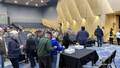
The administration worked with a redistricting consultant to develop the three possible options, which were displayed in the Morningside cafeteria for the hearing.  Data on student population trends, school capacities, population density, transportation considerations, walk and ride distances, and long-term enrollment projections informed the proposals. 

View Full Story

More Pittsfield Stories