Lanesborough Finance Chair to Resign After Budget Season

By Brittany PolitoiBerkshires Staff
Print Story | Email Story

LANESBOROUGH, Mass. — The chair of the Finance Committee is resigning as its leader and is considering leaving the panel entirely.

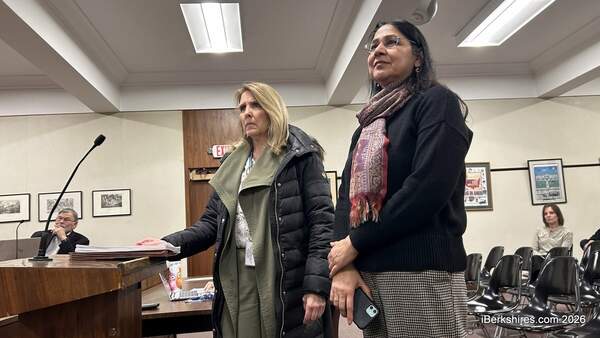
Jodi-Lee Szczepaniak-Locke announced on Monday that she will be stepping down once the fiscal 2025 budget is complete.  She told iBerkshires that her decision "most certainly" came from an attendance issue with a member of the committee not being resolved.

"I am a strong believer in following the rules as written and the bylaw was written, approved by town council, and voted on by the townspeople at some point in the past," she wrote in an email on Tuesday.

"The fact that we are now advised differently is unacceptable to me. I will serve until our most important job, the budget, is complete. I also in the meantime am considering complete resignation from the board."

Last week, she spoke to the Select Board about the issue, explaining that the committee is "essentially down to a 33 percent attendance rate."

For full transparency to Lanesborough residents, she feels it is important that they know there are elected members of the committee who are not able to be fully present and this could pose a "significant" problem throughout budget season.


One member had nine absences last year and several meetings had to be rescheduled due to not having a quorum when there was business to take care of.

The Finance Committee has five members elected on a rotating basis for three-year terms. Its main job is to make studied recommendations on all town financial matters and to prepare a budget for the annual town meeting.

Town Administrator Gina Dario pointed out that there is a provision in the bylaws that states if there are more than six unexcused absences within a consecutive 12-month period, the next step is to notify the member that they are considered to have vacated the position. In this case, the town and the committee will allow people to put in an interest form and appoint a replacement member to serve the balance of the term.

The board supported sending out a communication to anyone who meets that criteria and will follow through with Szczepaniak-Locke's request.

She announced her resignation to the committee on Monday, explaining that it will be effective as soon as the budget is voted on in May, explaining that she is "not going to desert my post through what our most important role is."

"I will be speaking with the town clerk to see when I need to notify her so that my position can be placed on the town ballot so that the townspeople can pick my replacement instead of the Select Board and the remaining members of the Finance Committee," she said.

Szczepaniak-Locke was re-elected to a three-year term in 2023, leaving two years left on her term. 


Tags: Finance Committee,   

If you would like to contribute information on this article, contact us at info@iberkshires.com.

Berkshire Towns Can Tap State Seasonal Communities Resources

BOSTON — Governor Maura Healey announced that 18 additional municipalities across Massachusetts have been designated as Seasonal Communities, opening up new tools, support and grant funding to help them manage seasonal housing pressures. 
 
Created as part of the historic Affordable Homes Act signed into law by Governor Healey in 2024, the Seasonal Communities designation was designed to recognize Massachusetts communities that experience substantial variation in seasonal employment and to create distinctive tools to address their unique housing needs. The law also established the Seasonal Communities Advisory Council (SCAC).  
 
The Affordable Homes Act identified several communities to automatically receive the designation, including:   
  • All municipalities in the counties of Dukes and Nantucket;   
  • All municipalities with over 35 percent seasonal housing units in Barnstable County; and   
  • All municipalities with more than 40 percent seasonal housing units in Berkshire County. 
  •  
To identify additional communities, the Executive Office of Housing and Livable Communities (HLC) reviewed available data, specifically focusing on cities and towns with high levels of short-term rentals and a high share of second- or vacation homes.
 
In Berkshire County, Egremont, Great Barrington, Lee, Lenox, New Marlborough, Richmond, Sandisfield, Sheffield, West Stockbridge and Williamstown have been designated. 
 
"Our seasonal communities are a vital part of Massachusetts' cultural and economic fabric, but they're also home to essential workers, families, seniors, and longtime residents who deserve a place to live year-round," said Governor Healey. "That's why we're committed to supporting these communities with innovative solutions like the Seasonal Communities designation to meet their unique needs, and I'm thrilled that we're offering this opportunity to 18 additional communities across the state. Everyone who calls these places home should be able to live, work and grow here, no matter the season." 
 
As with the statutorily identified communities, acceptance of the designation for municipalities is voluntary and requires a local legislative vote. HLC will open an application for newly eligible communities that haven't accepted the Seasonal Communities designation to request consideration. 
 
The Affordable Homes Act created several new tools for communities who accept the Seasonal Communities designation to be able to:  
  • Acquire deed restrictions to create or preserve year-round housing 
  • Develop housing with a preference for municipal workers, so that our public safety personnel, teachers, public works and town hall workers have a place to live 
  • Establish a Year-Round Housing Trust Fund to create and preserve affordable and attainable housing for year-round residents 
  • Create year-round housing for artists 
  • Allow seasonal communities to develop a comprehensive housing needs assessment 
  • Permit tiny homes to be built and used as year-round housing 
  • Permit year-round, attainable residential development on undersized lots 
  • Increase the property tax exemption for homes that are the owners' primary residence 
 
View Full Story

More Pittsfield Stories