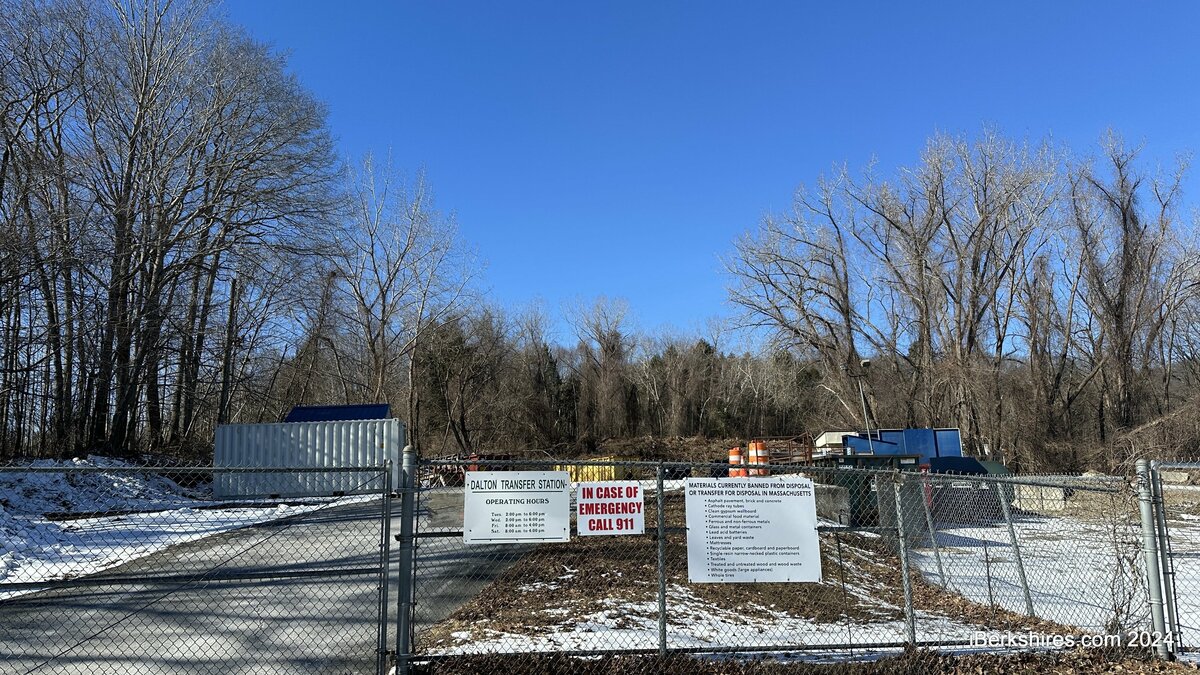
Dalton Considers Reorganizing Transfer Station
DALTON, Mass. — The transfer station may undergo a reorganization.
Town Manager Thomas Hutcheson last week showed the board a list of proposed money articles for town meeting in May.
Articles proposed included funds to cover the cost of engineering or match for lifts at Town Hall, a vehicle for the Department of Public Works and Police Department, the design and installation of heat pumps at Town Hall and the library, replacement of the last two town garage doors, grant application funds, funds for cleaning up condemned homes, and more.
Three of these articles involved the transfer station including a swap shop, equipment, and 25 percent engineering for a transfer station renovation.
Public Works Superintendent Edward "Bud" Hall and Hutcheson asked an engineer for an estimate for a full redesign of the building because the concrete blocks in front of the trash and recycling are crumbling and the shed is not in good condition.
According to the draft document, the estimate provided for 25 percent of the engineering was approximately $20,000, a pre-built swap shop was projected to cost $10,000, and the transfer station equipment was estimated at about $30,000.
The three money articles adding up to $60,000 would come from free cash if approved during town meetings but Hall and Hutcheson may have another way.
In the past, there have been discussions of implementing services such as accepting recycling from private town haulers or a compost station, he said.
These services would require navigating things surrounding it such as accounting for cost, traffic flow, among other things.
To consider adding these services the town needs to make room for it by determining how to better organize the transfer station.
They are now considering combining the requests for a study on reorganizing the transfer station which would provide a cost estimate for designing a transfer station that has all of the functions that the town wishes to implement now or in the future.
The estimated cost of engineering study for a major renovation of the station would cost approximately $68,000, and may be worth considering because of the crumbling and spalling concrete footing of the station, Hutcheson said.
Hutcheson said part of the cost of the engineering study would be covered by free cash and another part would be covered by general stabilization, if approved at town meeting.
The possibility of a composting facility would take out at least half of the transfer station's municipal solid waste weight because food scraps are very heavy from the water, Hutcheson said.
Hutcheson also noted that this initiative is still in the very early stages of development. Once the proposal is finalized the Select Board will have to approve it for it to be included in the Town Warrant as a money article.
This incentive will be discussed further at a future Select Board meeting.
During a recent Green Committee meeting, member Antonio Pagliarulo said they have paused planning of a compost program because of the proposed reorganization of the transfer station.
Committee members also expressed an interest in collaborating with Hall and Hutcheson to aid in their efforts.
Tags: transfer station,