image description
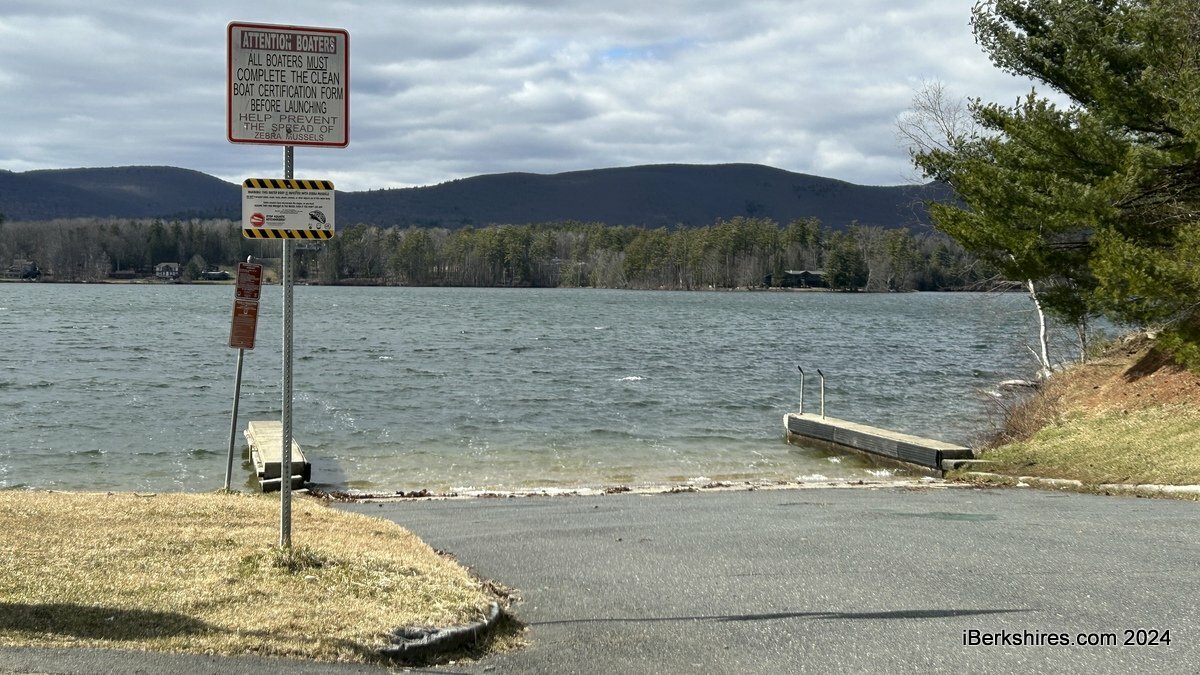
A sign at Onota Lake warns boaters to certify their boats are clean before launching.

Pittsfield Grappling With Possible Zebra Mussell Infection at Onota Lake

By Brittany PolitoiBerkshires Staff
Print Story | Email Story

PITTSFIELD, Mass. — After an alarming detection of zebra mussel DNA in Onota Lake, the city continues to grapple with a possible infection.

Last week, the Conservation Commission saw a notice of intent application for the application of EarthTec QZ pesticide within a specified treatment area of the lake.  

After a detection of DNA in the fall, the water has tested negative in two subsequent samples but the city is preparing for a possible confirmation of the invasive species with a treatment plan.

"In the fall of 2023, the state alerted the city that a recent water sample taken to the public boat launch at Onota Lake contained a positive detection for the presence of zebra mussel DNA. Subsequent water samples taken in the vicinity of the positive sample in November and then in February did not detect zebra mussel DNA," Park, Open Space and Natural Resource Program Manager James McGrath reported.

"The city is working closely with the state on additional sampling to determine whether there is a pioneer infestation of zebra mussels in Onota Lake or not. If it's determined that there is a certainty to the presence of zebra mussels, the city's interest is to define the boundary of the organisms and undertake a control strategy using a copper-based state-approved chemical called EarthTec QZ, one that has been recommended by the state's zebra mussel expert."

Further eDNA sampling will occur again in the spring and if it does not reveal the presence of zebra mussel DNA, additional scuba surveys will be done in the spring and summer. If the invasive species are present, they are likely to be a new introduction and won’t reproduce until water temperatures rise, giving time to determine the next steps.

"The treatment plan presented here proposes to isolate and eradicate mussels in response to early detection, as control or management of an established dreissenid mussel invasion is unrealistic and would result in significant economic and ecological damage to Onota Lake," the application states.

The pesticide is registered by the U.S. Environmental Protection Agency and is effective at killing adult mussels and preventing settlement and infestation by larval-stage veligers.

The notice of intent was filed for the use of the control strategy but following the submission, it was determined that the best course to permit the activity is through the state Ecological Restoration Limited Project. Because of this, the commission continued the hearing on the application.


"We plan to submit additional information to your commission and to the state DEP and other project partners at the state which seeks to permit this activity as an ecological restoration project," McGrath said.

Zebra mussels are invasive freshwater mollusks that present a variety of ecological, recreational, and economic concerns. In 2009, they were detected in Laurel Lake and its outflow in the Housatonic River in Lee/Lenox and since then, the city has worked with the state Department of Conservation and Recreation to proactively monitor and bring awareness to proper boating care to help prevent the spread from one waterbody to another.

Resident Daniel Miraglia was "puzzled" about the NOI.

"Because we look at the Notice of Intent application, we already have a specified treatment area designated for treatment yet we have not specifically found any zebra mussel colonies in Onota Lake," he said.

"You have one suspected hit on a DNA minute sample and then we have consecutive tests that have come back negative."

When the city notified the public about the detection in November, community members were asked to refrain from boating activities before ice-over, to remove docks, mooring, and buoys from the water, to inspect recreational equipment that comes in contact with the water, and to wash any equipment that comes in contact with the water followed by sun drying for five days.

Miraglia added that he is not saying the city shouldn't move forward to use scuba testing and identify a colonization but thinks the application should be withdrawn.

"There is no colonization but yet we have signs up all over the lake that say this lake is contaminated with zebra mussels," he said. "I think they were pretty premature putting the signs up that basically says this lake is infested and that's what the sign says 'This lake is infested with zebra mussels,' but yet we have yet to find any."

He said the first thing that needs to be done is to determine if the invasive species are in the lake with continued testing in warmer temperatures and then look at a plan to get a case study on the pesticide at Laurel Lake to see if it would work for Onota Lake.


Tags: onota,   zebra mussels,   
If you would like to contribute information on this article, contact us at info@iberkshires.com.

Youth For The Future: Adwita Arunkumar

By Breanna SteeleiBerkshires Staff

PITTSFIELD, Mass. — Williams Elementary School fourth-grader Adwita Arunkumar has been selected as our April Youth for the Future for her mentoring of a younger child.

Youth for the Future is a 12-month series that honors young individuals that have made an impact on their community. This year's sponsor is Patriot Car Wash. Nominate a youth here

Adwita has cortical visual impairment; she has been working with her teacher, Lynn Shortis, and her, paraprofessional Nadine Henner.

"My journey with CVI means that I learned in a different way. I work hard every day with Miss Henner and Miss Lynn, to show how smart I am," she said.

"Adwita is a remarkable student. She's a remarkable child. She has, as she shared, cortical visual impairment, which is a brain-based visual processing disorder, which means the information coming in through the eyes is interfered with somewhere along the pathways, and we never quite know what's being interpreted and how and how it's being seen," said Shortis.

"So she has a lot of accommodations and specialized instruction to help her learn."

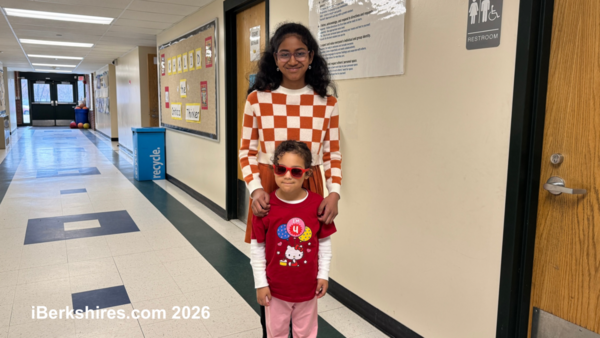
Recently Adwita has chosen to mentor 4-year-old Cayden Ziemba, who is also visually impaired.

"I decided to be a mentor to Cayden so that she can learn some new things. I teach her how to walk with the cane, with the diagonal and tap technique, I am teaching her Braille," she said. "I enjoy spending time with Cayden, playing games and being a good role model."

Shortis said the mentoring opportunity came up when Cayden was entering preschool at Williams, and they introduced her to Adwita. 

"Adwita works really, really hard academically. She's very smart, but there are a lot of challenges in that, because of the way that it's so visual and she's a natural. She's just, it's automatic," Shortis said. "It's kind of like a switch is turned on and she becomes this extremely confident and proud person in this teacher role."

Adwita also has been helping Cayden on how to use her cane on the bus and became a mentor in a unexpected ways.

"Immediately at the start of this year, she would meet Cayden at the bus. She has taught Cayden how to use her cane to go down the bus stairs. Again, Adwita learned that skill, so it wasn't something I had to say to her, this is what you need to have Cayden do. She just automatically picked that up and transferred that information," said Shortis. "Cayden is now going down the bus step steps independently with her cane. And then she really works hard with Adwita in traveling through the hallways, Adwita leads her to her class every morning, helps her put her things away and get ready for her morning."

Adwita said she hopes Cayden can feel excited about school and that other students can feel good about themselves as well.

"I want them to know that Braille is cool to learn. You can feel the bumpiness with your fingers. I want people to know how you can still learn if your brain works differently sometimes. I need to have a lot of patience working with a 3-year-old. I need to be creative and energized," she said.

She hopes to one day take her mentoring skills to the head of the class as a teacher.

"I want to become a teacher and teach other students when I grow up. I might want to teach math, because I am great at it," she said. "I also want to teach others about CVI. CVI doesn't stop me from being able to do anything I want to. I want students to not feel stressed out and know that they can do anything they want by working hard and persevering."

Her one-to-one paraprofessional said she likes seeing the bond that has grown between the two girls, and can picture Adwita being a teacher one day.

"I do see her in the future being a teacher because of her patience, understanding and just natural-born instinctive skills on how to work with young children," Henner said.

Shortis also said their bond is quite special and their relationship has helped to bring out the confidence in each other.

"The beauty of it, there's just something about it their bond is, I don't even really have a word to describe the bond that the two of them have. I think they share something in common, that they're both visually impaired, and regardless of the fact that their visual impairment differs and the you know the cause of it differs," she said.

"They can relate. And they both have the cane. They're both learning some Braille. But there's something else that's there that just the two of them connected immediately, and you see it. You just you see it in their overall relationship."

 
View Full Story

More Pittsfield Stories