Pittsfield Subcommittee Supports Wright Building TIE
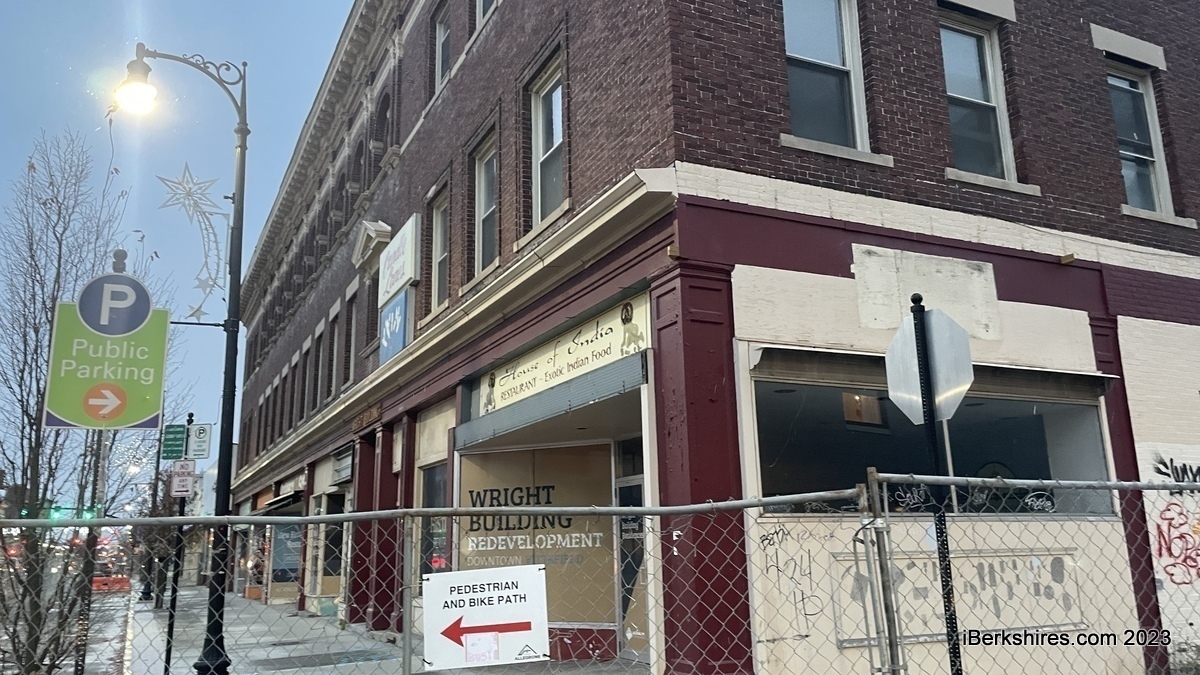
PITTSFIELD, Mass. — The Community and Economic Development subcommittee has supported tax incentives for the rehabilitation of the Wright Building and the former Jim's House of Shoes.
The committee on Monday unanimously voted in favor of a 10-year tax increment exemption agreement for 229-237 North St. and 239-261 North St. for Allegrone Construction Co.'s $18 million overhaul of the properties.
"Thank you for bringing this proposal forward," committee member Alisa Costa said to the developers.
"I know you have been very patient with the timing and I know the community is really eager to see something happen with this building."
The project will combine the two buildings into one development, retaining the commercial storefronts on North Street and providing 35 new rental units, 28 of which will be market-rate units and seven of which will be affordable.
If approved by the full City Council, the TIE will freeze the current property values and base value and phase in the increased property taxes that result from the upgrades, beginning at 100 percent forgiveness in the first year and decreasing by 10 percent each subsequent year over the term.
It is a requirement to receive state tax credits through the Housing Development Incentive Program. Since 2012, the HDIP has supported nine projects totaling 166 new units of housing in the city.
The TIE represents an estimated savings of nearly $402,000 over the period though Community Development Director Justine Dodds emphasized that it is not a subsidy.
"The city is not diverting public funds from any other program or services that we have here in the city," she said, explaining that the property owner continues to pay the assessed value of the properties.
"All we're doing is phasing in the increased amount that, once the investments are made and once the property is fully occupied and rents are being charged, we then phase that in over a specified period of time."
Dodds explained that incentives are needed to expand the diversity of available housing, balance market-rate and affordable units, increase residential growth, and supplement existing affordable housing projects. It was also emphasized that this project will create needed workforce housing and preserve a historic building.
"As you've all heard, construction costs are very high. Construction costs are the same as they are throughout the commonwealth but the rents that are being charged here in Pittsfield are not as high," she added.
"So this creates a shortfall that really there needs to be some incentive in order to facilitate these."
The former Jim's House of Shoes site will be built up to include 14 units of housing and ground-floor commercial space. The base value is $229,900 with about $9,200 in commercial races and after the improvements, is estimated to be valued at $1.9 million with $39,900 in annual commercial and residential taxes.
With the proposed forgiveness schedule that begins at 100 percent and decreases by 10 percent each year, the estimated taxes paid over 10 years will be more than $279,600, an average of more than $27,900 per year. This represents an estimated savings of about $169,800, an average of $16,900 per year for the developer.
The Wright Building will contain 21 units of housing and ground-floor commercial space. The base value is $497,900 with about $20,000 in annual taxes and after the improvements, is estimated to be valued at $2.5 million with over $53,600 in annual commercial and residential taxes.
With the proposed forgiveness schedule, the estimated taxes paid over 10 years will amount to around $369,400
with an estimated savings of nearly $232,000, an average of about $23,000 per year.
The project is staged for two phases, the first requesting $7 million in assisting funds and the second requesting $2.5 million. The HDIP is the largest ask, amounting to $6 million, and getting into this round of funding is said to be critical.
The company purchased the property several years ago but was put on a "total pause" in 2021 when the HDIP was paused due to over-allocation. Louis Allegrone explained that the sources of funding are required to make this happen.
The project has secured state and federal historic tax credits and was recommended for $175,000 of the city's Community Preservation Act funds.
"The Wright Building, like many buildings, it reached its end of life but it's also deteriorating from the inside out so in order to save that in a historically appropriate fashion, which also helps to tap into the tax credit side of it, that design process in and of its self is a long process and iterative process," he said.
"Also, the state for state tax credits, it takes time for the state to allocate our project so that's a couple of the reasons."
Committee member Patrick Kavey said people have not supported this type of incentive because they haven't fully grasped it.
Dodds explained that there has to be a benefit for the community as part of this. There is the immense capital investment that is being put into the properties and there is also job creation, she said.
"We all know that we have a shortage of quality housing units and again, it does things like boost our downtown by bringing new residents down. It will make a vibrant area more vibrant. That block currently is very, as they have mentioned, underutilized at the moment."
She pointed out that the current assessed value of the properties is low because they are underutilized and are not bringing in a lot of revenue.
"All we're doing here is putting our local support behind it, telling the state that yes, we really want this project to happen," Dodds said.
"We continue to collect what we would have always collected and it's just phasing it. We're going to make more tax dollars on the project we're just going to have to phase those out and take it a little slowly so that this can get under construction and underway."
The subcommittee also approved an allocation of $500,000 from the Pittsfield Economic Development Fund to the Pittsfield Small Business Fund.
Mayor Peter Marchetti explained that the Small Business Trust Fund, which came out of the 2011 election, has come to an end.
"We say that we want to help small businesses. We say that we want to be there. To be there is to provide them small either technical grants or funding to get them off the ground," he said.
"So the request is to be able to replenish the funds so that we can continue doing all the great work that we've done over the last decade."
Tags: housing,