Clark Highlights Work, Revolutionary Spirit of Underappreciated Master
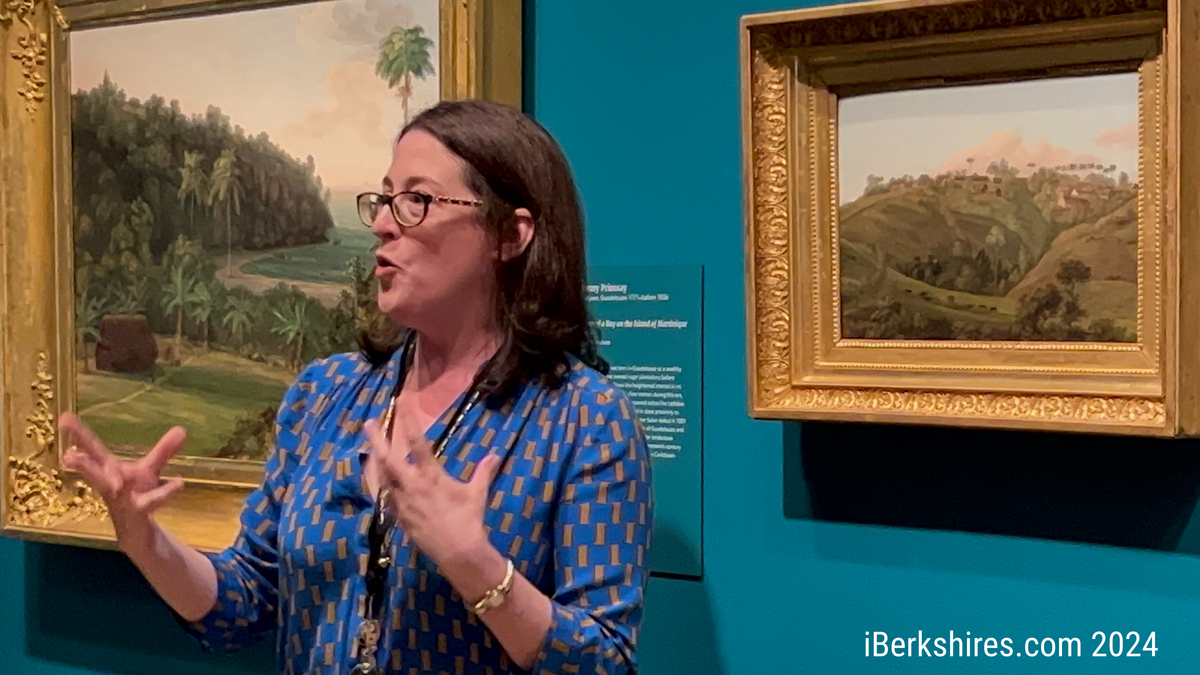
Clark Art Institute Deputy Director Esther Bell discusses the exhibition 'Guillaume Lethiere,' a partnership of the Clark and the Louvre in Paris.
Since then, Lethiere's own legacy largely has been overshadowed.
This summer, the Clark Art Institute is doing its part to bring Lethiere to light.
"Guillaume Lethiere" opens Saturday at the South Street venue. The exhibition runs through Oct. 14 before crossing the Atlantic for a three-month run at the Musee de Louvre, which partnered with the Clark on the show.
Although Lethiere's name may not be well known, even to art aficionados, his art is far from obscure.
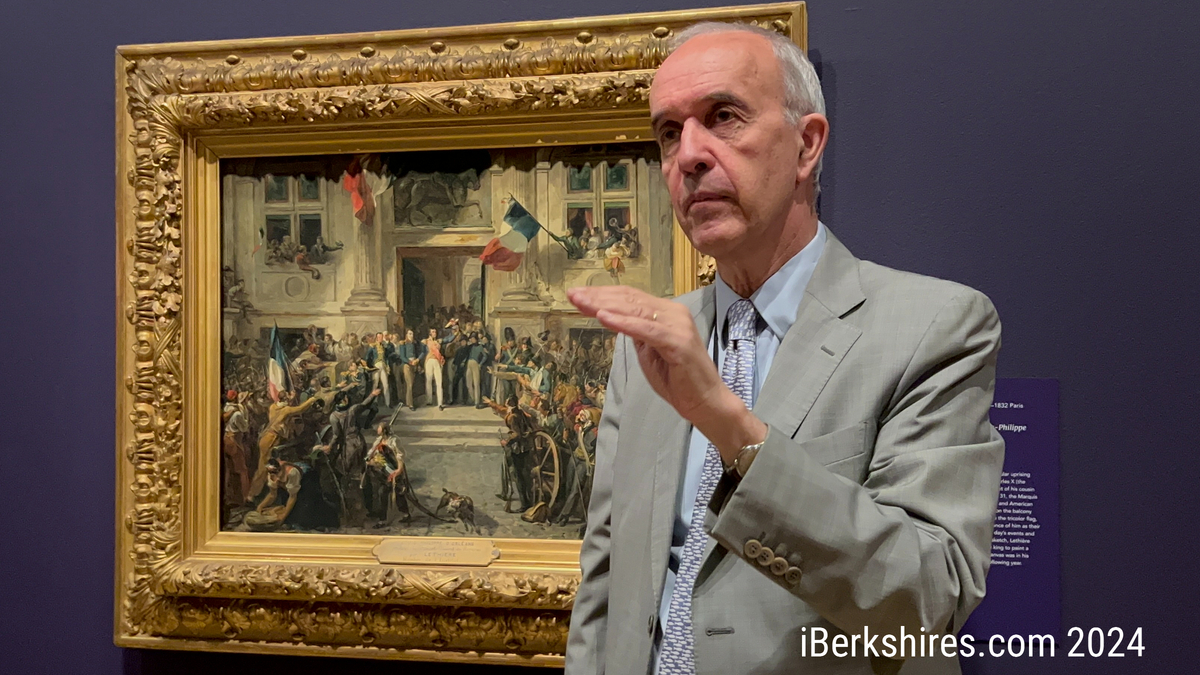
"Lethiere is a good example of being obscurity when you are still in plain sight," Clark Director Olivier Meslay said during a press preview of the exhibition on Thursday morning.
"The two big paintings … the [‘Brutus Condemning his Sons to Death' and ‘Death of Virginia'], which are 25 feet long [each] are standing in the next room to the Mona Lisa since 1832. Never went in storage. But nobody was looking at it.
"It's very difficult to understand why this sort of trajectory happened. I'm sure that after this exhibition it's not going to continue. I think it's obvious when you look at what you see that he's a great painter. He's a very important figure. He's a painter who was one of the most looked at during his life, and then, after that, he disappeared."
Lethiere's life began on the Caribbean island of Guadalupe, where he was born in 1760 to Marie-Francoise Pepeye, an enslaved woman of mixed race, and Pierre Guillon, a French colonial administrator and plantation owner.
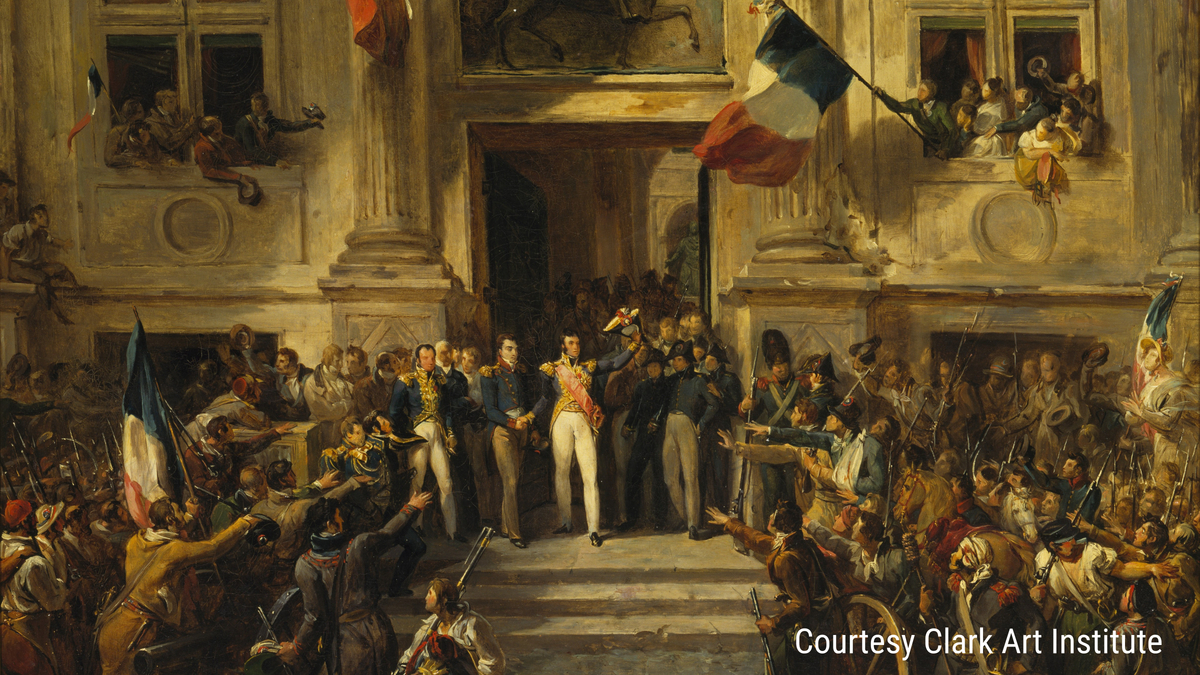
The eponymous exhibition traces Lethiere's career from a red chalk study of a nude figure he did at 16 in 1776 to 1831's "Lafayette Introducing Louis-Philippe to the People of Paris."
The show also highlights a number of Lethiere's contemporaries and students, in particular the women he encouraged to pursue their art and others, like him, who had roots in the Caribbean.
The exhibition also explores the ways that Lethiere navigated the turbulent period of the French Revolution, which shook the nation for more than decade as he was hitting the prime of his career in his 30s.
"Lethiere had to work for Napoleon, and he was asked to do a certain number of paintings," Meslay said. "He was asked to do Joesphine's portrait, which you see here, which was supposed to be hanging in the [National Assembly]. This is also an official portrait he was asked to do of Elisa, Napoleon's sister.
"For this reason, you think, ‘He's really part of the system and a guy who was working with Napoleon.' Not exactly."
In fact, the exhibition demonstrates how Lethiere aligned himself with Republicans and abolitionists and Paris' Caribbean community, like the mixed-race General Thomas-Alexandre Dumas, father of the novelist, who also became close with the painter.
And while Lethiere was commissioned to do a large portrait of Napoleon's wife, Josephine, that is included in the exhibition on loan from Versailles, Lethiere was closer to Napoleon's brother, Lucien, who is depicted in "Lucien Bonaparte Contemplating Alexandrine de Bleschamp Jouberthon."
"At the end of his career during the Napoleonic period, Lathiere made a depiction of Lucien, when Lucien was exiled by his brother," Meslay said. "There is a complicated relationship between the two brothers. Lethiere always stood for his friend Luciere, even though it was probably damaging his own career."
Clark Deputy Director Esther Bell, who led the Clark's curatorial effort with Meslay, pointed out other examples of how Lethiere's anti-authoritarian sentiments show in his work: engravings of four historical revolutionaries — Brutus, William Tell, Benjamin Franklin and Jean-Jacques Rousseau — on loan for the exhibition from the National Library of France.
"Lethiere obviously admires these men," Bell said. "He portrays them in strong profiles, surrounded by laurel leaves.
"It's a little bit difficult to put a finger on Lethiere's politics exactly throughout his life as he successfully navigated the tumultuous politics of his time and the various regime changes. But I think in his various works, whether it's 'Brutus Condemning His Sons to Death' or these [engravings] that he was invested in the fight against tyranny. And all of these men fought against tyranny in their own time."
The massive "Brutus Condemning His Sons to Death" remains in the Louvre, but the exhibition at the Clark does include a number of smaller studies from the Clark's collection.
"Brutus" in Lethiere's time, became an exemplar for French revolutionaries. It depicts the moment when the founder of the Roman republic makes a personal sacrifice to execute his own sons for attempting to restore the monarchy.
Perhaps Lethiere's most overtly political work, "Oath of the Ancestors," was to have been loaned to the Clark by the National Pantheon Museum in Port-au-Prince, Haiti, but could not leave the country safely due to the current political turmoil in the island nation.
"Oath of the Ancestors" depicts the alliance of two of Haiti's founding revolutionaries, Alexandre Petion and Jean-Jacque Dessalines. Lethiere's heroic depiction of the pair is represented at the Clark in an illuminated reproduction.
"They're embracing one another, shackles at their feet, war happening behind them, and they're making an allegiance that never again will they allow their country to be ruled by colonial oppressors," Bell explained. "[Haiti] is the first freed nation in the Caribbean. And here, Lethiere signs the painting, 'Guillaume Lethiere, nee a Guadalupe,' born in Guadalupe. So he's asserting his origins and his allegiance to Haiti and the people of the Caribbean.
"This was a very risky undertaking, to paint such a politically charged image at a time when slavery had been reinstated in France. So he was putting himself at great risk to paint such a thing."
"Guillaume Lethiere" opens at the Clark Art Institute on Saturday, June 15, and runs through Oct. 14. There is an opening lecture free to the public on Saturday at 11 a.m. at the museum's Manton Research Center.
Tags: art exhibit, Clark Art,