MCLA Accredited by New England Commission of Higher Education

Print Story | Email Story
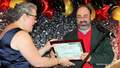
NORTH ADAMS, Mass. — Massachusetts College of Liberal Arts has received its decennial accreditation from the New England Commission of Higher Education.
 
NECHE is a voluntary, peer-based, non-governmental membership association that promotes educational excellence and quality assurance to its more than 200 members, all of which are degree-granting, post-secondary institutions. NECHE, through its membership, has established Standards for Accreditation to ensure quality, innovation, and student success across the evolving higher education landscape. The commission itself consists of faculty and administrators from affiliated institutions as well as public members who have no institutional affiliation.
 
MCLA submitted its 10-year accreditation report (Self-Study) in October 2023, documenting its work to provide a high-quality, affordable, public liberal arts education. The content responds directly to the nine standards outlined by the Commission for all institutions undergoing reaccreditation. 
 
The Self-Study was the outcome of two years of careful, thoughtful work, with input from more than 70 members of the campus community, according to college officials. It covered everything from MCLA's mission and purpose to the academic program and student profile, to the physical plant and financial strength. Self-Study described the ways in which the college felt it meets the standards, identified areas of progress and improvement, and offered plans to continue moving the college forward in the next 10 years.
 
As part of the accreditation process, a NECHE team visited campus last November.
 
The college received a formal accreditation letter in May, which can be viewed in its entirety here.
 
MCLA remains on the list of Top Public Liberal Arts Colleges at No. 7 in the U.S. News rankings and has risen to the Top College for Social Mobility in the state and No. 2 in the country for public institutions, and No. 22 for national liberal arts colleges. 

Tags: accreditation,   MCLA,   
If you would like to contribute information on this article, contact us at info@iberkshires.com.

Build or Rent: Communities Seek Options to House Public Safety Departments

By John TownesSpecial to iBerkshires
This is the second of two articles looking at examples of how towns and cities are dealing with a common problem of old and inadequate facilities for their public safety operations, including police, fire and emergency medical services. The circumstances and strategies to provide the buildings and infrastructure that are necessary to maintain modern public safety operations vary widely among towns and cities. Read part one here
 
For many years, the town of Lee has had to struggle with an outdated and crowded Police Department station located in its Town Hall, which was built in 1874. Its nearby fire station was originally constructed to house horse-drawn firefighting vehicles.
 
"The Police Department has been crammed into Town Hall and there is not enough room," said Lee Town Administrator Chris Brittain. "We had to fit the police staff on different floors wherever we can find space. In addition, the station was not designed for the Police Department's current needs. For example, our cells do not meet modern standards."
 
The Fire Department complex, including its main station and adjacent buildings and emergency medical services, have had similar problems. He noted that the town had to purchase customized fire trucks to fit through the doors.
 
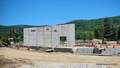
To solve these and other issues, the town is currently constructing a new public safety complex to house its police, fire and emergency medical services operations and the Building Department on a site at 49 Railroad St. in the town center. It has also relocated its Department of Public Works operations and equipment from there to a more effective site on Pleasant Street in the southern section of Lee.
 
In the first step of the process, the town in 2022 conducted a feasibility study of possible solutions. The study was funded by $70,000 from cannabis impact revenue.
 
"The town did a complete analysis of its public safety needs, including such factors as staffing, equipment, and what was needed to meet call volumes," explained Brittain. "We also looked at potential locations, and the estimated cost of facilities."
 
View Full Story

More North Adams Stories