North Adams ConCom Balks at Using Herbicides Near Reservoir

"The forest that's in there now is a healthy habitat. I walk through there every day, and the trees marked to be cut down are healthy native trees," said Julie Richard. "Yes, some of them are sick and some of them die, but they're like people, they die. That doesn't mean it's not a healthy forest. ...
"Who is profiting from this?"
The Conservation Commission indicated agreement with most of the arguments, unanimously voting to recommend the city research nonchemical alternatives to removing invasive plants on nearly 21 acres of forest.
"Can we go to the city and ask them to look into another option that would exclude any chemical application?" asked Commissioner Jason Canales. "I'm not going to push the project through just to get the project done."
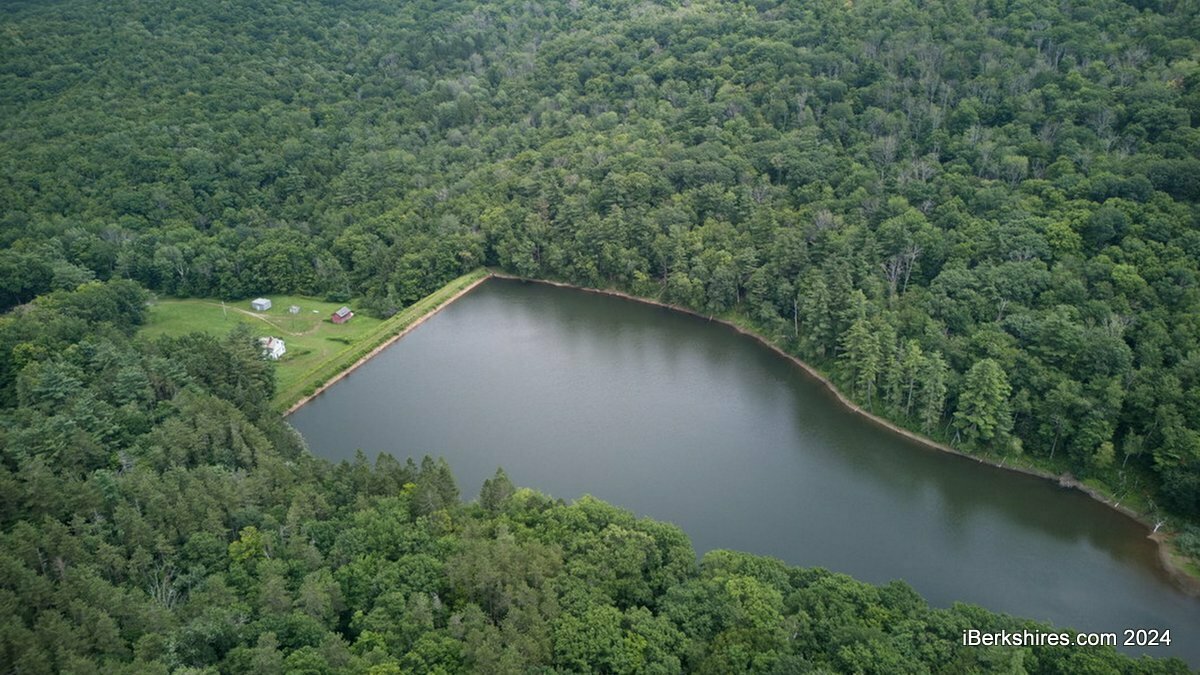
Commissioners had expressed concern about the use of chemicals two weeks ago during the management plan presentation, prompting Monday's more detailed presentation by New England Forestry Consultants.
The initiative is part of Mass Audubon's Forest Climate Resilience Program in conjunction with the Woodlands Partnership of Northwest Massachusetts, of which the city is a member.
The purpose of the plan is long-term management of the forest in terms of sustainability, removal of invasive plants and dying trees, and revenue generation through logging and recreation.
The presentation two weeks ago included addressing invasive species through a combination of herbicide application and "mechanical" removal, i.e., pulling out the plants by the root stock.
The plan only came to the commission because of the use of herbicides near the waterways. But the commissioners also discussed the creation of trails to bring in logging equipment and the impact on streams, potential erosion and their removal at the end of the process.
"We can't say much about anything else," said Commissioner Heather Williams. "We can express concerns about erosion, that some of these trails will become watercourses after they're made, especially since this area is often used by ATVs that are not allowed there."
Resident Frank Field, who lives on Notch Road, questioned a herbicide buffer zone for the reservoir at 400 feet and the streams that feed it at 100.
"It's OK for the stuff to run into the brooks and then run at the reservoir. I'm a little bit baffled there," he said. "I don't think you can keep the chemicals away. I don't think they should be used. And I might be wrong. OK, I might be wrong on this, but I know that there are horticultural products out there, non chemical that can be used."
Field said he uses agricultural vinegar, an acetic acid, on weeds near his home.
Jennifer Barbeau of Mountain Girl Farm asked if the use of goats or sheep had been considered for removing the shrubs as they have been successful elsewhere.
Liam Smith, a forestry technician with New England Forestry Consultants and licensed herbicide applicator, said he had not been charged with researching alternatives.
"I'm here not because I'm trying to poison anybody. I'm here because I've been contracted by the city of North Adams to kill these invasive plants," he said. "I am deferring chemical selection until after my professional recommendation to the ConCom."
He offered three options to the commission: glyphosate, triclopyr and imazapyr. Glyphosate is considered the least toxic and has the shortest proximity restriction of four hours (compared to 48 hours for the others) but imazapyr breaks down fastest in water, in less than a week.
The densest area of invasives is in about a half-acre to an acre in the middle of the target area. The rest is moderate to light. Smith said he'd walked the area with the Department of Environmental Protection, which will determine the parameters.
Residents questioned why the need to remove the invasives at all and take the risk of poison getting in the groundwater. Or removing any trees, since downed trees still provide habitat for wildlife.
"I can't believe that it's beneficial to take out large old-growth trees, when immediately the invasives take over that space, it's going to cause more invasive growth," said another resident, adding it took 20 years for a logged section of her property to recover.
Joshua Rapp, senior forest ecologist for Mass Audubon, said he could speak to specifics of the project as the consultant, Gary Gouldrup of New England Forestry Consultants, was not able to attend.
He said questions would be better directed to Gouldrup during the planned public woods walk on Wednesday, Aug. 7, at 6 p.m. The walk will start at the Bellows Pipe trailhead.
Janet Sinclair of Shelburne Falls, a former member of the Woodlands Partnership and conservation commissioner, attended the meeting to make the commission aware that a recent report from the new state Climate Forestry Committee advises against some of the management plan's goals.
The 12-person committee recommends passive management, including leaving ash stands, allowing forests to grow and age to maximize carbon storage and leaving deadwood for habitats.
"The committee came up with a lot of things, such as that the best thing for climate change and provide diversity is to leave a forest alone, for example," she said. "There's all these ideas that are taking place in this logging plan that are absolutely, you know, in contradiction with this committee."
The commissioners felt uncomfortable in making any herbicide decision, noting they had only received the presentation that evening.
"This is a lot to swallow off the bat ... I'd like to think about it," said Commissioner Woody Boillat.
Canales raised the possibility of seeking further research on alternatives. Smith said he provide alternatives but noted that the quote for his work would change and that there was a deadline for logging to begin this winter.
"I'm not even sure if those recommendations have to be truly followed, because this is not we're not actually granting conditions," said Canales.
The commissioners then voted to send a letter to the administration recommending it consider nonchemical applications for invasives.
In other business, the commission re-elected Andrew Kawczak as chair and Canales as vice chair, and voted to request the administration clarify what constitutes a quorum. The seven-member commission is currently at four members as three declined to be reappointed when their term ended.
Tags: forestland, forestry, invasive species, logging,