Williamstown Planning Board Reduces Parking Lot for Art Museum
WILLIAMSTOWN, Mass. — Williams College will be back before the Zoning Board of Appeals on Thursday for a development plan review for the school's planned art museum at the Field Park rotary.
The ZBA last month held off on making any final determinations about the project, in part because it was waiting on a parking determination from the Planning Board, which was to have considered the college's parking plan on July 16 in a meeting that was canceled due to a blackout that impacted town hall.
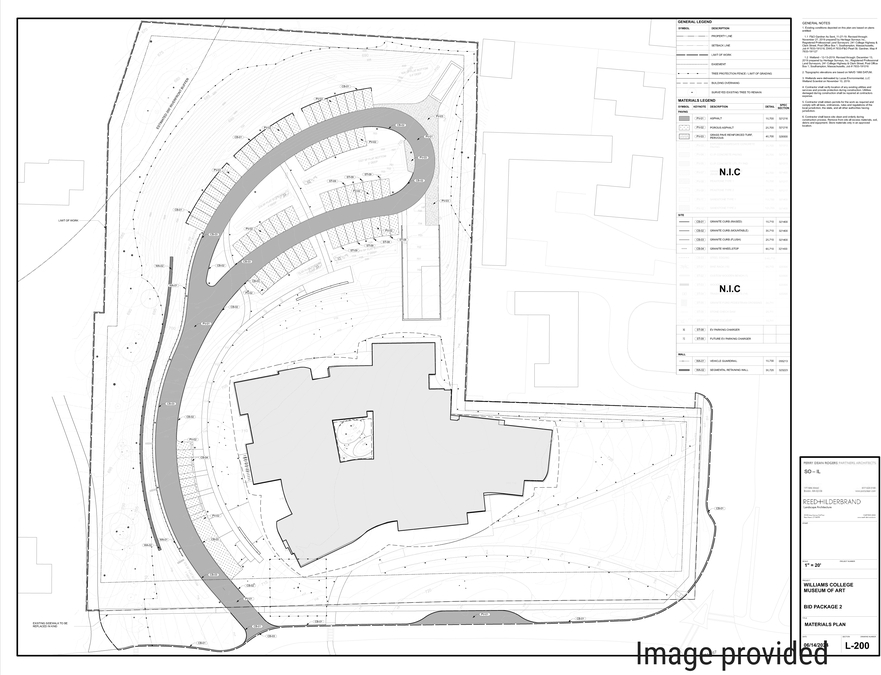
The Planning Board rescheduled its meeting for July 24 and, after a lengthy back and forth with college officials, accepted on a vote of 3-0 a parking plan that calls for 63 spaces in the museum lot, an 11 percent reduction from the 71 spots that the college proposed in its submission to the town.
When it became clear that two of the three Planning Board members participating in the July 24 discussion were not going to vote in favor of accepting the parking plan as submitted, the college development team asked for a recess from the meeting and came back with the counter proposal of 63 spaces.
Roger Lawrence, who was the most vocal critic of the parking plan as submitted, characterized the ensuing discussion as "horse trading" and at one point said the board was "flying blind" without good evidence for or against either the original number or 63-space counter.
Lawrence appeared to dismiss the college's proposal of 71 spaces after Kenneth Kuttner testified from the floor of the meeting that the college's engineer, Fuss and O'Neill of Manchester, Conn., submitted a determination that amounted to "statistical malpractice" by relying on industry-standard methodology that Kuttner said was flawed.
Kuttner, a member of the Planning Board, recused himself from the July 24 discussion due to his employment by the college. Cory Campbell took the same step, reducing the number of Planning Board members involved in the decision to three.
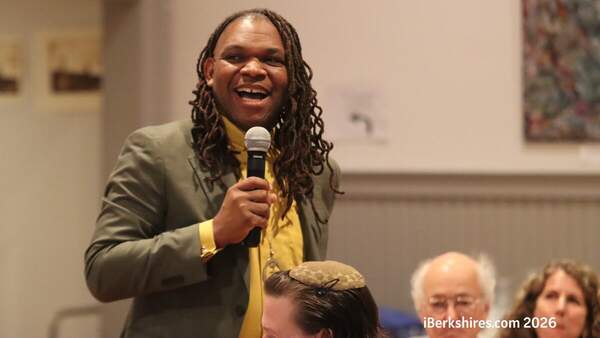
Kuttner, an economics professor at the college, spoke to his colleagues from the floor of the meeting and said the methodology employed by the Institute of Transportation Engineers is a "simple cookbook formula" that requires "10 seconds of analysis" and relies on a "very small set of observations."
"Donald Shoup, the guru of parking reform and the author of, 'The High Cost of Free Parking,' refers to it as 'pseudo science,' " Kuttner said, holding up a copy of Shoup's 2005 book.
Lawrence was swayed by Kuttner's analysis, saying, "Among us, you're the only one with a professional statistician's credentials."
Lawrence called the Planning Board's recently completed comprehensive plan his "guiding light." The plan generally calls for increased public transportation and a reduction in emphasis on conventional automobiles.
"Promoting alternative transportation options and increasing infrastructure that supports these options (including pedestrian and bicycle infrastructure and expansion of electric vehicle charging stations) will provide more opportunities for community members to travel around town in other modes besides a single occupancy, gas-powered vehicle," the plan reads, in part.
"It would be nice to see that vision realized," Lawrence said.
The Zoning Board Thursday is scheduled to continue its July 18 public hearing, where it began the special permit process for the art museum. Williams hopes to break ground on the project, on the site of the former Williams Inn, in September and complete construction in the summer of 2027.
Tags: Planning Board, WCMA,