Williamstown Zoning Board Considers Art Museum Plan
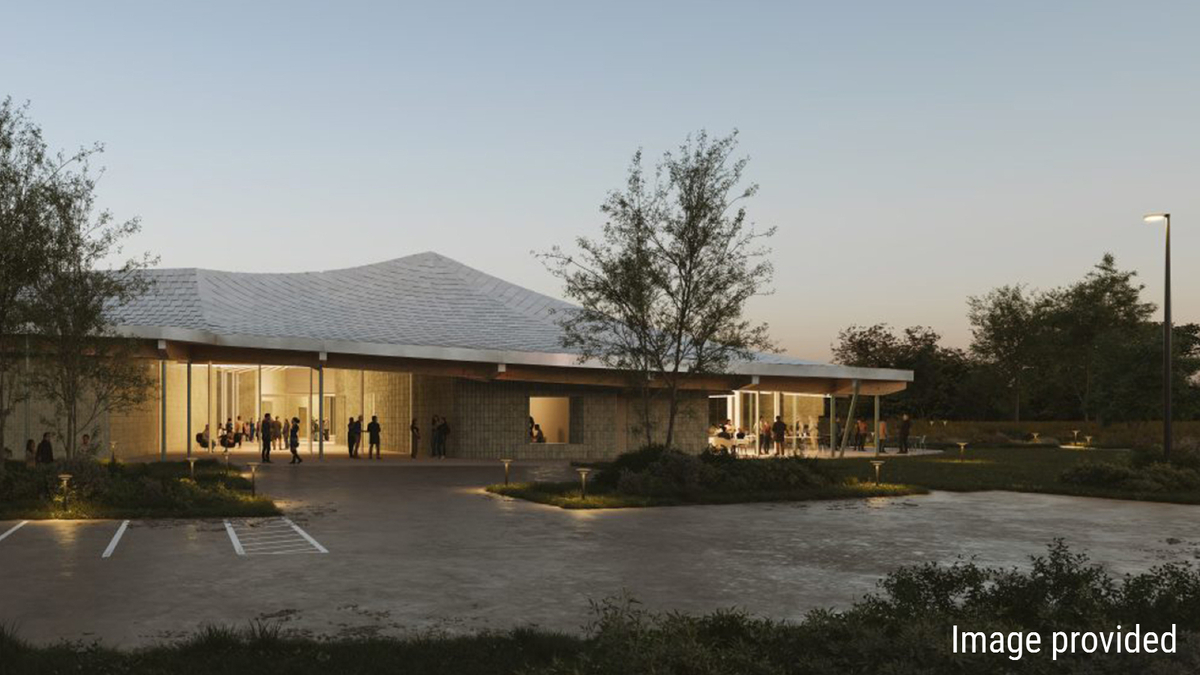
WILLIAMSTOWN, Mass. — The Zoning Board of Appeals on Thursday began its review of the development plan for a new Williams College Museum of Art at the junction of Routes 2 and 7.
College attorney Jamie Art, museum Director Pamela Franks and members of the design team went before the board to talk about the project to replace the current museum housed in Lawrence Hall on Main Street.
The college hopes to break ground on the new museum in September with a completion date in the summer of 2027.
First it needs a couple of approvals from town boards: the Planning Board, which will determine that the new museum has appropriate parking and the ZBA, which needs to grant a special permit.
Part of the permitting process is the development plan review.
Although the museum as designed largely is compliant with many town development standards, as a commercial building over 2,500 square feet, it triggers the development plan review.
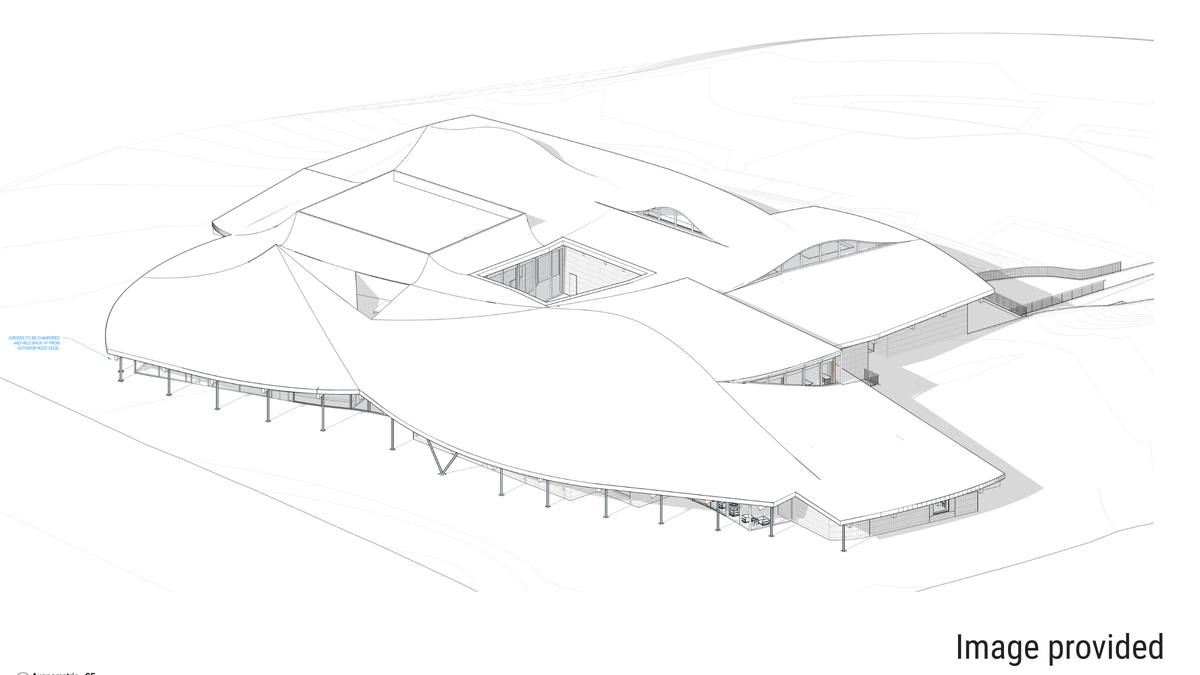
The museum is designed at 76,800 square feet, and the planned three-story structure and grounds do require a couple of waivers from town zoning bylaws.
Specifically, the new museum will exceed a 35-foot height limit in the town code, though, as architect Jonathan Malloy of New York architecture firm SO-IL noted, the height is exceeded in just one of the building's peaks and roughly matches the height of the site's previous occupant, the former inn.
And the project will include grading for the parking lot that includes, at a couple of points, 8 feet of fill, exceeding the 6-foot maximum change allowed by right in the bylaw.
As with many college projects, the ZBA's path to granting waivers is that relief from local zoning laws is available to educational institutions under Massachusetts General Law and legal precedents.
"Learning with art is at the center of everything we do," Franks told the board. "Faculty in every department across campus teach with the collection."
Franks said the college's art museum is, "quite different from other museums, where it's much more public oriented."
Board members later referenced WCMA's connection with the campus community in pressing the college for information about how it plans to facilitate pedestrian traffic to the new museum site, across North Street (Route 7) from the rest of the campus.
"The main population is going to be students, right?" David Levine asked the development team. "You should have some reasonable estimates [of pedestrian traffic]. You need that before you start considering how you're going to manage the traffic flow."
Pedestrian access is one of the elements of design covered by the bylaw and subject to ZBA review.
ZBA Chair Keith Davis suggested that the college and town consider a plan that includes adding blinking pedestrian lights to the northeast junction of Routes 2 and 7, similar to the way crosswalks are marked all along Main Street (Route 2) now.
Two residents raised concerns about the project during Thursday's public hearing.
Jefferson Strait of North Hoosac Place and Patrick Bandy of Main Street, each an abutter of former inn site, asked the ZBA to get more specificity from the college about its plans for vegetative screening on the western edge of the new museum site.
Both Strait and Bandy said they were enthusiastic about having an art museum for a neighbor but worried that the finished project would be visually intrusive for the adjoining neighborhood.
Felicity Purzycki, the college's landscape ecology coordinator, described the landscaping plan for the new site, including replacement of trees that may have to come down during construction.
Davis asked if the finished property will have the same opacity as that which shielded neighbors from the former inn.
"Not at first planting," Purzycki said. "But the woods right now is not in great shape. I'd say within five years we'll exceed the current screening."
Art, the college's attorney, reminded the ZBA and audience that Williams is not seeking any relief from the town bylaw's requirements on screening from a commercial development, a point that later was reiterated by Davis in response to Bandy.
"They're required to put adequate screening in," Davis said. "If they don't do it, that's something you can ask the zoning officer to enforce."
Enforcement measures could include fines, the withholding of annual certificates of occupancy for the museum, or holding up future building permits for the applicant, Groff said on Friday morning.
"Also, while not explicitly in the bylaw, we've always allowed a few years for plantings to reach the required state," Groff wrote in an email responding to a request for clarification of the town's enforcement options. "It's very difficult to get the required [height and density] right off the bat with nursery stock at the standard sizes prescribed by the bylaw."
Davis on Thursday asked the college to come back to the ZBA with an architect's rendering of what the view of the museum will be from the Fort Hoosac neighborhood at night when the project is completed.
The college's team pointed out that the museum mostly is in operation during daylight hours with, perhaps, one night per week in operation until 8 p.m. That is a usage vastly different from the college's main library, where late night hours are the norm and a window-dominated eastern wall spills light into the Southworth Street neighborhood.
While he recognized that the new WCMA will comply with the screening bylaw and have vastly different usage patterns than Sawyer Library, Davis said he was thinking about the library, "probably our biggest mistake," when he asked for the rendering of the the view from Fort Hoosac Place.
The ZBA will be looking for the rendering and the answers to a couple of other questions that came up on Thursday when the hearing is continued on Aug. 15. It also will hope to have a parking determination from the Planning Board, which was to have weighed in on the WCMA proposal on July 16 in a meeting that was postponed due to a power outage that affected town hall.
If the museum ultimately is permitted and built, its building and grounds will surround the retrofitted fraternity house that functions as town hall on three sides. The college already owned the former inn property, which extends to North Street south of the municipal building.
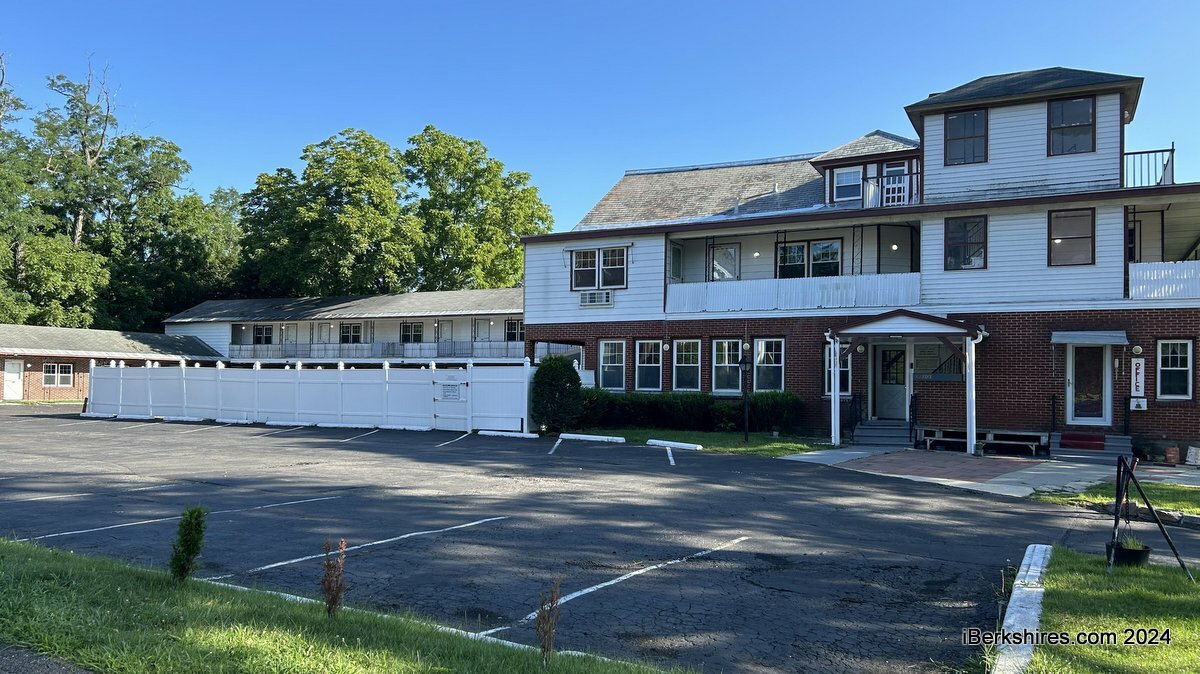
On Thursday, Art told the ZBA that Williams has acquired the Northside Motel to the north of town hall with the intent to raze the building; the property is not included in any of the building or parking plans submitted to the town. According to documents filed with the Registry of Deeds, the college paid $1.8 million on July 9 for the property owned by Vipulkumar and Niketa Patel. The Patels have owned the motel since 2004.
Tags: WCMA,