Williams College Museum Envisions Natural Setting, Sustainability Focus
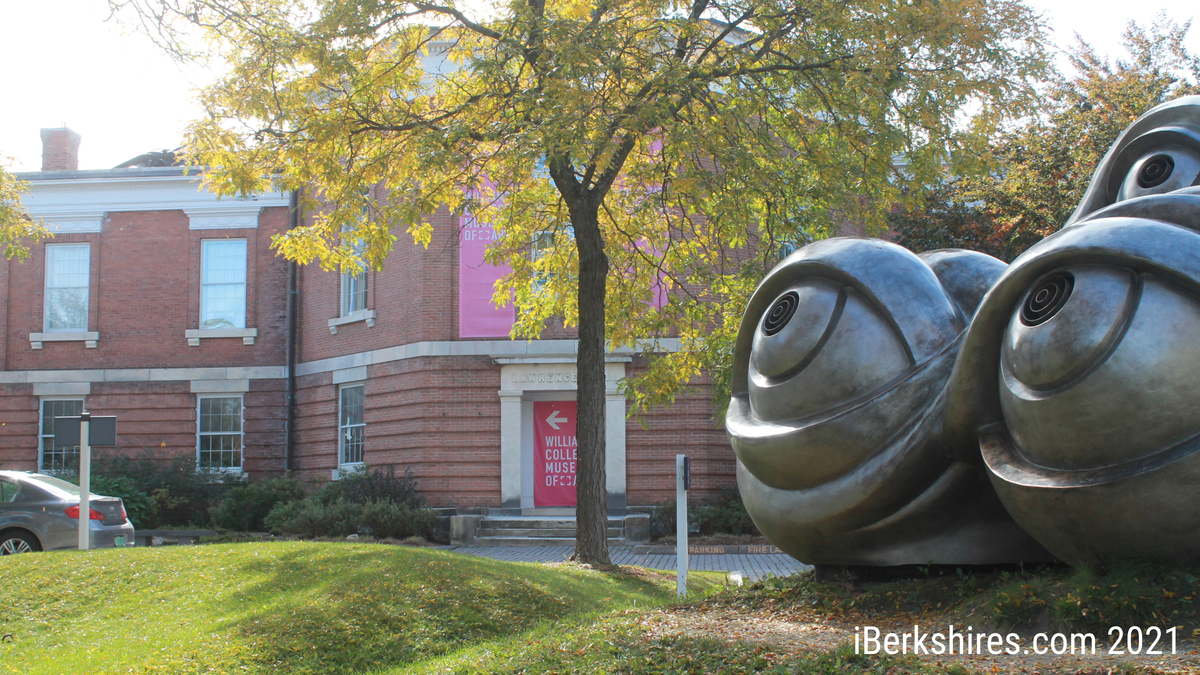
The college art museum has spent the last century in Lawrence Hall.
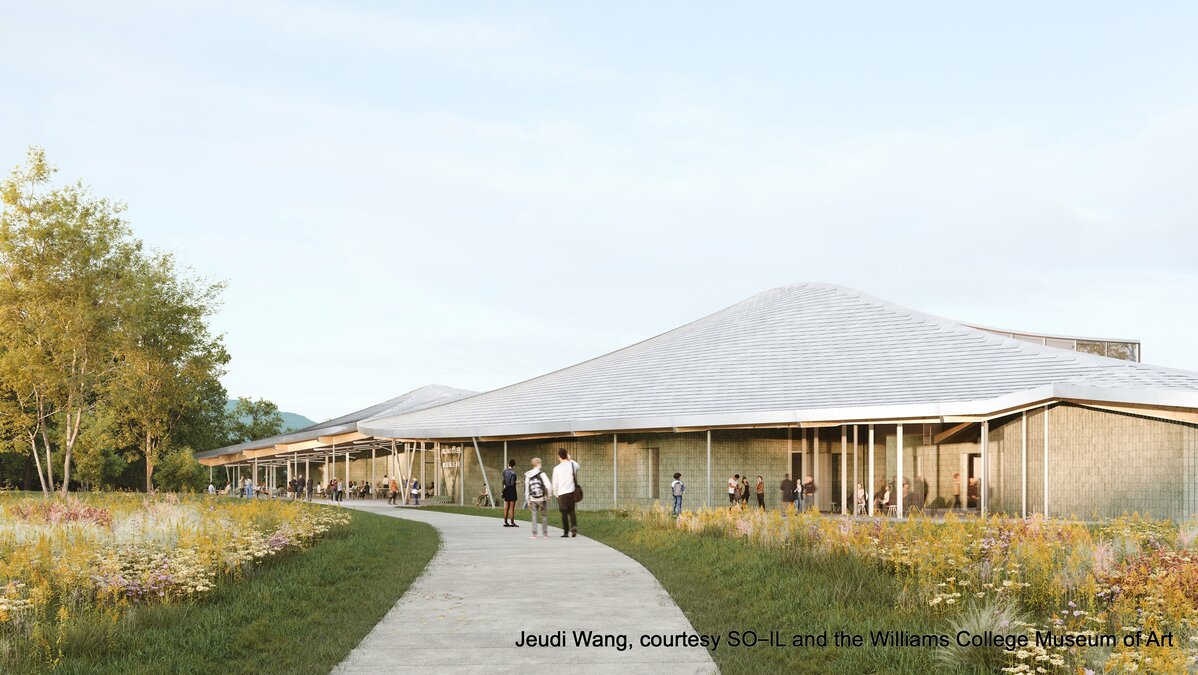
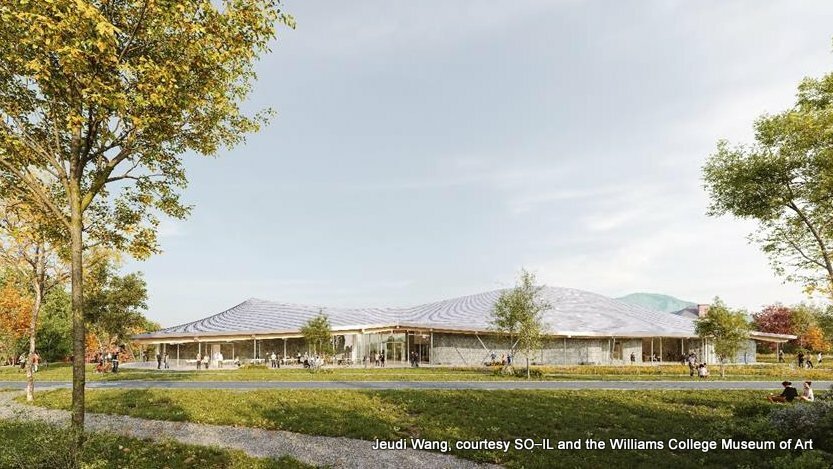
The single-story structure is designed to harmonize with the natural setting across from Field Park, on the former site of the Williams Inn. It is projected to open in 2027, in line with the museum's centennial.
The design by Brooklyn-based firm SO–IL were released on Thursday. A public forum about the museum building project will be held at on Monday, March 11, at 6 p.m. at the new Williams Inn on Spring Street.
The museum has served the college as a primary teaching resource, the community and art-lovers over the past century and has long outgrown its space off Main Street. The board of directors in 2021 voted to move ahead to the design phase after years of debate.
"I'm thrilled by how deeply and imaginatively SO–IL has responded to our goal of engaging the entire campus around art, while bringing the Williams College experience into dynamic interaction with the wider world and becoming a more visible, accessible presence among the outstanding cultural attractions in the Berkshires," said Pamela Franks, Class of 1956 museum director. "The new WCMA prioritizes inspiring spaces to display and study the collection and will be a forward-looking architectural achievement that is simultaneously a welcoming and relaxed meeting place for the campus, the Williamstown community and our visitors from around the world.
"It will be a sustainable building in dialogue with the beautiful natural surroundings, where people can linger, converse, participate in wide-ranging programs, and enjoy art from ancient Assyrian reliefs to contemporary media at no cost of admission."
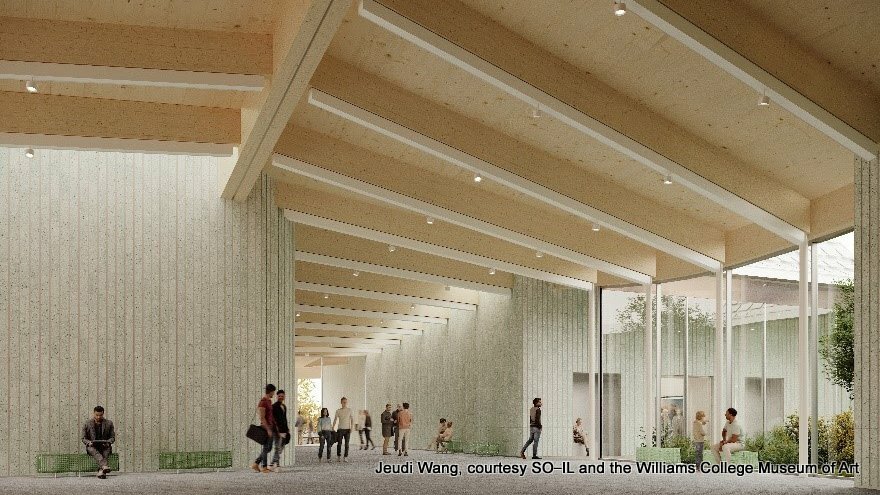
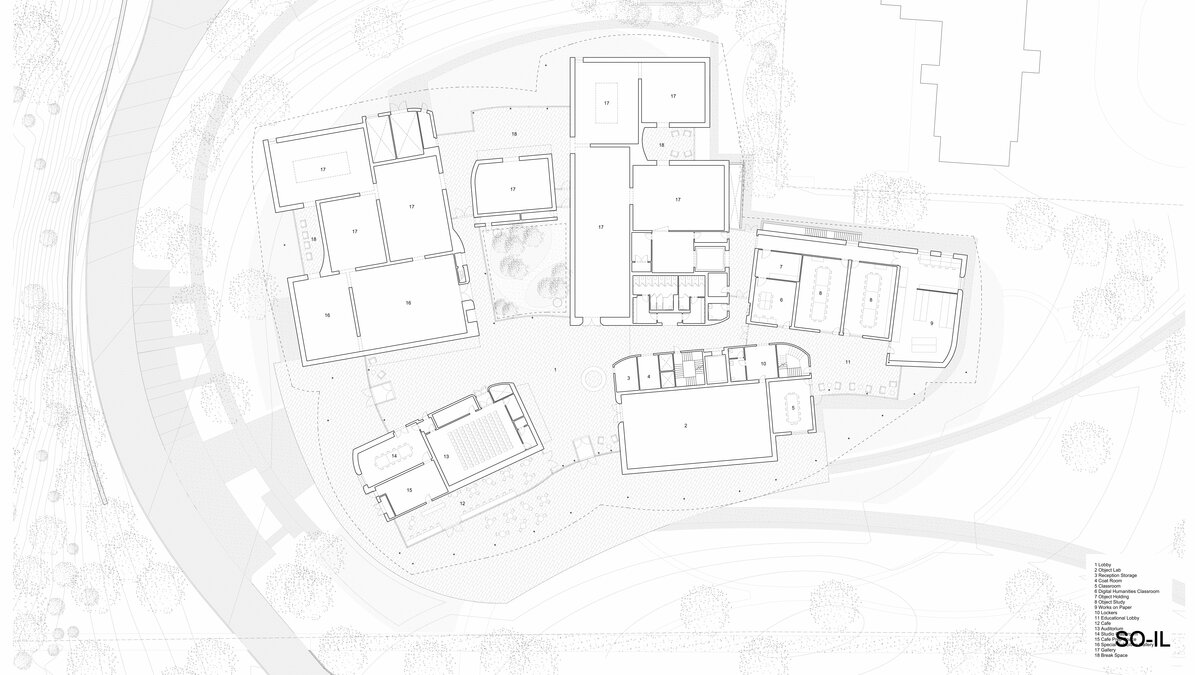
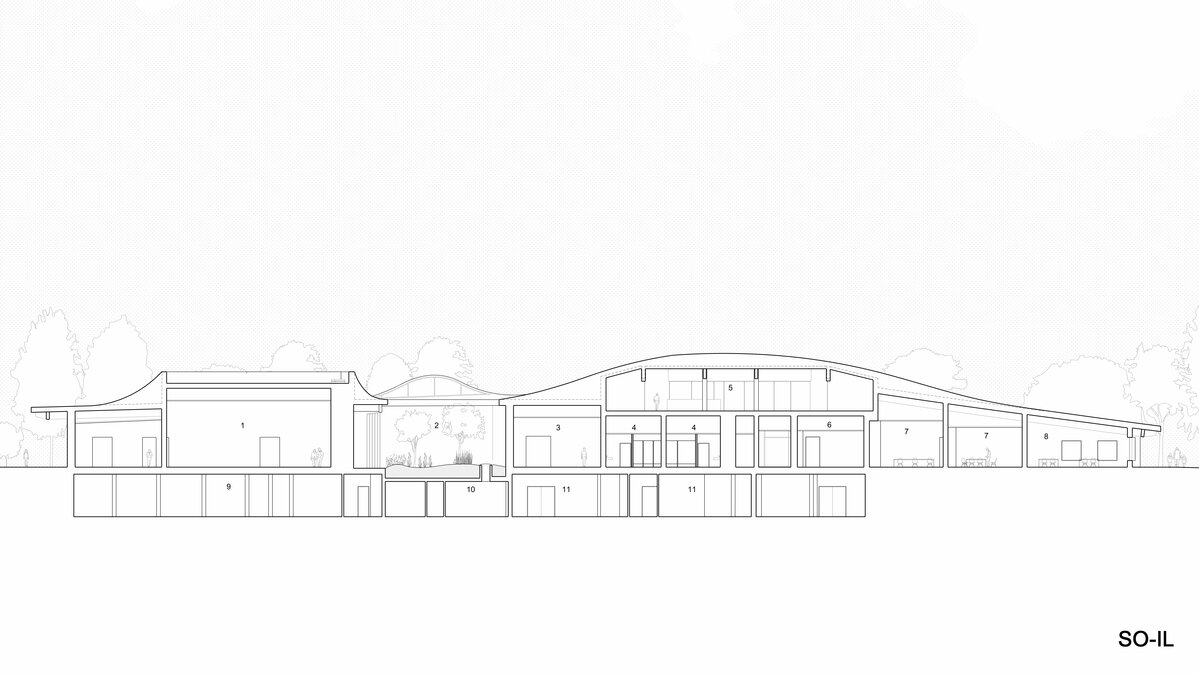
The museum will consist of four main programming areas, slightly set apart like pavilions, and unified through their materials, their openness to the natural setting, their organization around a central gathering place, and an overarching roof that shelters them all.
Jing Liu and Florian Idenburg, founding partners of SO–IL, said designing a college art museum has been an exciting task.
"Orchestrating synergies between the past, present, and future enables us to create a home where students, faculty, community, and collection converge," they said in a statement. "We believe space is as much a teacher as the programs it houses, so we are thrilled to partner with WCMA in designing a building in which different modes of art study and appreciation can intersect, coexist, and reinvent one another.
"Walls do not confine the concept of this museum, but rather the inviting gesture of an overarching roof that delineates spaces for these interactions to take place. Contributing to this beautiful landscape, we hope the building will become a welcoming beacon, situated sensitively between campus and the world beyond."
The museum has been housed in the 1846 Lawrence Hall since its founding in the 1920s. The octagon hall on the south side of Main Street was the college's original library and has been expanded numerous times over the past 180 years, the last time in 1986.
The collection has meanwhile grown to more than 15,000 items, including more than 1,000 from philanthropist Peter Norton and 340 objects of African art from Drs. Carolyn and Eli Newberger just in this century. The bulk of the collection has to be stored offsite.
The old inn was purchased by the college in 2014 and demolished in 2020 after the opening of a new inn at the bottom of Spring Street.
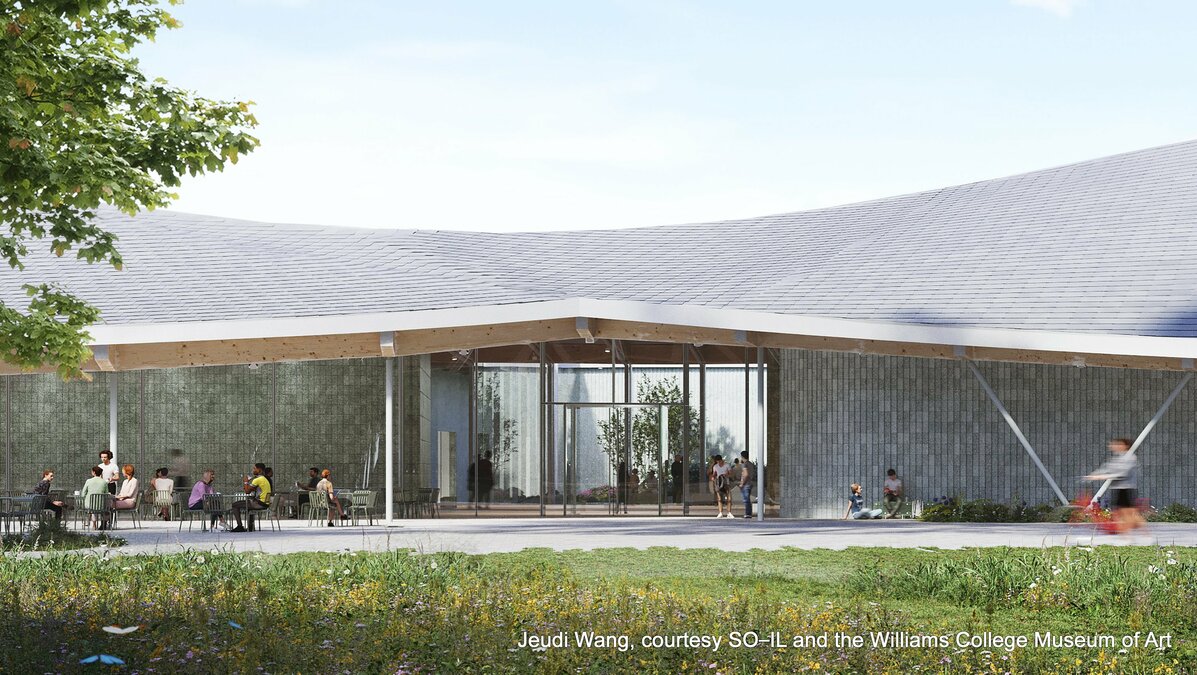
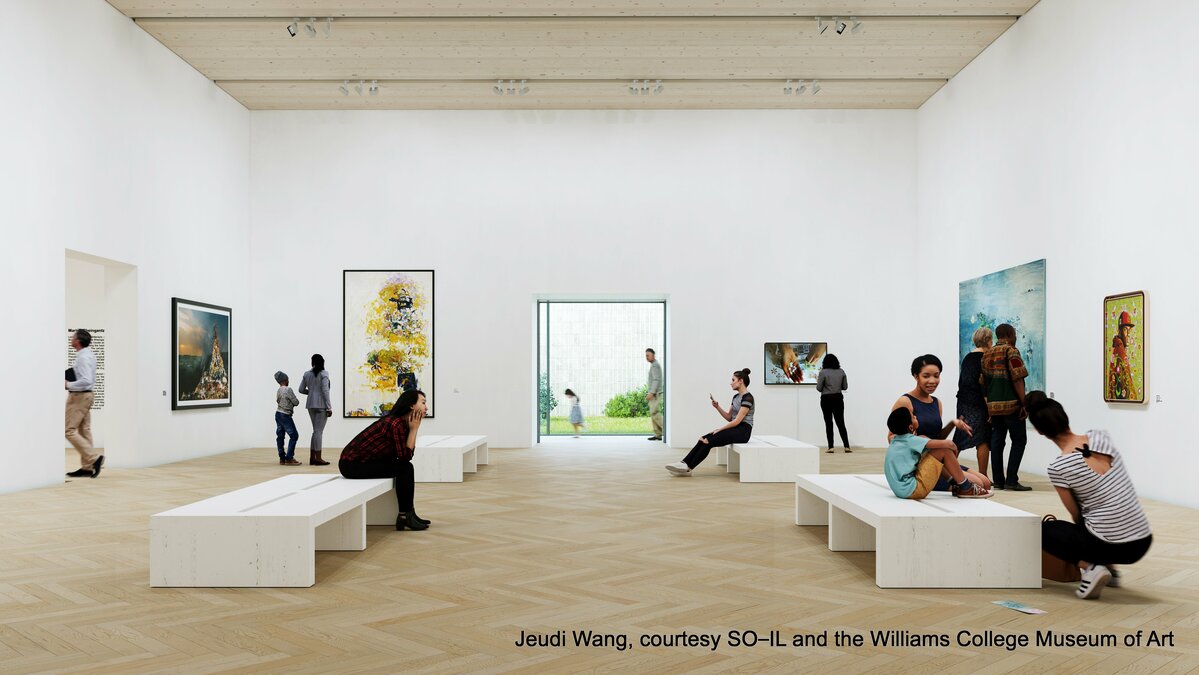
According to the architects, the new museum will have a large south-facing central lobby and two gallery clusters for temporary exhibitions while the permanent collection will radiate toward the north. These galleries provide more than 15,000 square feet of display space, accounting for 35 percent of the net square footage of the building. Off the entrance is an auditorium, art studio space, and a café. A hybrid gallery-classroom space will be dedicated to the museum's signature Object Lab and a study center of approximately 6,400 square feet will includes dedicated areas for works on paper study, storage, two classrooms for object study, a digital humanities classroom, and a seminar room.
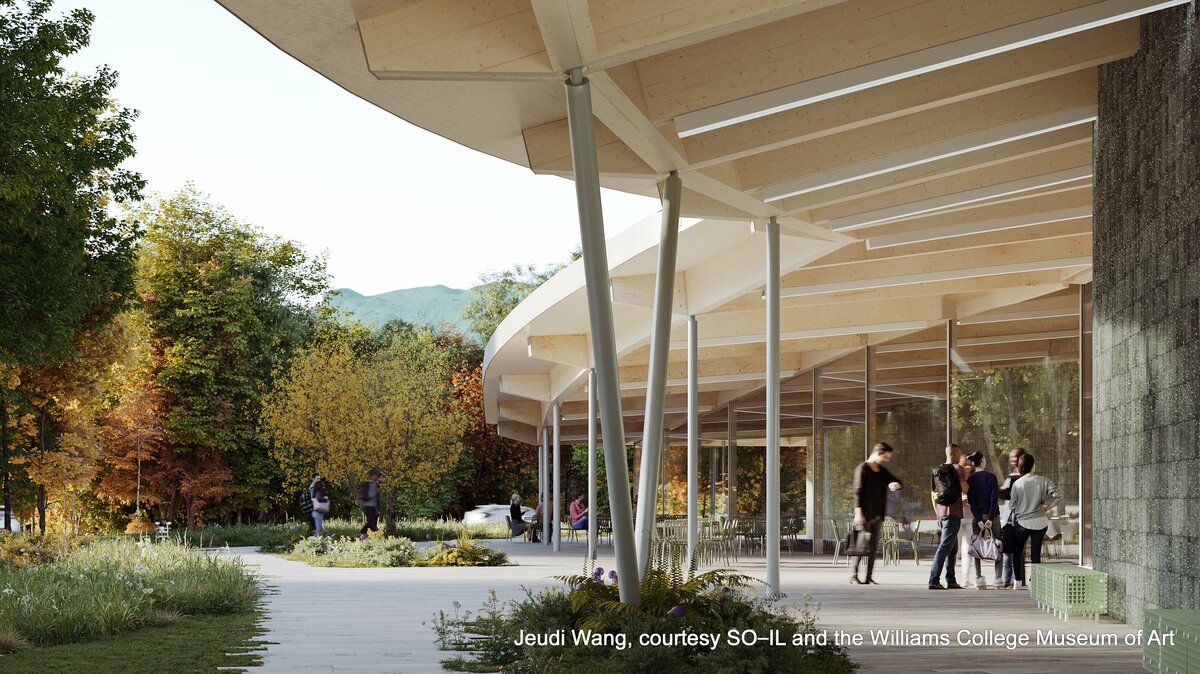
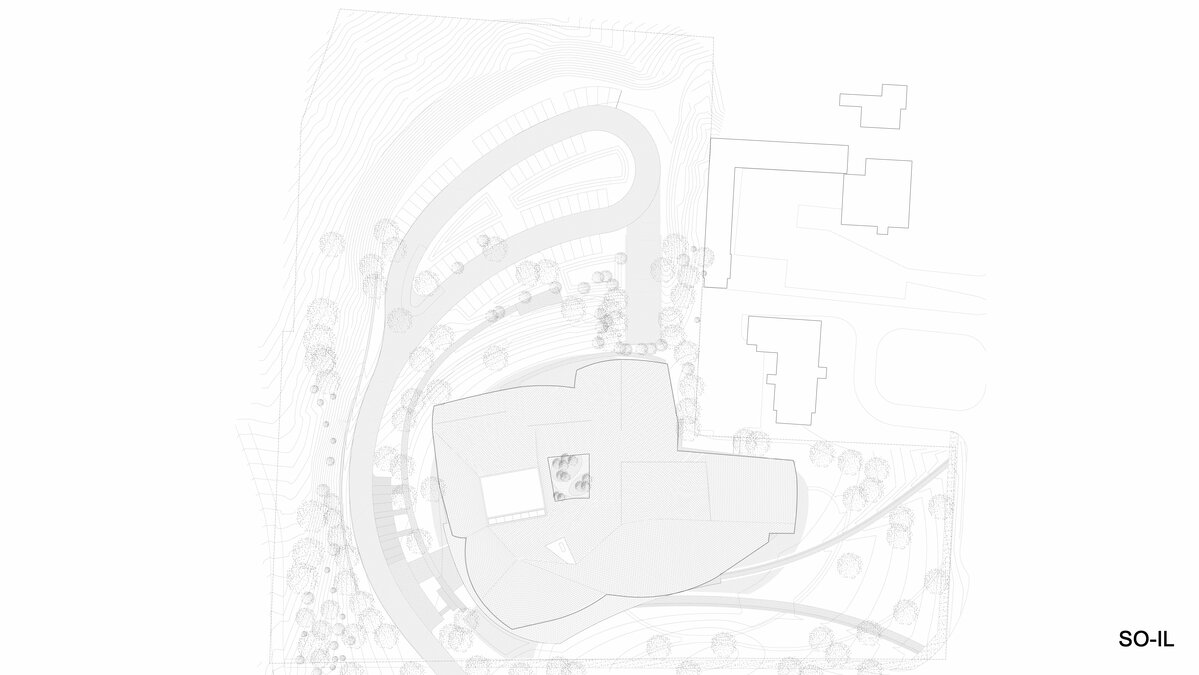
A roof of aluminum shingles covers all five volumes of the museum with curves and peaks that engage with the ridgelines of the surrounding mountains. The roof's broad overhang creates awnings and porches that surround the building, embracing visitors as they approach while providing temperature regulation to reduce energy use and enhance sustainability.
A courtyard garden stands at the heart of the building, north of the central lobby between the two gallery arms, locating nature at the center of the building. Views of the landscape open from the central lobby toward the main entrances, located on the south and west sides of the building. Seating areas between galleries offer views of the landscape, as does the lounge unifying the research spaces and classrooms in the study center.
With a focus on renewable materials and climate-control techniques, the building aims to require as little as 30 percent of the current baseline energy usage for art museums. The building's mass timber structure is exposed throughout the lobby and echoed by wood ceilings in the galleries. Carbon-conscious masonry in both textured and smooth surfaces will clad the outer walls of each pavilion, extending from the exterior façade to the interior gathering spaces and passageways. The roof's overhang will not only provide shade for the expanses of glass in the façade but also will be used for a rainwater retention system.
Outside the building, bioretention basins will catch and treat rainwater, while a cistern beneath the parking lot will hold water back until the brook running north of the site can handle the run-off. The landscape around the building, designed by Reed Hilderbrand, will be renewed and reforested, with a flowering meadow and gardens featuring native plants. The main parking area, located north of the building, will be a "park-in-the-woods" experience built into the existing 30-foot drop-off in the topography.
The museum will present an exhibition on the SO–IL design in May.
"Williams has a stellar legacy in the field of art history. At the center of that success has been our commitment to opening a world-class, global collection to engagement. The museum has been a place where people could come not just to view art, but to really get involved with it and in it — to think about the circumstances in which it is created, and the ways in which different artists see the world, and what those insights can mean for humanity as a whole," said college President Maud S. Mandel. "Some of the most fascinating examples have come from work with the collection by our classes in unexpected fields, such as chemistry or computer science or environmental studies.
"At the same time, and in the same space, the collection has been an important draw for visitors, a hub for discussion and culture and creativity for the Berkshires and beyond. The new building — designed to stand as a gateway to the heart of campus and Williamstown, and a tribute to the natural world in which we reside — will make it possible to realize and extend our vision for great arts engagement into a new century."
Tags: WCMA, Williams College, Williams College Museum of Art,