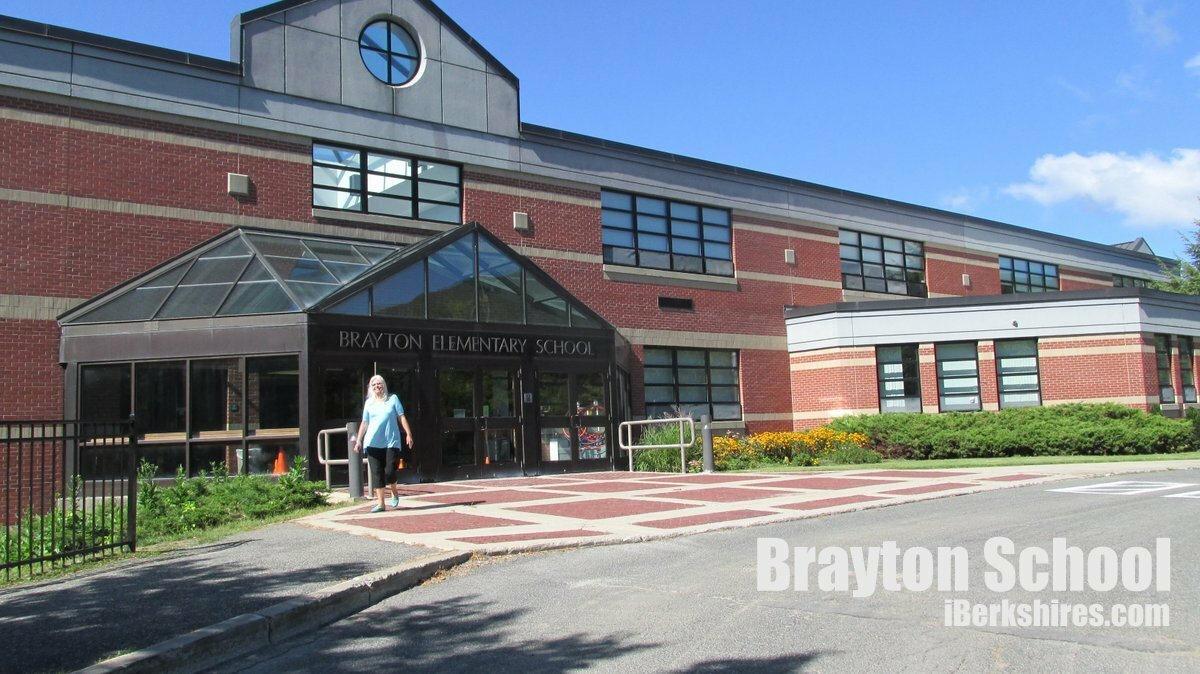
North Adams School Committee Hears Report on Brayton Air Quality
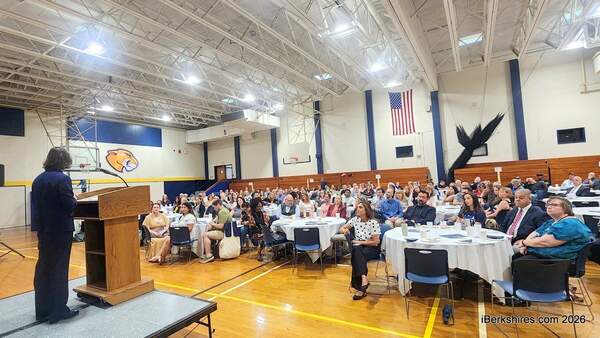
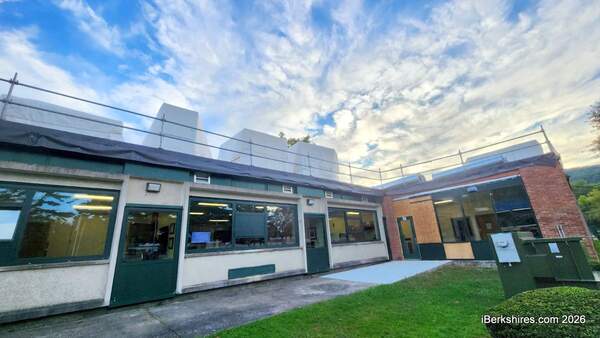
NORTH ADAMS, Mass. — The School Committee on Monday heard a report from the consultant hired to evaluate air quality at Brayton Elementary School after mold was found in a classroom this summer.
Craig Gifford of GEM Environmental walked the committee through the key findings in a 22-page report provided to the district.
Except for a couple of hallways in the lower level of the building, GEM found mold spore counts in the air to be below the counts in the ambient air outside the building, Gifford said.
"In the classrooms, to be honest, it was very low," he said.
On a typical day in the summer, Gifford said, outside air in the region might have mold spore counts between 500 and 1,000.
All seven of the rooms tested last month had counts of 107 or lower.
The outliers were the hallways, where, Gifford said, furniture was stored and moved during the testing period and where GEM found mold spore counts of up to 3,107.
He reiterated to the School Committee a point that was made in the written report's conclusion section: "The visual assessment identified no visible mold growth on walls, floor systems and furniture on the day of testing."
"If I saw something on a surface that was visible, I'd do a surface sample," Gifford said in response to a question from a committee member. "What's in the air is what you're going to breathe. … Air testing, to me, gives me more information. Sometimes [mold] can be behind a wall or in a drop ceiling, but it's going to come out in the air."
Monday's special School Committee meeting also included testimony from Matthew Pitoniak of Conserve Thru Control, who explained how his firm monitors and services the heating, ventilation and air-conditioning systems at the city's schools.
Pitoniak said older buildings like Brayton benefit from having HVAC systems that were installed before modern energy efficiency mandates; therefore buildings like Brayton maximize intake of outside air.
"Your air exchange in this building is exceptional," Pitoniak said.
The district's director of facilities talked to the committee about his staff's regular use of disinfectants on surfaces and high-efficiency particulate air filters on vacuum cleaners.
"Everything we use and do helps mitigate any mold we could find," Robert Flaherty told the committee. "I've never found any mold down there in that area."
Superintendent Barbara Malkas told the School Committee that the district had removed and replaced carpeting in classrooms that were found to have mold on equipment and outlined other mitigation efforts.
"When we pulled the carpet up, there was no evidence of mold on top of the carpet or on the back of the carpet," Malkas said. "There was old glue. But it was not mold. It was decomposing glue. The carpet was replaced after sanding [the floor] down.
"We added several new dehumidifiers to the area. We have repainted and looked to maintain a clean environment, which is something the maintenance staff does anyway. We went through materials to look for any products that could potentially have mold."
Malkas said the district also requested an inspection from the commonwealth's Department of Public Health and is waiting for a report to be published.
"I was told by [DPH official] Michael Feeney that the only items he found mold on were two old guitar cases in a storage closet and nothing else," Malkas said.
Malkas thanked Mayor Jennifer Macksey, also the chair of the School Committee, for rolling up her sleeves and helping with the carpet removal. Malkas also alluded to the widespread discussion in social media in the wake of reports of mold at Brayton and said she hopes the district can move forward.
"I'm hoping this [meeting] will reassure our school community that we take these issues seriously and do, in fact, address them," Malkas said. "When I was quoted on Aug. 22 saying there were no visible signs of mold present, that was a truth.
"We have taken this seriously. The inspection report we'll receive from the DPH director of indoor air quality will also be available publicly. It demonstrates Brayton is a safe school and it has been cared for."
Only one member of the public addressed the committee during Monday's meeting. Miguel Rodriguez told the panel he appreciates the hard work that has been done to make Brayton safe but he was concerned about how the mold issue was communicated to parents initially.
"I don't know why I got the email so late," Rodriguez said. "I don't know if it's because the superintendent's office found out about it late and we learned about it at the same time."
Rodriguez said he was concerned that the email was sent to parents less than 48 hours before the start of the school year.
Macksey responded for the committee.
"I apologize if you think that was short notice, but we feel we pushed the information out as fast as possible," Macksey said. "Internally, we never thought there was a danger of people being in the building."
Tags: Brayton School, mold,