image description
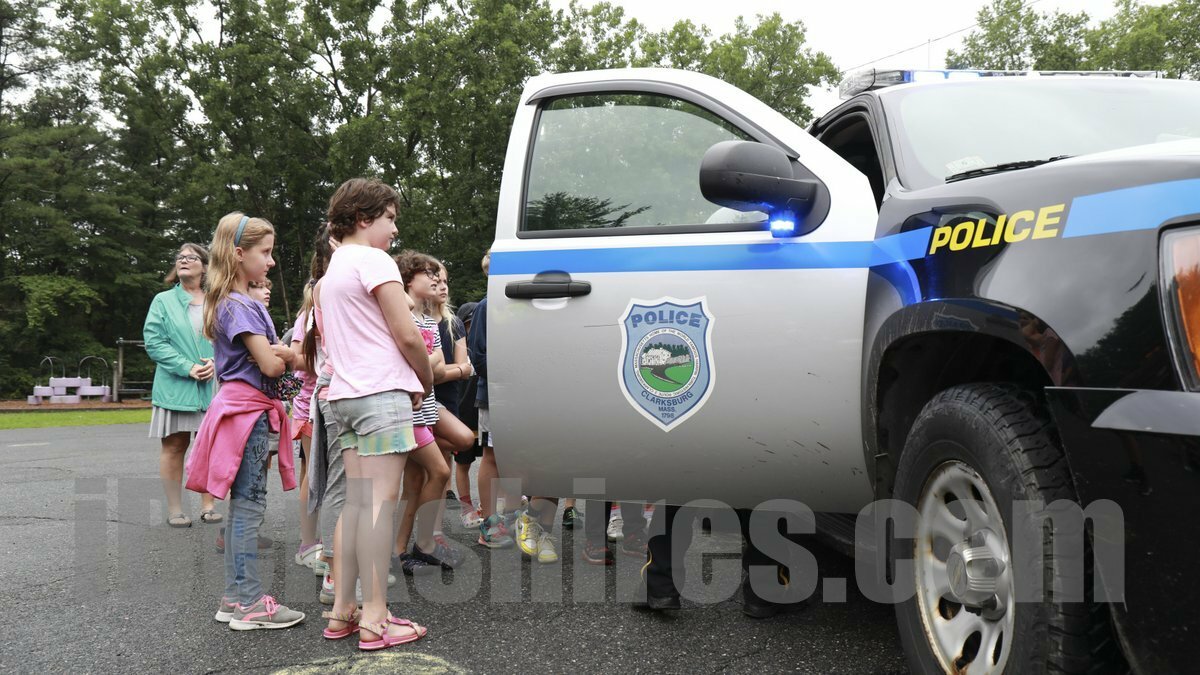
Children check out the Clarksburg Police cruiser at a 2021 event. The cruiser will be parked in the garage on Friday and for the foreseeable future.

Clarksburg Board Suspends Police Operations With Chief's Retirement

By Tammy DanielsiBerkshires Staff
Print Story | Email Story
CLARKSBURG, Mass. — The Select Board on Monday voted to suspend police operations in the town of 1,700 at the end of shift on Friday.
 
That's when Police Chief Michael Williams will retire after 40 years on the force, the last 21 as chief. 
 
Officials have been debating for weeks about the future of the Police Department, which has declined at this point to Williams and a single part-time officer. 
 
"I think we have to transition to State Police," said board member Colton Andrews. 
 
Fellow member Daniel Haskins agreed: "I don't see any alternatives at the moment."
 
Officials had researched several options: hire a new chief, contract with North Adams, or depend on State Police, as do a number of other small towns. 
 
"North Adams was not feasible," said Chair Robert Norcross. 
 
The board members felt the figures they were quoted for coverage were too onerous. But they also discussed whether the town would support a chief and possibly a full-time officer. 
 
They advertised for a police chief and over the last several weeks interviewed three candidates — an officer from Deerfield, the part-time chief in the town of Washington and the town's only officer. 
 
The Deerfield and Washington candidates were felt to be too far away and neither indicated they would relocate. The part-time officer fell short of qualifications — he would need 2,400 hours of training or on-the-job experience to be certified under the state's new regulations. 
 
That left the board with little choice but to transition to State Police coverage, at least for now. 
 
Williams said the town's been relying on the State Police for the weekends while the part-time officer averages about five hours a week. 
 
At one point, the department also had a part-time sergeant and four to six part-time officers. Williams argued unsuccessfully for a full-time officer in 2019.
 
On Monday, the board asked Williams if he'd stay on part time as an administrative chief — able to process firearms permits — and continue as emergency management director. 
 
He agreed pending an agreement on salary and hours. What he didn't think he could do as a paper chief is supervise an officer when board members raised that idea.
 
"The [administrative] police chief is basically a civilian role," he said. 
 
He would not be able to accept a part-time post until after Oct. 15; the emergency management director is a volunteer position.
 
The board spent some time going over the chief's duties, how those gaps could be filled and the securing of existing police materials. Williams said he and Town Clerk Marilyn Gomeau had been looking into aspects such as elections, which now require a police presence. One option could be appointing a constable for the purpose.
 
The police chief's last official action may be escorting Pvt. First Class Erwin King, whose body is being returned to the Berkshires 82 years after he was killed in combat at Guadalcanal. The procession is expected to stop at Town Hall for a wreath-laying ceremony at about 3 p.m. before heading Flynn & Dagnoli Funeral Home. 
 
In other business: 
 
Norcross reported that about 10 people attended the digital equity information session on Saturday and spent about an hour and half discussing internet needs and setting priorities.
 
 Town Administrator Carl McKinney told the board National Grid would not take down the large pine near the library. A tree fell on the building earlier this year and officials are concerned the pine may also cause damage. Its removal may have to go out to bid. 
 
National Grid is switching out all the streetlights to 25-watt LED bulbs, McKinney said. "We are going to save several thousand dollars on our electric bill."
 
 A Department of Public Works post is still open. Town meeting authorized adding a fourth person this May. McKinney said he is going back through applicants but the job may have to advertised again.
 
 The board voted to end COVID-19 sick time. The time had been counted outside of personal/sick time during the pandemic to prevent the virus's spread. But Haskins noted that the state had eliminated this extra sick time more than two years ago. 
 
 Norcross questioned a house being disconnected from the sewer system and North Adams not being informed. McKinney said a permit is required to disconnect and that the highway foreman has to witness it. An updated list is sent to the city each year but the board asked that any disconnection be immediately forwarded. 

Tags: clarksburg police,   police chief,   

If you would like to contribute information on this article, contact us at info@iberkshires.com.

Why the Massachusetts Art Community Is Worth Continued Investment

By James BirgeGuest Column
How do we quantify the value of art on society and culture? Even eye-popping figures, like the $100 million estimate for the jewels stolen from the Louvre, or the record auction last fall that saw a piece by Gustav Klimt sell for more than $236 million can't fully account for the value of the history, stories, and emotions behind the creations themselves. But beyond that, there is a measurable financial, cultural and social benefit of the arts that is often taken for granted. 

Closer to home, arts and cultural production in the Commonwealth of Massachusetts totals nearly $30 billion annually, representing more than 4 percent of the state's economic output, according to the Mass Cultural Council. All told, more than 130,000 jobs are spread across the commonwealth creating a vibrant and thriving artistic community for us all to enjoy. 

Despite the obvious impact, these figures are under threat. A recent survey by MassCreative compiled recent federal cuts to the National Endowment for the Arts, the National Endowment for the Humanities and the Institute of Museum and Library Services and identified 63 grants canceled and $4.2 million in grant funding rescinded across New England so far this year. 

The dollars, of course, are important. But they also only scratch the surface on what they bring to the community. Today, we risk losing part of the culture and identity many now take for granted. 

While others choose to look past these less tangible, but just as vital benefits, we're doing the opposite. Massachusetts College of Liberal Arts is all in to ensure the next generation retains their access to works of art, while also being empowered to create themselves. 

Last fall, MCLA officially broke ground on the new Campagna Kleefeld Center for Creativity in the Arts, which will serve as a new hub for the campus and the local community for arts programming. When complete in fall of 2027, our students will benefit, but so will all of Berkshire County and artists in the surrounding area. 

This exciting new facility is just one of the many forthcomings our region can enjoy in the coming years. Just a few miles away, anticipation builds for the Fall 2027 anticipated opening for the Williams College Museum of Art. Years in the making, the museum likewise grows from an enduring commitment to the arts, both in curriculum and in practice. Exciting times are also underway for the Clark Art Institute with the construction of a new facility to house a collection of 331 works of art, including paintings, sculptures, drawings and other works. Their wing is scheduled for completion in 2028. And listeners will no doubt enjoy the sounds and melodies from Mass MoCA Records, the latest endeavor to foster creativity and artistic pursuits through music launched in October as well. Of course, many are also awaiting the reopening of the Berkshire Museum anticipated this summer, after a tremendous renovation process to rejuvenate the experience for visitors. 

So much time, energy, and yes, dollars, have already been invested in taking these facilities from ideas and sketches and making them reality. But they represent much more than new buildings. They represent new opportunities to cultivate and accelerate the thriving arts community in Massachusetts and the northern Berkshires. 

Art, regardless of the medium, is a reflection of who we are, where we've been, and what we aspire to be. It can be inspired by hopes or fears and chronicle collective triumphs as well as tribulations. The goal of art is not only to document history, but to inspire those positioned to change it and to feel something new or even to provoke us to revisit our own assumptions or misconceptions. 

As unfathomable of a number as $30 billion can seem, boiling down the impact to any number inherently discounts the unknowable downstream effects our graduates will bring to the community and the broader world after they leave our institutions. Likewise, rescinding $4.2 million now removes a huge chunk of that growth potential.  

Justification for making these investments today when simply boiled down to dollars and cents still places us on solid ground strictly from a financial perspective that forgoes all of the intangible, but no less valuable, benefits as well.  

The arts are still worth our support. And our community will be richer for it. 

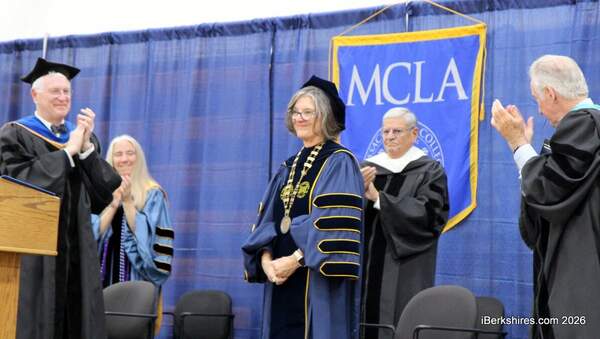
James Birge, PhD, is president of Massachusetts College of Liberal Arts in North Adams.  


View Full Story

More North Adams Stories