Dalton Green Committee Seeking CAP Logo Submissions

By Sabrina DammsiBerkshires Staff
Print Story | Email Story
DALTON, Mass. — The Dalton Green Committee is asking Wahconah Regional High School to submit logo designs for its Climate Action Plan. 
 
The committee has sent a letter to the school's art teacher, Bonnie Capogna, requesting her students' assistance in creating a design to accompany its CAP. 
 
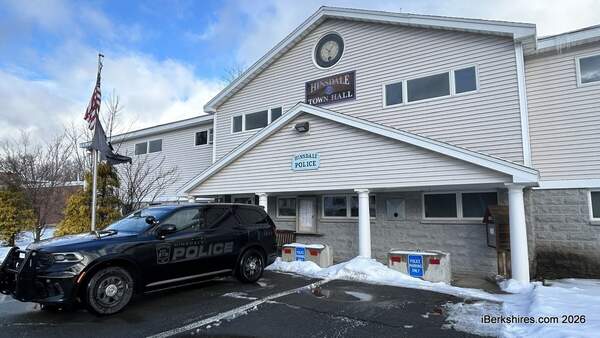
"We would like the logo to touch upon one or more of the following attributes representative of our community or any other pertinent attributes [including] the Housatonic River, Appalachian Trail, Pine Grove and Greenridge parks, the town hall, Community, Recreation Association, family and community values, smallness, friendliness, and charm of our community," Green Committee member Laurie Martinelli said. 
 
"The logo may reflect Dalton's past, present, and future environmental climate status. Designs may include a phrase or tagline … The artists will be publicly recognized for their cap contribution."
 
All designs should be submitted to the Dalton Green Committee by Oct. 31. Following the deadline, the committee will review all the submissions and submit the qualifying logos to its steering committee for a final selection of one or more designs. 
 
Once a design is selected, the committee's CAP consultant, Blue Strike, will have its graphic designer amend the selected logo, which the artist will review and approve. 
 
Blue Strikes graphic designer is meant to "clean up and tie up a few key concepts" that the committee brings to them, said Cisco Tomasino, climate and events manager, during a previous meeting. 
 
The committee is developing a climate action plan with Blue Strike to achieve net-zero by 2050 by seeking strategies to decrease the town's dependence on fossil fuels for homes, businesses, municipal facilities, and vehicles. 
 
Part of this process is community engagement, which involves informing residents about the climate action plan, gathering community input for its development, and answering people's questions. 
 
"A picture is worth 1,000 words," committee member Antonio Pagliarulo said during a previous meeting.  

Tags: green committee,   
If you would like to contribute information on this article, contact us at info@iberkshires.com.

Pittsfield Council OKs $15M Borrowing for Drinking Water System

By Brittany PolitoiBerkshires Staff

PITTSFIELD, Mass. — The City Council last week approved borrowing $15 million for drinking water system upgrades, and heard a commitment from the Department of Public Works to consider solutions for the intersection of Onota and Linden Streets. 

Last month, the council supported the borrowing for the city's two drinking water plants during its regular meeting. 

Commissioner of Public Services Ricardo Morales explained that the decades-old filtration units need to be babysat "much more" than usual, and the city is due for new technology. 

Pittsfield's two Krofta water treatment plants were installed in the 1980s and are said to be beyond anticipated useful service and at risk for catastrophic failure that could result in a shortage of potable water. Krofta is a compact filtration system that Pittsfield will continue to use, with four new units at the Cleveland WTP and two at the Ashley WTP.  

"When the Krofta was built in 1980, I was there on the council, and here we are looking to repair or replace certain parts," Ward 1 Councilor Kenneth Warren said. 

"So 40 years later, I think we need to do that." 

The full drinking water project is expected to cost $165 million over the next eight years, with $150 million for long-term construction and $15 million for near-term needs. The initial ask would fund the final design and permitting for Phases 1-3 and Phase 1 of interim updates. 

The $15 million borrowing breaks down into $9.2 million for the design and permitting, $2.4 million for the construction of Phase 1, and $1.4 million in city allowances, including owner's project manager services, land acquisition, legal fees, and contingency. 

Pittsfield's water system includes six surface water reservoirs, five high-hazard dams, one low-hazard dam, two water treatment plants, two chlorinator stations, and gravity flow from the plants to the city. It serves Pittsfield, Dalton, Lenox, and the Berkshire Mall property. 

View Full Story

More Pittsfield Stories