Hoosac Valley SAAB Holds Inaugural Retreat
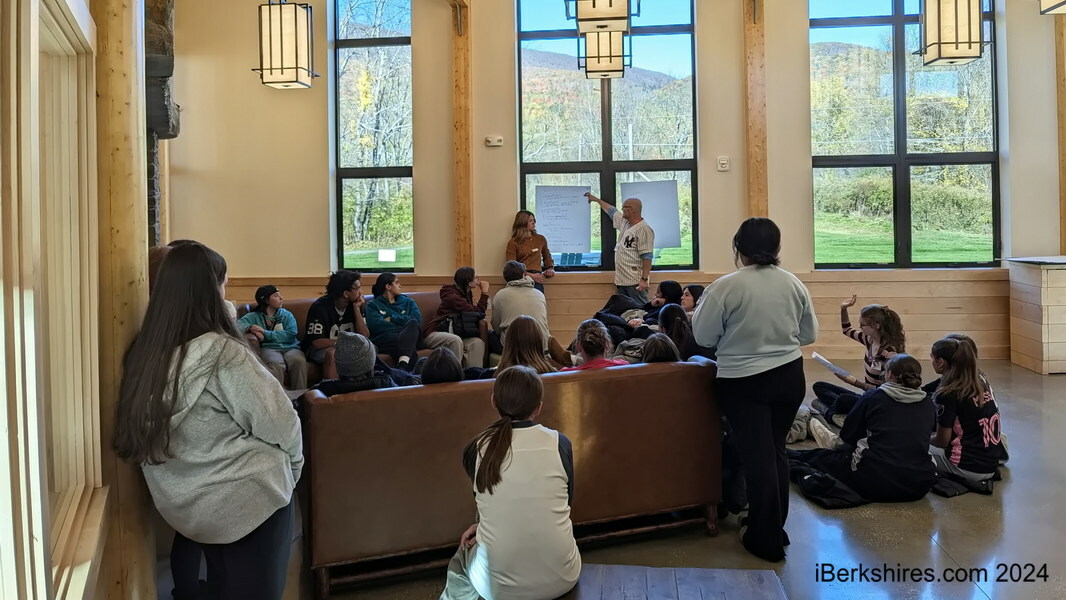
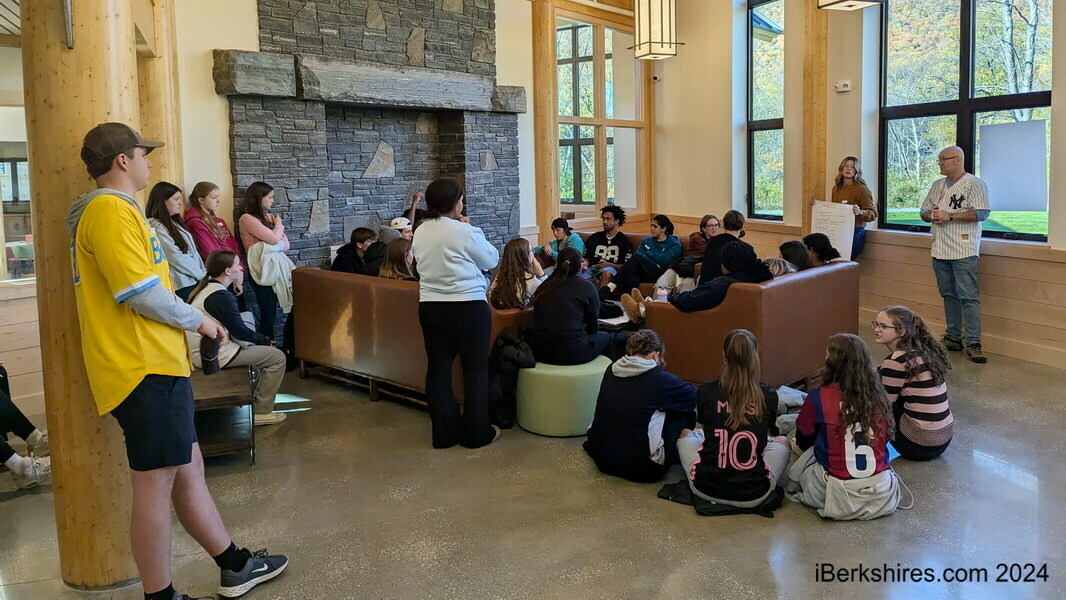
This is the first event to be held in the Outdoor Center since its opening Oct. 11.
"We are trying to create something out of nothing, well not nothing," said Keith Wright, group organizer and science teacher. "What they are doing this morning is looking at a whole bunch of data about Hoosac Valley based on what students have said as well as students' own passions. This is the birth of the organization."
The group of 50 or so will meet regularly to discuss different issues at the school as well as find ways to advocate for changes they want to see in the building. They will use a data to inform their discussions that they hope to be able to share with school leadership.
Wright said last year students in statistics class started looking at school data, essentially data indicating what students cared about. Students they later presented to the superintendent. It reminded Wright of a similar program he was part of at Monument Mountain High School.
"There was a really active student voice component at work down there, and I wondered if we could do it here," he said. "The administrators said lets do it … Students bring a lot of expertise because they live it everyday. It is invaluable."
An important aspect of the group is their interaction with adults. Four members of the Hoosac Valley community are part of SAAB and will help serve as the link between the group and the rest of the school as well as provide any needed support.
"Adults have a lot of experience in education and in life. What ends up surfacing is that there is not always time when I am teaching Stoichiometry in chemistry class to learn that there are students who are really concerned about their peer's mental health and well-being," he said. "So this gives us that space to have those conversations."
Friday's session was pretty open and students tried to pin down four broad categories that were all-encompassing of some of the topics they wanted to bring to SAAB as well as nuances they found in the data.
Each group, supported by an adult, will contain 10 or so students who will meet twice a month. Before lunch, the group tried to boil down topics including environment, celebration, student life, and academics, among others.
Students were not only passionate about the specific ideas but how to properly organize them to best address the array of topics. During the opening sessions, students patiently announced their ideas being sure to make room for new voices to speak out.
Teacher and SAAB supporter Lindsay McGinnis said she hopes that members of SAAB will eventually be able to meet with administrators as well as the school committee to make their case.
"This gives students a voice in the things the administrative really focus on like policy," she said. "Here they can talk about those changes or getting rid of some things that have been implemented that they may not love."
She said students were interested in addressing a new bathroom policy, a new cellphone policy, and perhaps bringing back composting, among other things.
But before they can go before the school's policymakers, Wright told the students it will be about putting their time in as well as their due diligence
"Basically, we're going to become experts on the things that we're advocating for before we advocate," he said. "If you have to go to the school committee … you have got to have your stuff together. You need to know what's up, you need to know what other schools are doing, and you have to have data to support your argument. That is how change happens."
Wright said there are true lessons to be learned through this program, lessons sometimes challenging to teach in a typical classroom.
"The exciting thing about this is that it is all very academic in a way that is very real to life. It is civics, it is public speaking, it is making change," he said.
The group are the first to meet in the newly opened Outdoor Center. Wright said the space met their needs perfectly with plenty of different areas to hold collaborative break-out sessions
"I was just blown away by this place's beauty," he said. "It works really well for the whole group as well as small groups."
Tags: advisory committee, HVRSD,