Williamstown Con Comm Clears New WCMA
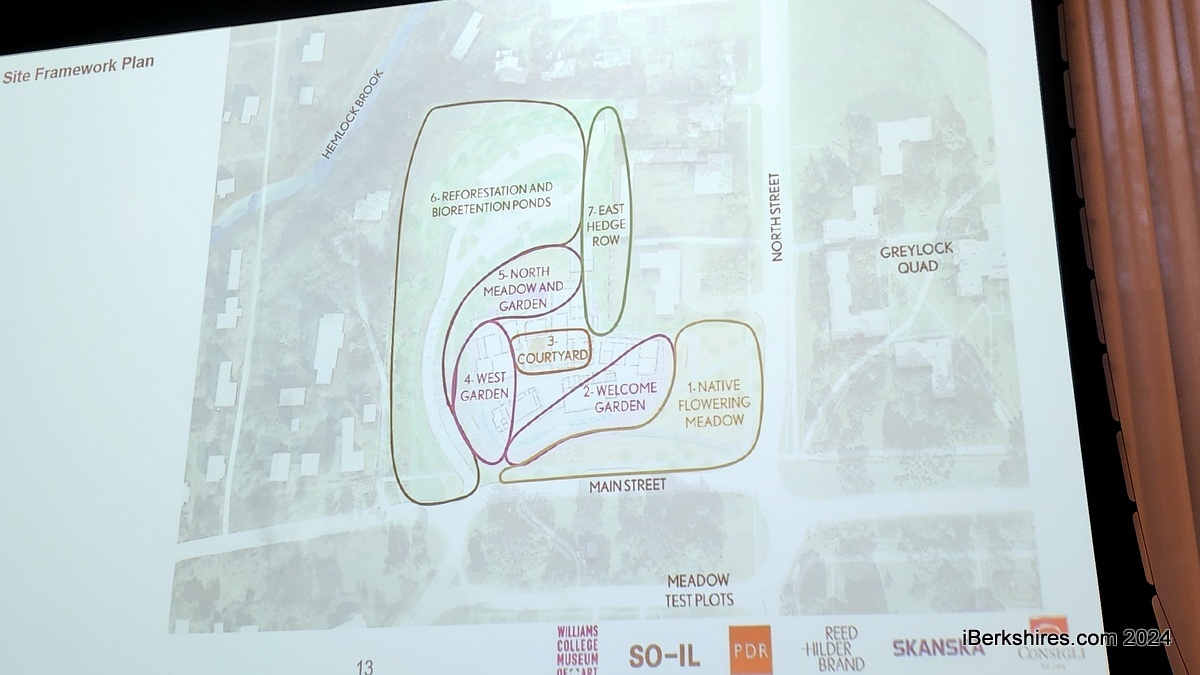
The landscaping includes a number of distinct gardens and the planting of 1,000 trees.
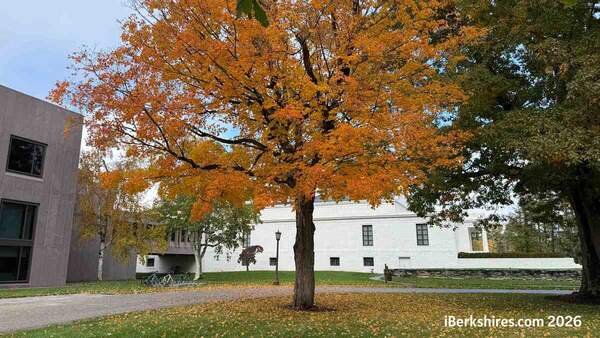
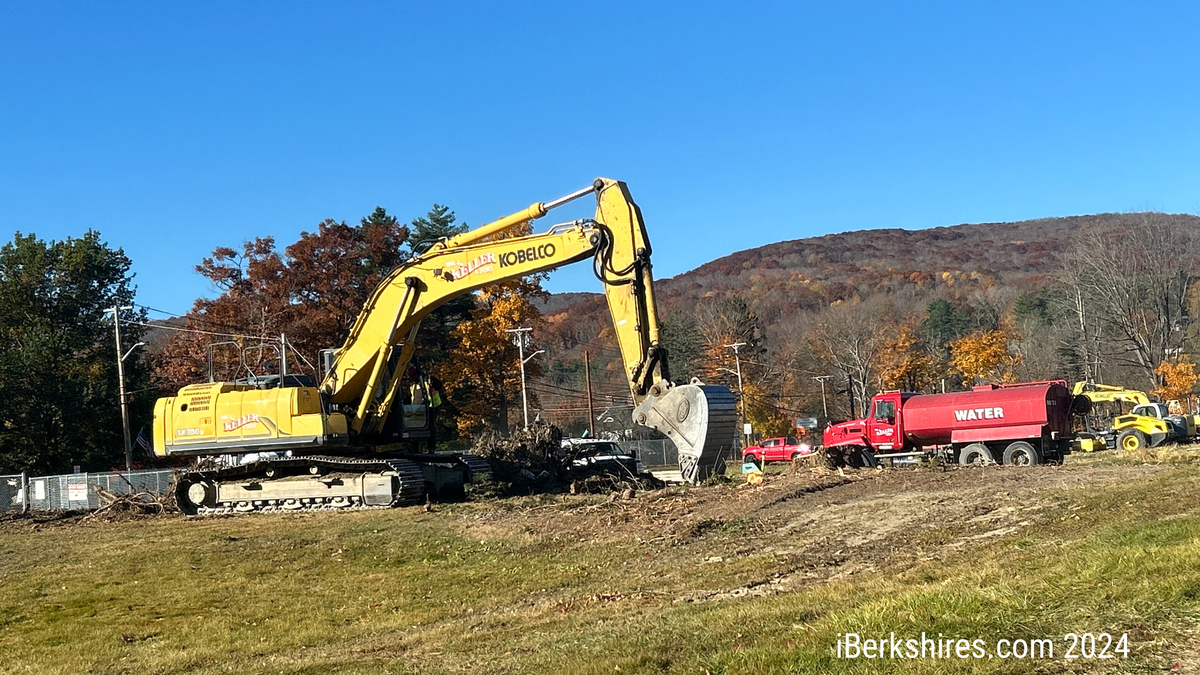
Even as site work was underway for the planned 76,000-square-foot museum next door to Town Hall, the Conservation Commission met to consider a request for determination of applicability of the Wetlands Protection Act for landscaping the college plans in a small portion of the 6.75-acre site.
The area in question is in the northwest corner of the museum property and within 200 feet of the nearby Hemlock Brook.
Civil engineer Daniel Monette of Vermont's Fuss and O'Neill explained to the commissioners that it was not always clear to the museum's planners that it would need to do any work in the outer riparian zone of the river.
"Our original plan was to avoid that area," Monette said. "We didn't have any work planned, no earth disturbance or any work within the 200-foot buffer.
"We started doing more research on what was in that area. We found there were invasive species and some dead, dying, diseased trees in there. As part of the landscape architect's effort, we thought, as a project, we should do some sylviculture, move into that area, clean it up, have some forest management and try to improve the health of the forest overall and see what we could do to keep those invasives out."
That meant a trip to the Con Comm to determine whether the work planned constituted the kind of "minor activities" exempted from the WPA in a buffer zone.
"It's an RDA because there are a suite of exempt minor activities in the buffer zone and the riverfront area," town conservation agent Andrew Groff told the commission. "Two of them are vista pruning, as long as it's more than 50 feet away from the median annual high water mark of Hemlock Brook, which this area clearly is. Also, all plantings of native species of trees, shrubs, ground cover — excluding turf lawns — is an exempt activity as well."
An abutter from neighboring Fort Hoosac Place appeared before the commission to ask that it postpone a decision on the RDA — which would avoid the more onerous step of presenting a notice of intent to the commission — because it did not come with a specific planting plan outlining which native species would replace the dying and/or invasive trees slated for removal.
The college's museum project director told the panel that the school's landscape architect, Reed Hilderbrand of Cambridge, is developing an overall planting plan that the college wants to move on as soon as possible.
"Doing removals and replanting at this early stage is critical to the life of the project," Devon Nowlin told the commission. "We would like to know your determination so we know how to complete our plans. Our construction documents are due to be complete on Nov. 15. That's coming up soon.
"A determination would help us know how to proceed and complete the plans then complete the early work throughout the winter and be prepared for planting in the spring."
The complete museum project is slated to be finished sometime in 2027.
When members of the commission started to discuss a timeline for potentially rehearing the RDA with a planting plan on the table, Commissioner Sarah Rowe asked whether the plan was relevant to the request before the body.
"Can we say 'no' if they're only going to have native species?" Rowe asked.
Groff advised that the commission might have authority to require a planting plan in the RDA process.
"What's applicable in the Wetlands Protection Act is the two minor activities I referenced earlier," Groff said. "Working with the college and their team, I recommended an RDA because these are minor activities.
"You can condition [the RDA]. You can find that they're minor activities in the buffer zone and condition the RDA appropriately. I think you could even condition one-for-one replacements for what is lost. But I don't think you can require a whole planting plan. You can have them come back and submit it to my office … for confirmation the species are native and meet the intent of 10.02(d) [of the act] in the minor activities provision."
The commissioners chose to do just that, determining that the WPA does not apply to the work planned by the college and requiring that it submit a planting plan to the conservation agent for verification. The Con Comm also conditioned that work in the riparian zone be limited to hand tools or machinery no larger than a mini excavator.
In other business on Thursday, the commissioners learned from Groff that there is progress on getting the go-ahead from state officials to do a long-discussed bank stabilization project on the Hoosac River near the intersection of North Street and Syndicate Road.
Groff said an environmental consultant hired by the town did find evidence of an endangered sedge that is a species of concern to the commonwealth in the area that needs stabilizing.
But the town also has a solution to protect the plant and proceed with the project.
"Folks might remember from the bike path project there's a funky piece of property that's difficult to get to on the opposite side of the Hoosac from what is now the 330 Cole Ave. apartments," Groff said. "It was attached to the Photech mill property. The town owns it from when we took Photech for taxes. But it's not usable. … That's where all the rare plants from the bike path were moved to. That might be an ideal location."
Once the town gets approval from the state for the relocation of the sedge from one section of the Hoosac River bank to another, it will come back to the Con Comm for an order of conditions on the Notice of Intent the commission first saw in June, Groff said.
Tags: conservation commission, WCMA,