image description
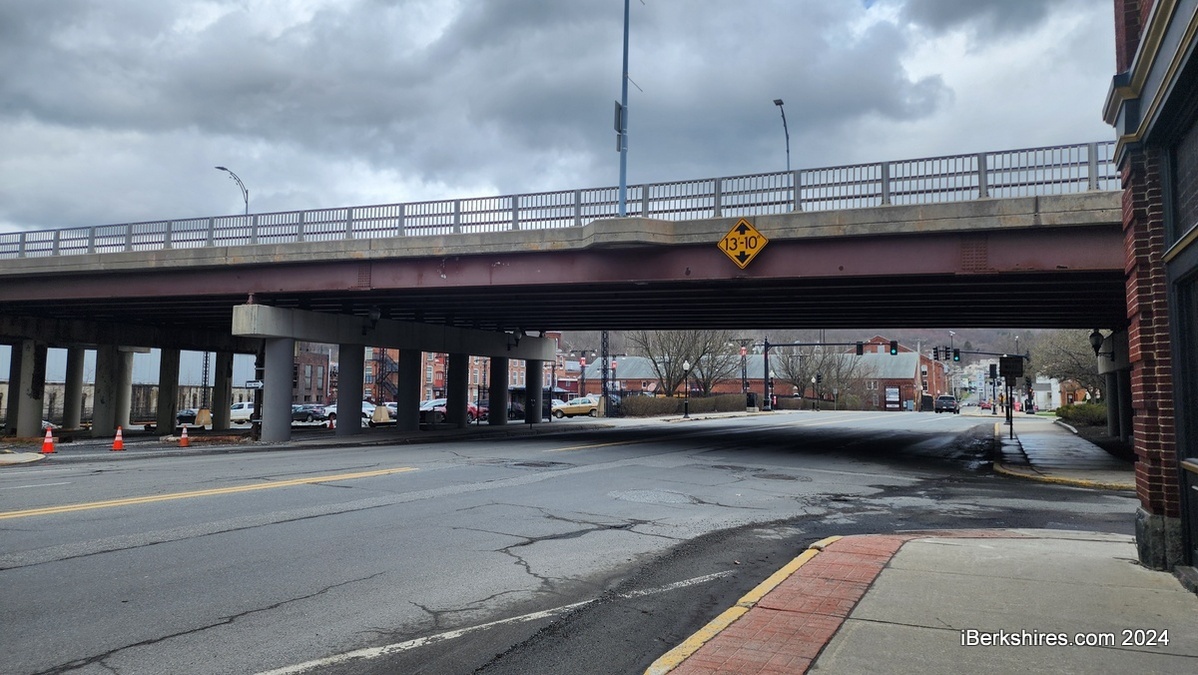
The Route 2 overpass, the Veterans Memorial Bridge, is the focus of a transportation planning study to better connect the downtown to Mass MoCA.

North Adams Hosting Route 2 Overpass Study Walks

Print Story | Email Story
NORTH ADAMS, Mass. — The city of North Adams is hosting three community walks this week to solicit input on a study of the 60-year-old Central Artery project. 
 
The focus is on the deteriorating Veterans Memorial Bridge that carries Route 2 and connections between the downtown and Massachusetts Museum of Contemporary Art. The site visits will be led by Openbox, a community-centered design partner for the study, in collaboration with the Northern Berkshire Community Coalition 
 
The community walks will be held on one evening and two mornings:
 
Wednesday, Nov. 13, from 4:30 to 6 p.m.
Thursday, Nov. 14, from 7:30 to 9 a.m.
Friday, Nov. 15, from 7:30 to 9 a.m.
 
The walks are open to all and attendees are asked to register here and indicate and accessibility needs.  Attendees should arrive within the first hour and plan to spend between 30 to 45 minutes in total during the 90-minute timeframes.
 
Meet at the UNO Community Center on River Street for a self-guided site walk around the Route 2 overpass and
return to the center for conversations about people's everyday experiences moving to, through, and around Route 2 and North Adams.
 
The city, in conjunction with Mass MoCA, has received a federal Reconnecting Communities grant of $750,000 for a planning study. North Adams was one of only 46 communities out of 450 applications to receive a grant; the $1 billion pilot program is part of the Bipartisan Infrastructure Act. 
 
The study will analyze traffic flow and multimodal access and come up with alternative streetscape designs that will better connect the north and south sides of Route 2. It will consider other plans that relate to downtown connectivity, commission transportation, urban design and environmental analyses of the overpass and its surroundings, and engage diverse segments of the community to comment on planning and the feasibility study. 
 
Contact Raissa Xie at raissa@opnbx.com or 734-545-3976 with questions. More information here: rt2overpass.info

Tags: feasibility study,   federal grants,   mass moca,   pedestrians,   traffic study,   

If you would like to contribute information on this article, contact us at info@iberkshires.com.

State Fire Marshal: 'Fall Back' Into Safety

STOW, Mass. —State Fire Marshal Jon M. Davine and the Fire Chiefs Association of Massachusetts are reminding residents to replace the batteries in their smoke and carbon monoxide (CO) alarms and replace outdated alarms when they change their clocks this weekend. 

"Smoke and CO alarms can save your life and protect the people you care for, but only if they're working properly," said State Fire Marshal Davine. "As we 'fall back' this weekend, please take a few minutes to check the manufacturing date on the back of your alarms, replace them if they're outdated, and put fresh alkaline batteries in the alarms that use them." 

"Smoke alarms should be replaced after 10 years," said Brockton Fire Chief Brian Nardelli, who serves as president of the Fire Chiefs Association of Massachusetts. "Carbon monoxide alarms should be replaced according to the manufacturer's instructions – usually 5, 7, or 10 years, depending on the make and model." 

A 2015 update to the State Fire Code requires that replacement smoke alarms in most Massachusetts homes have sealed, 10-year batteries. Now, more than 10 years later, many alarms purchased to comply with the update are at or near the end of their useful lifespans. 

State Fire Marshal Davine and Chief Nardelli offered these tips for anyone replacing out-of-date single-station smoke alarms. Following these guidelines will reduce the risk of a disabled or outdated alarm failing to alert residents: 

  • Choose photoelectric alarms from a well-known, national brand 
  • Look for the mark of an independent testing lab like UL or Intertek/ETL 
  • Select alarms with a sealed, long-life battery and a "hush" feature" 
  • Alarms that meet UL Standard 217, 8th edition or later, use the latest multi-criteria technology to reduce nuisance alarms caused by cooking smoke 

If your alarms are less than 10 years old and take alkaline batteries, then put in fresh batteries to be sure you're protected all winter long. And remember to test your smoke and CO alarms once a month to be sure they're working properly. 

Fire and CO Hazards Rise During Heating Season

In an average year, about 54 percent of Massachusetts residential fire deaths take place between November and March, State Fire Marshal Davine said, with home heating equipment being the second-leading cause of house fires in 2025. Carbon monoxide incidents start even earlier as residents start turning up the heat for the first time since summer. 

"Carbon monoxide is a leading cause of accidental poisoning, and heating equipment is the main source of carbon monoxide at home," Chief Nardelli said. "We can't see, smell, or taste carbon monoxide. Working CO alarms on every level of your home are the only way to detect this invisible killer." 

Massachusetts firefighters encountered carbon monoxide hazards at about 5,000 calls last year, State Fire Marshal Davine said. 

Create & Practice a Home Escape Plan

"Changes to building construction and furnishings mean we have less time to escape a fire at home than ever before," said State Fire Marshal Davine. "You could have just three minutes to get out safely."  

"Working smoke alarms and a practiced home escape plan are among the most fundamental and important tools for surviving a fire," said Chief Nardelli. "Be sure everyone in the home knows what to do and where to go when the alarm sounds, including young children, older adults, and persons with disabilities." 

Fire officials recommend planning two ways out of the building, the apartment, and each room if possible. Be sure to select a family meeting spot a safe distance from the building. 

Senior SAFE

View Full Story

More North Adams Stories