Governor Announces Grant Opportunities for Fire Safety Education

Print Story | Email Story
STOW, Mass.—The Healey-Driscoll Administration announced that applications are being accepted for $2 million in grants to support fire and life safety education for children and older adults, the people most vulnerable in the event of a fire at home.
 
The Student Awareness of Fire Education (SAFE) and Senior SAFE grant programs are administered by the Executive Office of Public Safety & Security and the Department of Fire Services. They send local firefighters to schools, community groups, senior centers, councils on aging, and other venues to teach age-appropriate safety lessons to children under 18 and adults 65 and older.
 
"The SAFE and Senior SAFE grants are a smart investment in fire protection, fire prevention, and fire safety for the most vulnerable members of our communities," said State Fire Marshal Jon M. Davine. "I want to thank Governor Healey, the Executive Office of Public Safety, and the Legislature for supporting these programs, and I encourage every fire department to apply."
 
According to a press release, the SAFE grant program has contributed to the steepest decline in child fire deaths in Massachusetts history. In 1994, there were more than two dozen child fire fatalities; the SAFE grants were launched the following year and child fire deaths never again reached even half that number. Massachusetts recently went more than two and a half years without losing a child to fire.
 
The Senior SAFE grants were created in 2014 to provide education, smoke and carbon monoxide alarm installation, and other services to reduce fire-related fatalities among older adults, who now represent the age group most likely to die in a fire.
 
Fire departments of every city, town, fire district, and eligible state authority can apply to share in funding for SAFE grants, Senior SAFE grants, or both. Departments must meet certain requirements, including mandatory fire data reporting, to be considered. The Notice of Funding Opportunity, grant application, and eligibility requirements are available on the Department of Fire Services' website. Applications must be submitted by 5:00 pm on Dec. 10, 2024.

If you would like to contribute information on this article, contact us at info@iberkshires.com.

Lanesborough Planners Bring STR, ADU, Signage Bylaws for Town Vote

By Breanna SteeleiBerkshires Staff

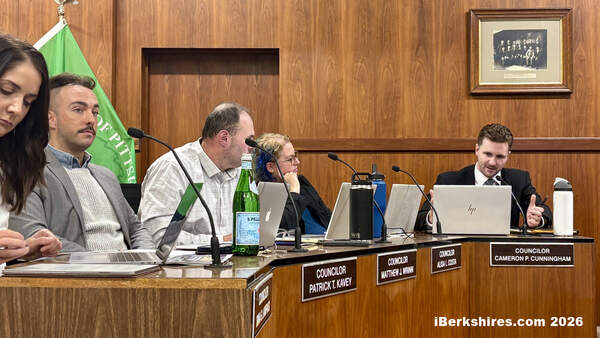
LANESBOROUGH, Mass. — The Planning Board held a public hearing on the much anticipated bylaws for short-term rentals, accessory dwelling units, and signage to be presented at the annual town meeting.

For the past few months, planners have diligently been working on wordage of the new bylaws after Second Drop Farm's short-term rental was given a cease and desist because the building inspector said town bylaws don't support them.

The draft bylaw can be found on the website.

The board voted on each of the four articles and heard public comment before moving to entertain any amendments brought forward.

A lot of discussion in the STR section was around parking. Currently the drafted bylaw for parking states short-term rentals require two parking spaces, and with three or more bedrooms, require three spaces but never more than five.

There were questions about the reasons for limiting parking and how they will regulate parking renters choose to park on the lawn or the street. Planners said it is not their call, that is up to the property owner and if it is a public street that would be up to the authorities.

Some attendees called for tighter regulation to make sure neighborhoods are protected from overflow.

Lynn Terry said she lives next to one of the rented houses on Narragansett Avenue and does not feel safe with all of the cars that are parked there. She said there can be up to 10 at a time on the narrow road, and that some people have asked to use her driveway to park. She thinks limiting to five cars based on the house, is very important.

The wordage was amended to say a parking space for each bedroom of the house.

Rich Cohen brought up how his own STR at the Old Stone School helps bring in money and helps to preserve the historic landmark. He told the board he liked what they did and wants to see it pass at town meeting, knowing it might be revised later on.

He said the bylaws now should not be a "one size fits all" but may need to be adjusted to help protect neighborhoods and also preserve places like his.

After asking the audience of fewer than 20 people, the board decided to amend the amount of time an short-term rental can be reserved to 180 days total a year in a residential zone, and 365 days a year in every other zone. This was in the hopes the bylaw will be passed and help to deter companies from buying up properties to run STRs as well as protecting the neighborhood character and stability.

They also capped the stay limit of a guest to 31 days.

Cohen also asked them to add "if applicable" to the Certificate of Inspection rule as the state's rules might change and it can help stop confusion if they have incorrect requirement that the state doesn't need.

The ADU portion did not have much public comment but there were some minor amendments because of notes from KP Law, the town counsel.

View Full Story

More Pittsfield Stories