Williamstown Community Preservation Committee Funds Proposals at Half the Levels Sought
WILLIAMSTOWN, Mass. — The Community Preservation Committee Wednesday decided to send town meeting warrant articles that fund each of eight applications for CPA funds at half of the levels requested.
The committee started its consideration of fiscal year 2026 requests with applications totaling about $294,000.
Pending tax collection and state matching funds, the town expects to have $202,535 in Community Preservation Act funds available in the fiscal year that begins on July 1. But CPC Chair Philip McKnight noted at Wednesday's meeting that nearly $43,000 of that available balance needed to be held in reserve for future open space requests because none of the requests for this funding cycle fall under that statutory purpose of the commonwealth's Community Preservation program.
Another $15,000 of the $202,535 needs to be held in reserve in case state matching funds fall short of expectations, McKnight said. And the committee
That meant the effective balance the committee had to work with was $144,781, or 49 percent of the total needed to fully fund all eight requests on the table.
The first order of business on Wednesday was deciding how to address two applications that came in after the noon deadline on Jan. 3.
Representatives of both the late non-profits appeared before the committee to address their tardiness. Affordable Housing Trust Chair Daniel Gura and Sand Springs Recreational Center Executive Director Henry Smith each described the extenuating circumstances that led to the late receipt of the applications.
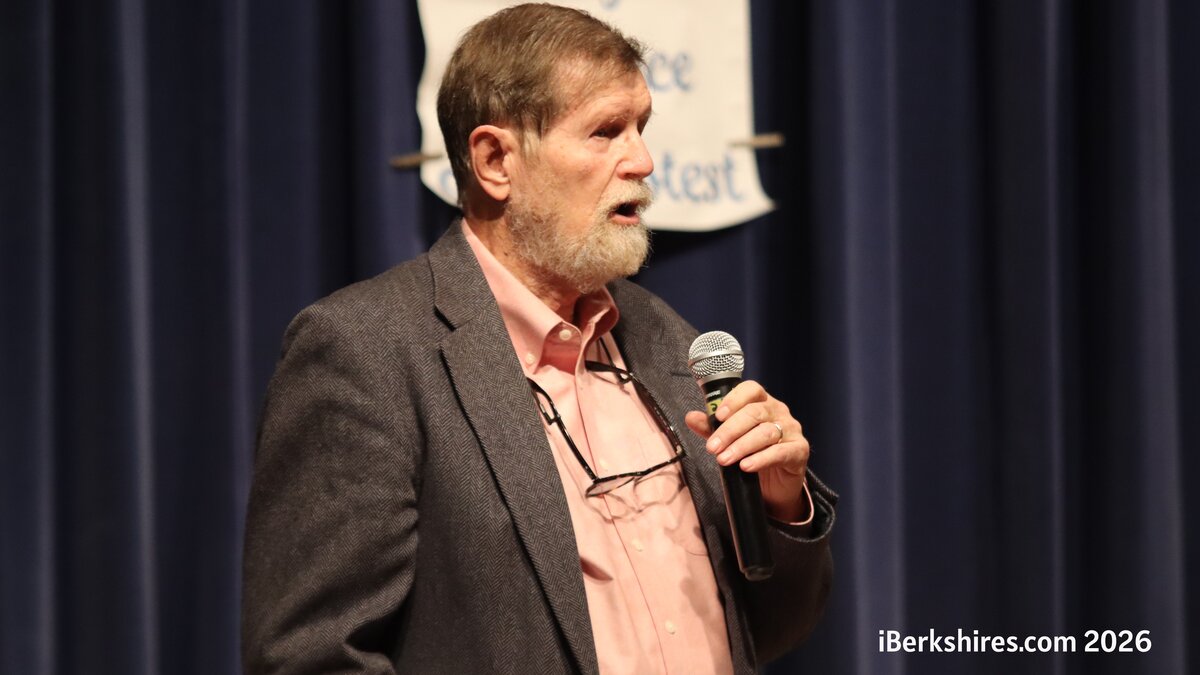
The coincidentally named Daniel Gura of the Williamstown Rural Lands Foundation, one of six "on-time" applicants for CPA funding, joined members of the CPC in pushing for leniency over the timing issue.
"Speaking as a fellow applicant, I think the types of organizations here and the people submitting applications are responsible, in large part, for a lot of the good things that happen in this community," WRLF's Daniel Gura said. "I'd personally like to see all applications considered. In both cases, it seemed like they tried their best. In one of the cases, at least, it's volunteer time going into these sorts of major projects.
"So I think we should do everything we can to encourage our community to be improved and bettered. I don't think we get a lot by having a hard deadline in this case."
McKnight was one of several committee members who argued that the panel should adhere to the deadline, which, he noted, was printed on the CPC's application for 10 years.
"How do we write a deadline if it isn't, in fact, that?" McKnight asked rhetorically. "If we were to enforce the deadline, it is no reflection on the quality of the applications."
McKnight ended up in the minority of a 7-1 vote to consider the Affordable Housing Trust and Sand Springs applications along with the other six requests.
Prior to voting, the committee discussed and several members seemed favorable to updating the FY27 application to move the deadline time to close of business on the date submissions are due.
All eight of the non-profits had a chance to discuss their applications with the committee before the CPC members voted on whether each request qualified for funding under the Community Preservation Act.
That left the committee with the conundrum of either recommending funding for some projects but not others or recommending funding for all eight at less than the requested amount.
McKnight initially pitched going the latter route, noting that the committee could recommend town meeting allocate just less than 50 percent of each applicant's requested amount and still preserve the traditional $5,000 warrant article to cover the committee's administrative expenses.
A couple of members expressed support of the proposal as a fair way to allocate the scarce resource. One, Randal Fippinger, suggested that even applicants who receive less than they sought could leverage the financial support of a town committee in their efforts to raise funds from other sources.
One CPC member, Nate Budington, disagreed.
"I think our task as a committee is to make decisions," Budington said. "There seems to be uniformity on the committee that all of these proposals are really good. Implicit in that is that anybody can apply [for CPA funds] again next year.
"I think giving half of what they asked for is, to me, unsatisfying. I'd rather us make decisions on the applications that rise to the top and fully fund them."
An initial vote on McKnight's "half funding" idea failed on a vote of 4-4.
A lengthy discussion followed in which the committee members discussed how the group of eight could prioritize the eight proposals on the table. A couple suggested establishing a rubric of qualities on which to score applications, including the number of people impacted by a project, whether a CPA grant would make or break a proposal and whether a proposal would benefit the town from an economic development standpoint.
"I don't know if anyone watched the joint meeting of the Select Board and the Finance Committee the other day," Budington said. "The discussion around taxes was grim. … What I got from that conversation is tourism is, right now, our best bet. Increasing revenue from tourism is our best bet for increasing town revenue. When I read these applications, that was in the back of my head.
"Should the CPC be in sync with town priorities? I think it should be."
Fippinger agreed but noted that any of the applications could, arguably, help the town's economic development, "from within but also possibly tourists."
"[The Store at Five Corners] is one of the first places you see when you enter town, and people spend time there," Fippinger said. "Sand Springs, a lot of people come to town because of that. We need affordable housing so that people can stay here and live here.
"So I hesitate as an individual to put my finger on the scale to say, ‘Supporting Images is a better economic driver for this town than supporting Sand Springs,' because I don't know the markets well enough. I don't know all the businesses well enough."
Another of the proposed criteria for evaluation, the size of the CPA request relative to total project budget, also gave some committee members pause.
One noted that the criterion could disadvantage applicants like Images, which sought $51,197 in CPA funds toward a $2.2 million project (roughly 2.4 percent of the budget) to add a second screen to the Main Street arthouse theater.
Some years ago, a different incarnation of the CPC urged applicants to bring projects for which CPA funds would be part of the funding, not the entirety of the budget.
In fact, the second page of the aforementioned application reads, in part, "The Williamstown CPC strongly encourages applicants to seek and secure funding for their projects from other sources. We will prioritize projects for which the CPC would participate with other funding sources."
Some members of the committee pointed out that adding a rubric to evaluate proposals at this stage of the process would be unfair to applicants, who had no access to such a rubric when drafting their applications or making their in-person pitch to the committee on Wednesday night.
When it became clear that no consensus was imminent on how to make the decisions Budington called for, the committee returned to McKnight's proposal, which passed on a 7-1 vote with Budington in the minority.
But the committee slightly modified McKnight's original plan.
Instead of sending town meeting a warrant article allocating $5,000 of CPA funds toward the committee's expenses (primarily note-taking and minutes creation), the panel opted to use a portion of that earmarked $5,000 to bring each of the eight applicants up to 50 percent of their original ask. The FY26 expenses article will be for $2,881.
On a series of unanimous votes, the committee agreed to move all eight applicants into the article-writing phase at the 50 percent funding level. The warrant articles themselves will be approved later this winter for inclusion on the annual town meeting warrant.
The committee also agreed to continue the conversation on creating a process to evaluate and prioritize proposals when requests exceed available funds. The members agreed to invite an expert in the field of evaluating grant applications to its Jan. 29 meeting to help inform that discussion.
Tags: CPA,