image description
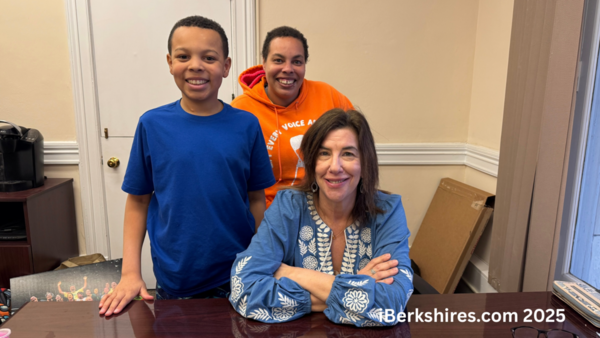
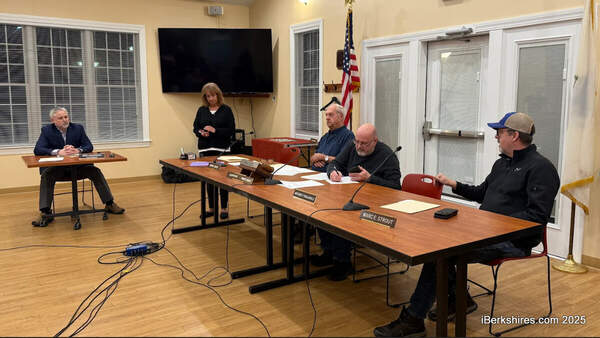
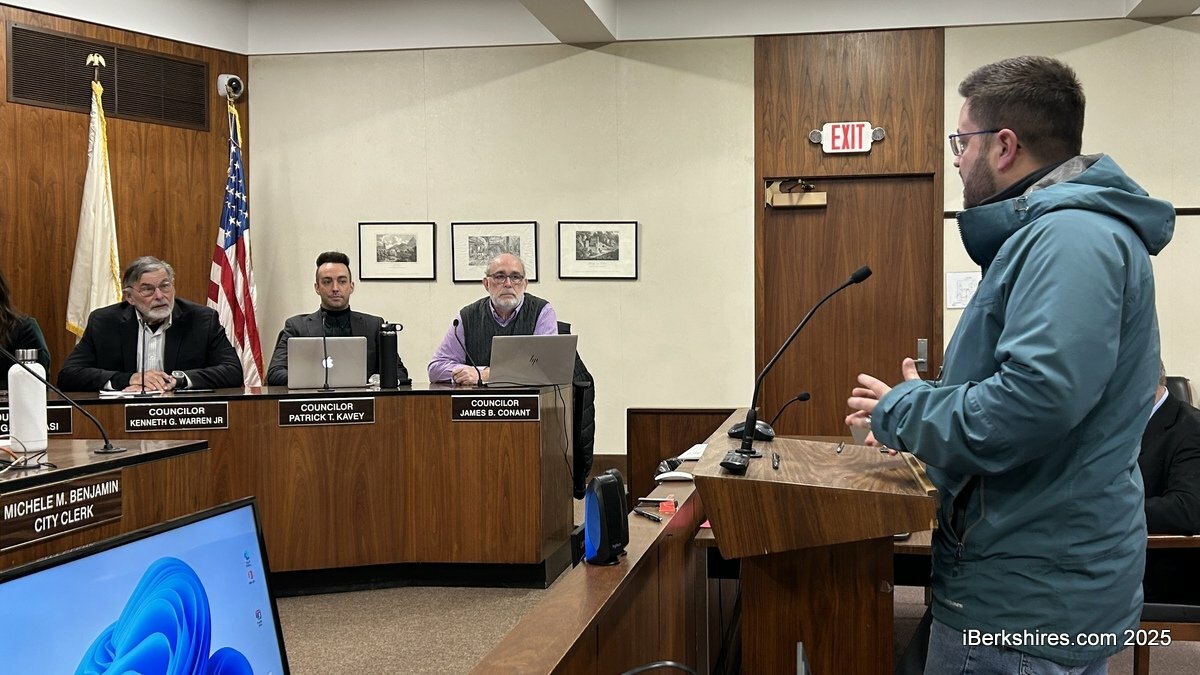
Airport Manager Daniel Shearer explains to the City Council the need for a taxi lane and how it will be funded.

Pittsfield Council OKs Million-Dollar Borrowing for Airport Taxi Lane

By Brittany PolitoiBerkshires Staff
Print Story | Email Story

PITTSFIELD, Mass. — The Pittsfield Municipal Airport will build a new taxi lane with help from federal, state, and local funds.

On Tuesday, the City Council approved a $1,040,000 borrowing for a paved way that enables access to additional developable land. Because the local share is only 2.5 percent, or $26,000, Rule 27 was waived.

A taxi lane is a path that connects aircraft parking areas to taxiways. Airport Manager Daniel Shearer said it will "substantially" open up a new area that is yet to be developed, providing access to a new hangar.

"This is the taxi lane for the development area that we've been working towards and signed a lease for. We had intended to start this a couple of months ago, the federal fiscal year put us a little behind on that so we're trying to get that work underway so we can pave as soon as the asphalt plant opens up in the spring,"

"This will line up with the completion of the first hangar in that area and will provide access to that space."

He added that ground lease revenue will come in as soon as the lane is finished.

Ward 5 Councilor Patrick Kavey pointed out that the current hangar has a dirt floor.

The first lease to construct a new hangar on this land was approved by the Airport Commission and council in 2023. Last year, the council authorized borrowing for the engineering services portion of this project.


This borrowing covers the construction phase and will be funded 95 percent by the Federal Aviation Administration ($988,000,) and 2.5 percent from both the state and city.

"Construction of this taxi lane will be funded principally through grant funds from the Federal Aviation Administration (FAA) and Massachusetts Department of Transportation Aeronautics Division (MassDOT,)" Shearer wrote to the council.

"In this case, the Bipartisan Infrastructure Law (BIL) Airport Infrastructure Grant (AIG) program. These funds have been awarded to the Airport and allocated to this project through the Airport Capital Improvement Planning (ACIP) process with the Federal Aviation Administration (FAA) and Massachusetts Department of Transportation Aeronautics Division (MassDOT Aeronautics)."

The bid for the project comes to $906,960 and combined with engineering services and administrative costs, the grant for the construction phase totals $1,040,000.

"Due to the type of grant, application deadlines, and construction schedules, it is necessary that the project be funded locally through a borrowing authorization before the grant is awarded; however, once awarded the city will only be responsible for its  2 1/2 percent local share," Shearer clarified.

Last year, the Airport Commission approved a new logo with a cleaner design that depicts a jet flying over a green mountainscape. It is a far cry from the former branding, which had more than 10 saturated colors.


Tags: pittsfield airport,   
If you would like to contribute information on this article, contact us at info@iberkshires.com.

Berkshire Towns Can Tap State Seasonal Communities Resources

BOSTON — Governor Maura Healey announced that 18 additional municipalities across Massachusetts have been designated as Seasonal Communities, opening up new tools, support and grant funding to help them manage seasonal housing pressures. 
 
Created as part of the historic Affordable Homes Act signed into law by Governor Healey in 2024, the Seasonal Communities designation was designed to recognize Massachusetts communities that experience substantial variation in seasonal employment and to create distinctive tools to address their unique housing needs. The law also established the Seasonal Communities Advisory Council (SCAC).  
 
The Affordable Homes Act identified several communities to automatically receive the designation, including:   
  • All municipalities in the counties of Dukes and Nantucket;   
  • All municipalities with over 35 percent seasonal housing units in Barnstable County; and   
  • All municipalities with more than 40 percent seasonal housing units in Berkshire County. 
  •  
To identify additional communities, the Executive Office of Housing and Livable Communities (HLC) reviewed available data, specifically focusing on cities and towns with high levels of short-term rentals and a high share of second- or vacation homes.
 
In Berkshire County, Egremont, Great Barrington, Lee, Lenox, New Marlborough, Richmond, Sandisfield, Sheffield, West Stockbridge and Williamstown have been designated. 
 
"Our seasonal communities are a vital part of Massachusetts' cultural and economic fabric, but they're also home to essential workers, families, seniors, and longtime residents who deserve a place to live year-round," said Governor Healey. "That's why we're committed to supporting these communities with innovative solutions like the Seasonal Communities designation to meet their unique needs, and I'm thrilled that we're offering this opportunity to 18 additional communities across the state. Everyone who calls these places home should be able to live, work and grow here, no matter the season." 
 
As with the statutorily identified communities, acceptance of the designation for municipalities is voluntary and requires a local legislative vote. HLC will open an application for newly eligible communities that haven't accepted the Seasonal Communities designation to request consideration. 
 
The Affordable Homes Act created several new tools for communities who accept the Seasonal Communities designation to be able to:  
  • Acquire deed restrictions to create or preserve year-round housing 
  • Develop housing with a preference for municipal workers, so that our public safety personnel, teachers, public works and town hall workers have a place to live 
  • Establish a Year-Round Housing Trust Fund to create and preserve affordable and attainable housing for year-round residents 
  • Create year-round housing for artists 
  • Allow seasonal communities to develop a comprehensive housing needs assessment 
  • Permit tiny homes to be built and used as year-round housing 
  • Permit year-round, attainable residential development on undersized lots 
  • Increase the property tax exemption for homes that are the owners' primary residence 
 
View Full Story

More Pittsfield Stories