Retiring Superintendent Named to North Adams' Women's Hall of Fame
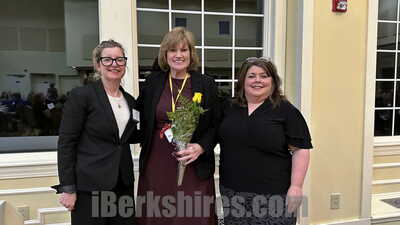 |
| Superintendent Barbara Malkas, center, is presented with a community award at the Zonta Club of the Berkshires last year. |
NORTH ADAMS, Mass. — Superintendent Barbara Malkas last week was inducted into the Women's History Hall of Fame in North Adams.
The honor was established several years ago by Mayor Jennifer A. Macksey to recognize women who have played important roles in the city's history.
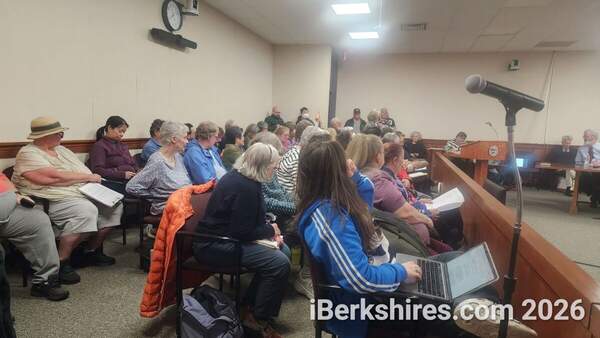
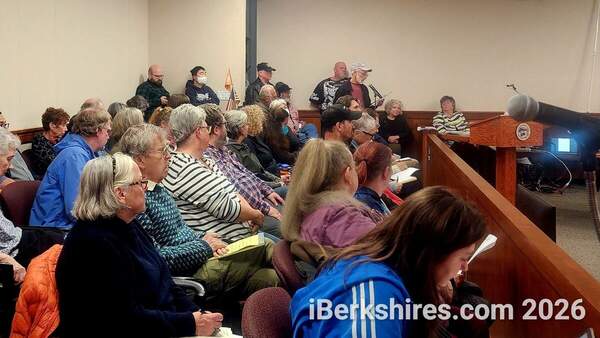
At the end of last week's School Committee meeting, Macksey asked if anyone knew who Julia Dewey was.
"No? She was the first female superintendent that served from 1893 to 1895 and another fun fact, did you know that Dr. Barbara Malkas is the second female superintendent serving from 2016 to now," the mayor said.
Malkas, who is retiring at the end of the school year, "is a true testament of a community leader for her stewardship and volunteer work within the city and beyond," said Macksey.
She listed the awards the superintendent has been presented, including the Against the Tide Award from the Massachusetts Breast Cancer Coalition, of which Malkas is president, Massachusetts Association of School Superintendents' 2019 President's Award for Outstanding Contribution to Education, the Unsung Heroine Award during COVID-19, Commonwealth Superintendent of the Year in 2024, and the Zonta Club of Berkshire County award for building a better work for women and girls.
She was also awarded the Bobbie D’Alessandro Leadership Award at the Women in Education Leadership Network Conference on March 18.
"Dr. Malkas, you've been a mentor, a trusted colleague and a friend to many of us over the years," said the mayor. "I see it most fitting as you prepare for your retirement to honor you for your unwavering commitment to education, to our students in this great city of North Adams. ...
"Barbara, your stewardship and commitment to the educational system will never be forgotten."
Malkas was presented with a plaque and her name will be added to the official plaque hanging inside City Hall.
The superintendent's induction was one of several items celebrated at last week's meeting. She pointed out that Assistant Superintendent Timothy Callahan was quoted twice in two separate articles Education Week articles about banning cell phones.
Principal Stephanie Kopala talked about the students who presented at the National Transformation Learning Experience Conference and student expo at Babson College in January. This was the first time their teachers, Mark Brown and Morgan Shafer, had participated.
"We incorporated the two units, the hustle economy, into our Algebra 2 course and genetic engineering into our ninth grade biology course," said Kopala. The "hustle" students had to create a product or service, figure out the costs and determine if it would become profitable.
Anna Dean, Aura Potvin and Vivian Vareschi created a plasmid genetic engineering biosensor. They said the challenge was how genetic engineering could enable microscopic organisms to tackle huge ecological challenges. They looked at contaminates in the region and looked to design a piece of DNA to address polychlorinated biphenyls. Their solution was to use genetically modified E coli to glow in the presence of PCBs.
Kopala said there were environmental engineers who told Schafer this was the type of low-cost prototype they were looking to manufacture.
"They are looking to potentially create some prototypes and invite those students in as interns to work with this company over the summer," she said.
The principal also said the school's attendance rate had rebounded to more than 90 percent though the last month had taken a hit because of the flu and colds making the rounds.
"If you remember, just a few years ago, going into COVID, we were at over 50 percent closer to 60 percent so we've almost reduced that by half," she said. "And at year to date, we are still down, a decrease in chronic absenteeism by 4.4 percent, so we're continuing to trend in the right direction."
The high school is also seeing an increase in enrollment in the early college courses, with students of color making 17 percent, up from 9, and low-income students increasing by 10 percent. Students in individual education plans and 504 plans have remained steady, "so we are still reaching not just traditional college bound students, but students that have been traditionally underserved in college education," said Kopala.
Committee member Richard Alcombright said he would like another presentation in the future focusing on the 39 percent of students not engaged in career readiness and how was the school guiding them.
Kopala said part of the reason the school isn't seeing a higher percentage is that only a few ninth-graders are enrolled in early college.
"If I disaggregated the data and I looked at just 11th and 12th grade, the number would be significantly higher, probably closer to almost 90 percent of our students involved," she said, not counting internship data. We have about 60 students in Grades 11 through 12 right now that are currently involved in an internship off campus with local businesses or within our own elementary schools, and we just received the Innovative Pathway grant [for medical pathways] for planning purposes."
Tags: NAPS, superintendent,