Pittsfield Subcommittee Files 'Median Safety' Ordinance
PITTSFIELD, Mass. — The Ordinance & Rules subcommittee has decided now is not the time to impose median safety regulations on community members.
"If you look at this as a public safety issue, which I will grant that this is entirely put forward as a public safety issue, there are other issues that might rate higher that need our attention more with limited resources," said member Rhonda Serre, Ward 7 councilor.
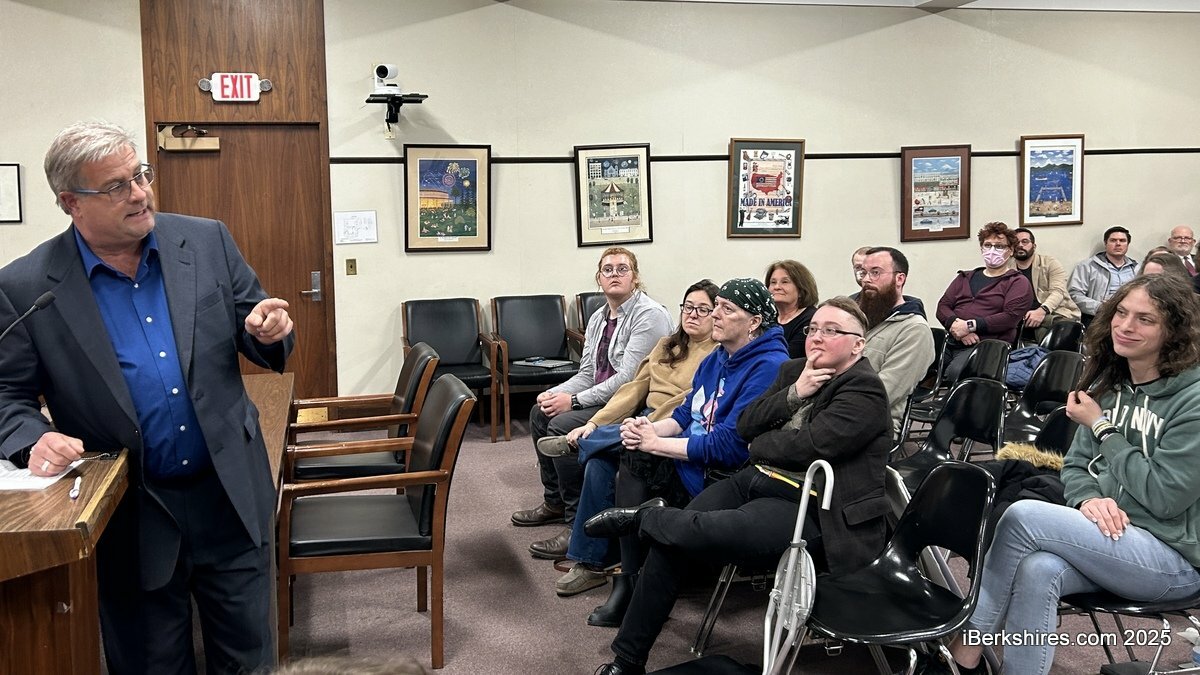
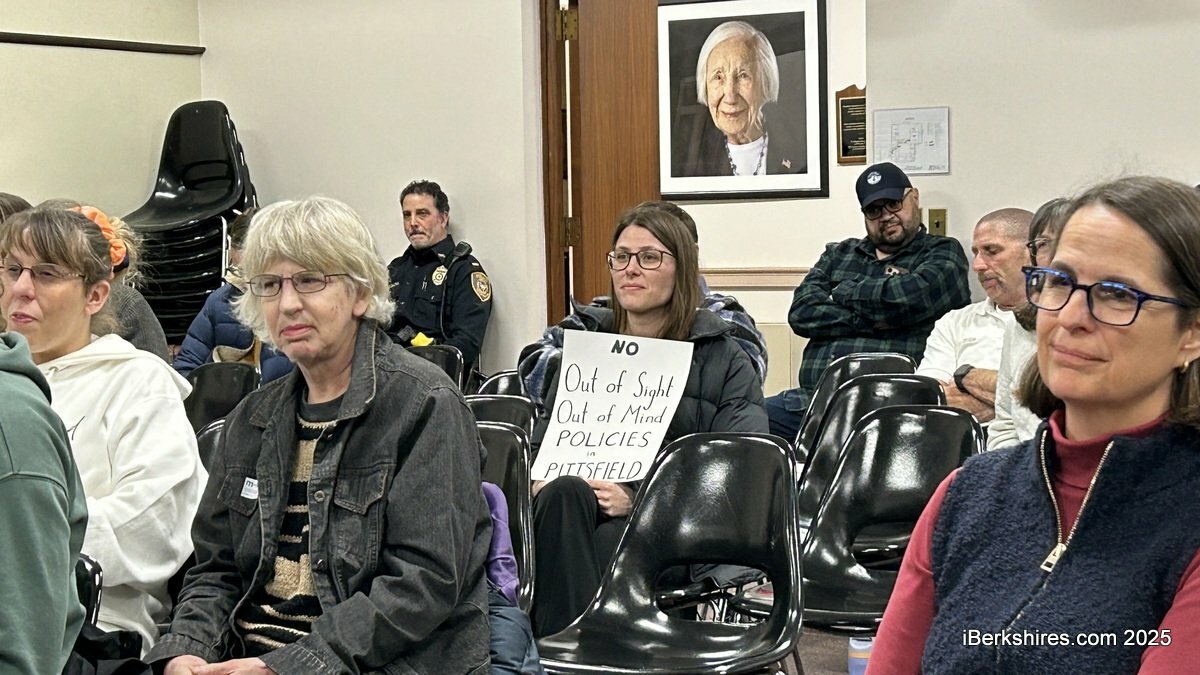
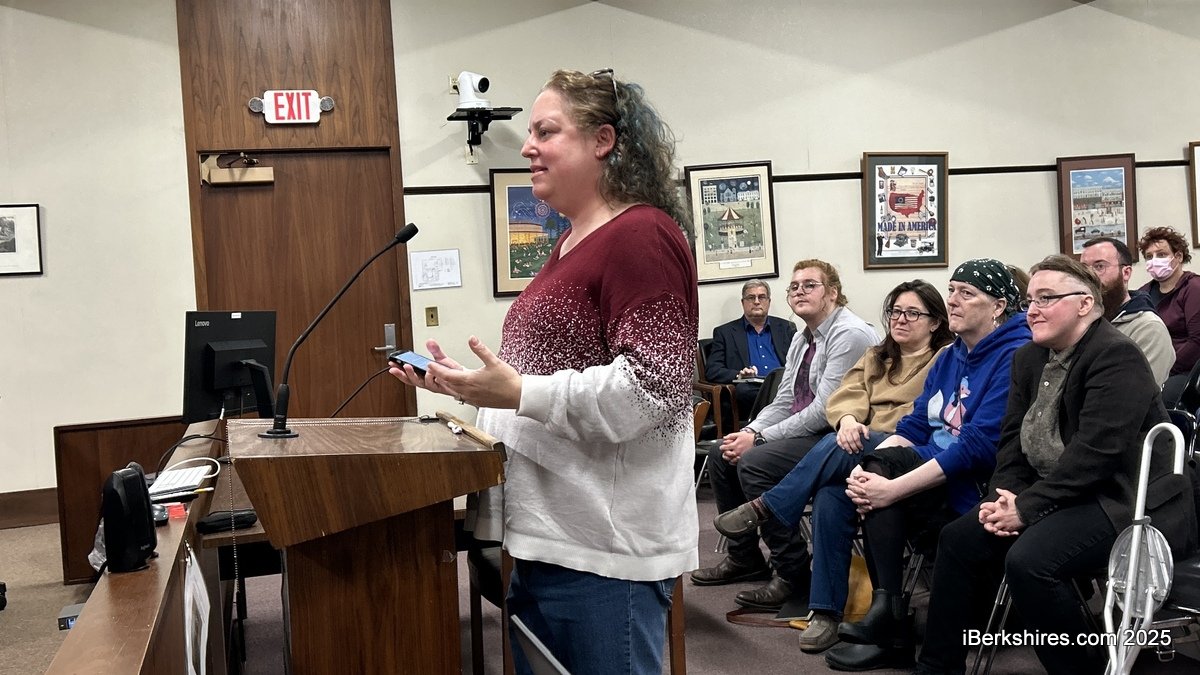
On Monday, committee members voted to recommend the City Council file a proposal from Mayor Peter Marchetti that incited 20 open microphone speakers and a protest last week. The proposal would have banned pedestrians from obstructing a median or traffic island and requires 5 feet between people and motor vehicles at five city intersections, including Park Square.
"This week in Berkshire County, we had neighbors taken by (U.S. Immigration and Customs Enforcement,) people who were taken in ways that were not in accordance with the law. We had a bomb threat to a business on North Street that was trying to host a Pride-related event," advocate Meg Bossong said.
"This is a moment when our community needs to be able to gather in the spur of the moment, and preventing that is deeply, deeply troubling."
Lee resident Elijah Mertinooke said it was clear that some people care more about optics than First Amendment rights, asking, "Do you understand the damage that this ordinance will do? Do you want the Berkshires to be a place for the people or a gentrified resort for the wealthy?"
Joel Huntington, who spent more than 32 years as the pastor of South Congregational Church, said, "In this time of national crisis, you don't want to do anything to minimize protests and vigils. We need all the resilience we've got. Pittsfield is doing so many really good things. This is going the wrong direction."
There were fears of being sued, infringing on people's rights, and a consensus that there is not adequate data to back a median loitering ban. Members of the public said while it targets problems with panhandling it would also affect protesting.
"I sincerely do not believe that the mayor had ill intent or malice in his heart. I don't think he is that type of person. I don't think that this policy is intended to be that way," Chair Dina Lampiasi of Ward 6 said.
"But even in recent interviews, his focus was still about a certain type of person or a certain type of situation. We're too far down that road to turn back now, in my view. We need a completely fresh start with something different, but I still don't know how you legislate a 2-foot median without getting the same situation."
In 2023, Marchetti requested an ordinance banning people from standing on median strips unless crossing the street. Panhandling has been a prevalent topic since the city's rise in homelessness during the COVID-19 pandemic, but this effort was said to be centered around public safety.
City Solicitor Devon Grierson said the heart of the ordinance regulates pedestrians' entry into roadways. Data was gathered from the city Department of Public Works.
"It does not prohibit people from standing in medians. The only time where a pedestrian would be prohibited from standing, sitting, or lying down in a median is if they intend to obstruct free-flowing traffic or the ability of other pedestrians to pass over that median," he said.
"Every other portion of this ordinance is directed at prohibiting individuals from entering the roadways, interfering with traffic, and becoming a danger to themselves or others."
Marchetti asserted that First Amendment rally permits are not under attack in this petition.
"A couple of years ago, we had an individual killed on West Street. We're now investing about $1.6 million for infrastructure on West Street. Why? Because we're reacting to an issue that happened," he explained.
"A couple of years ago, we had a child hit on Holmes Road. We put a rather large speed hump there that's also caused a lot of controversy. Why? Because we were reacting to something that was there."
Peter White, council president, was the lone subcommittee vote against filing the ordinance.
"I think this may be an overreach with the way it's worded now, but I'm hoping we can get everyone in this room to work with us to get it to a point where we can have an actual median public safety rule," he said.
"I don't want to see anyone get hit and I don't want to have to see someone to get prosecuted for hitting the person who steps into traffic because these strips are so small and I know everyone here thinks that this is just to criminalize homelessness or push it away but we have more housing projects going on right now to try to alleviate the problem than we ever have."
Community members did not see it that way.
Susan Pietrowsky, who was previously homeless, said this ordinance deals with a symptom of poverty rather than the cause, "What those causes are, we could go on for a week discussing, but they are systemic."
"What we need is cash flow," she said. "Poverty is a cash flow problem, so to deny people the ability and their right to ask for that is also in our constitution considered cruel and unusual."
Danielle Munn, owner of Witchslapped, reminded councilors that the ordinance could move panhandling into more populated areas, such as storefronts.
"None of us want to see [panhandling.] I don't want to see it either. It's heartbreaking, it's uncomfortable, and it should be because what we're seeing really is a failure of our systems," she said.
"A neighbor forced to dehumanize themselves and beg to survive. Instead of criminalizing poverty, we should be addressing it. We should be investing in services that solve the cause of panhandling, which is poverty, housing insecurity, lack of mental health, and addiction support. We should be focused on creating safety and stability for those who need it most, not pushing them out of sight, not under the guise of public safety."
Sean Manion, who lives in the downtown, thinks the ordinance "clearly" targets the most vulnerable people in the community "because they threaten the PR image of the Berkshires as America's premier cultural resort."
"There are real solutions out there. There are real solutions that other communities have taken that have effectively ended homelessness. I would like to see Pittsfield take that strategy rather than punching down," he said.
"We don't need any more forces punching down. We need hands reaching out. We need solidarity. We need support. We need our politics to look like love, not like a fine, not like criminalizing poverty. We see our civil rights and our civil liberties under attack across the nation from the highest seats of power. I don't want to see that reflected from my own city council."
Michael Hitchcock, co-director of Roots & Dreams and Mustard Seeds, said communities that have passed similar ordinances were sued for "millions of dollars" and pointed to the ordinance's possible criminal implications for individuals.
"When you don't pay your fine consistently, you eventually get criminal contempt of court, which is a criminal record," he said. "So this is one of the many places where people are dishonestly repeating a talking point without any critical thought, and this critical thought is important."
Several emphasized that reducing speeds and creating safe spaces for pedestrians are the way to prevent traffic fatalities.
Bossong said none of the intersections identified in the ordinance are flagged as the most dangerous in Berkshire Regional Planning Commission's Safe Travel and Equity Plan for our Streets.
"The [crashes] that could reasonably be attributed to panhandling, distraction, swerving, obstructed view, are the 10th through 12th most common reasons for crashes," she said.
"There are a number of safety recommendations within that report. That report, the stated purpose of that grant, was to create a toolkit for the city of Pittsfield and for cities in the county to make data-driven decisions about traffic safety. There is nothing in that entire report about panhandling and removing people from the medians. In fact, one of the main recommendations is to create more medians and safety islands for people to stand on."
Subcommittee member Patrick Kavey, of Ward 5, asked if there is any crash data specific to panhandling, and Police Lt. Marc Maddalena said there is no data specific to crashes from panhandling, but in higher volume areas, there is more opportunity for accidents to happen.
"The number of communities that have lost in court over this issue is pretty astounding, and I'm seriously concerned that if we were to pass this, we would be sued," Kavey said.
White hopes to see a reworked median or center island strip ordinance to protect individuals from bodily harm.
"It's scary when I see somebody out there, especially when you're vulnerable and you're there because you feel it's the only way you're going to make your rent or have some money," he said.
"Yeah, the systems have failed. We know the systems fail, but we all try to make it a little bit better when we can, and I don't want to see this ordinance demonized as trying to push out panhandlers or homelessness. To me, this is a public safety thing, and if we can work together coming up with a public safety way for this to work, then I do want to support this."
For him, this was "probably one of the worst nights as far as needing to push back against people I'm normally working with," but he thinks they are not far from agreement.
"I'd be happy seeing this tabled tonight and not just voted down so we can keep getting input. Because honestly, for this issue, we've gotten more input than when we get on the budget. We get more input on huge infrastructure projects that will have implications for the entire city and county. We don't get as much input as we got from this issue. So you should feel good," White said.
"We're listening to you, but I also want you to listen to those of us who are saying, 'For us, it is a public safety issue,' because I don't want to see anyone hit and I've been trying to address this. It's not about trying to solve panhandling because this has no chance whatsoever of making an impact on changing panhandling in the city or anywhere else."
Councilor at Large Alisa Costa took to the open mic podium to ask, "What are we really doing here?"
"It just seems to misplace what we're trying to do," she said.
"We've heard folks talk. We're so far downstream on this we're in the ocean, like we need to go upstream and figure out how to solve things, and I know as a city, it is so hard to do that. We can't always do that alone. We have to do that together, and there are larger systemic issues, so I don't want our most vulnerable citizens to be the ones taking the breadth of this."
Former councilor Helen Moon said the ordinance is a way to demonize and criminalize this population while taking away their opportunities.
"I have worked with many of you. I have sat in certain spots on this council and I found the work that the council has done to be thoughtful, to be creative," she said.
"But when we revert back to policies like this, this is not creative, this is not thoughtful, this is not compassionate. It is a blanket rule, blanket law that doesn't solve any problems."
Councilor at Large Kathy Amuso, a subcommittee member, explained that she did not think the proposal had malicious or unkind intent because, after 25 years being involved with the city, she knows the mayor doesn't work like that.
"This is not mean-spirited and I've never felt that way, but for me, and I've read all the emails, I read the information that I have, and I don't think the time is right now to pass anything like this," she said.
"We just voted unanimously for Pittsfield to be a sanctuary city, and this, to me, is pulling away from what we just did. Is there a safety component to this? I think there is, but I don't think right now is a time for me to make any of your lives more difficult for what you need to do to and what I've heard tonight was really a lot of times it's to survive."
Marchetti thanked attendees for showing up and for the mostly respectful debate.
Tags: ordinance & rules , protests,