Central Berkshire Picks Insider Henault for Next Superintendent
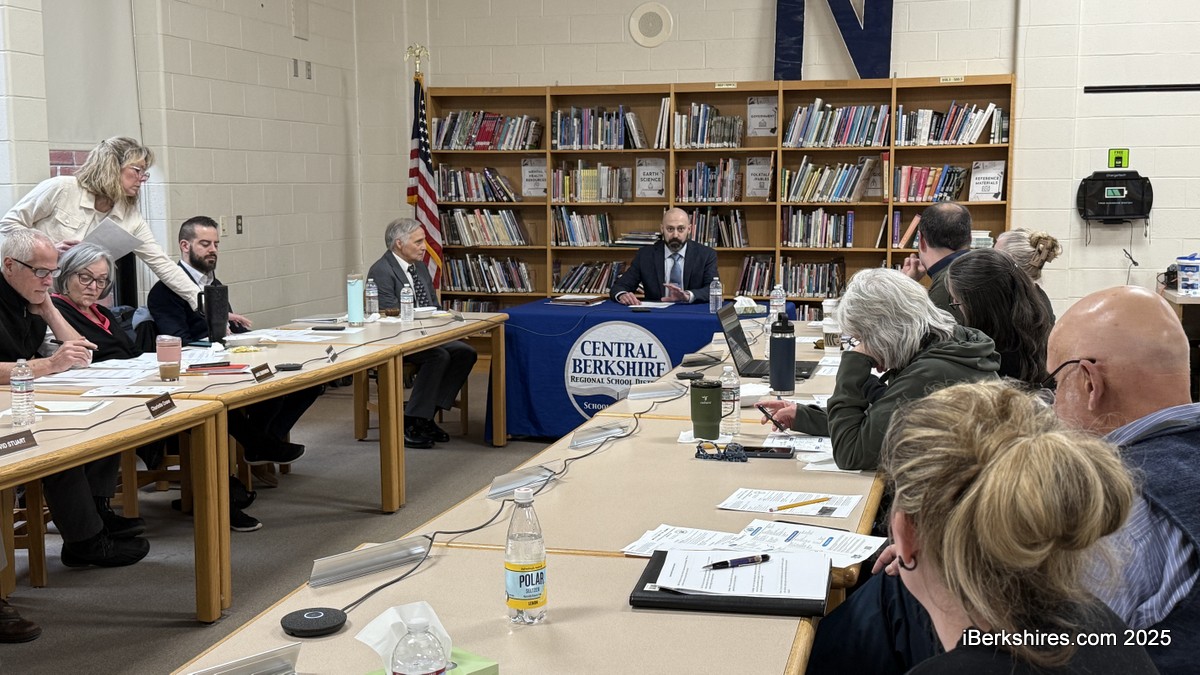
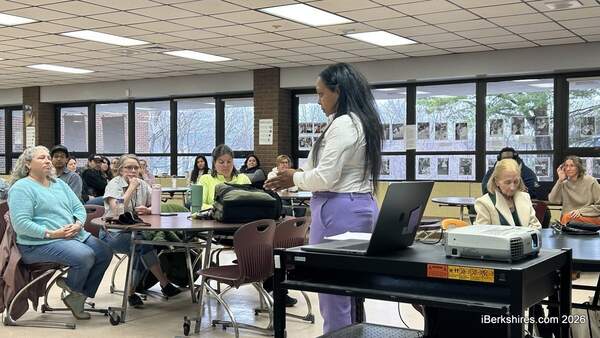
Michael Henault is interviewed by the School Committee on Wednesday.
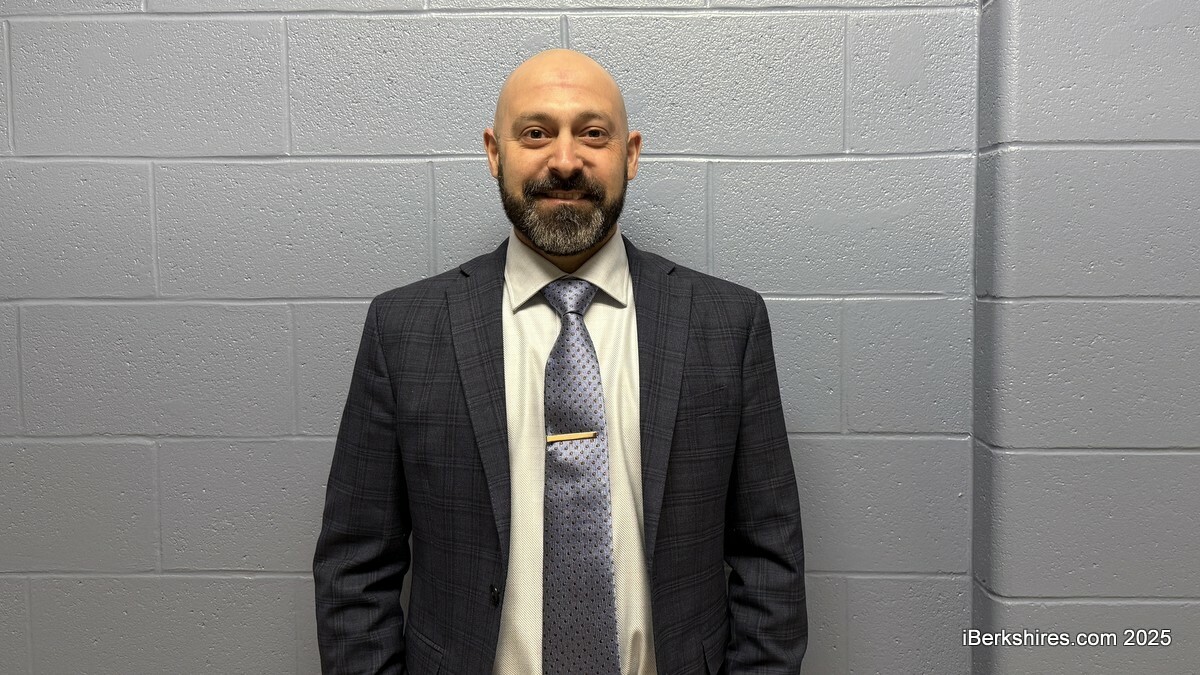
The committee voted unanimously on Wednesday to offer the post to Michael Henault, who has been the district's assistant superintendent for three years.
"He is an incredible candidate. It doesn't matter for what district, and I think he is ready, and certainly chomping at the bit to take on the next challenge," said Charlotte Crane, committee member.
"I suspect that we wouldn't be able to hold on again for too much longer in the assistant superintendent position."
The vote came at the end of a four-hour meeting during which Henault and two other finalists — John Franzoni, superintendent of the Northern Berkshire School Union, and Matthew Bishop, interim deputy superintendent for the Pittsfield Public Schools — were interviewed.
The 13 of the 15 committee members representing the seven towns in the district agreed that it was a difficult decision because of the quality of the candidates.
"I'm extremely torn right now," said Ellen Lattizzori of Dalton.
Several committee members said they liked Henault's data-driven approach and emphasized that he has done great work working on the curriculum.
He has been using data in such a good way in curriculum the district has really come leaps and bounds after the pandemic, Lattizzori said.
"I'm ready to lead here. I want to make a commitment to see the work I've started through to the end and I know that the work never really ends, but really, I'm just getting started, Henault said.
A major change was the shift away from literacy expert Lucy Calkins' curriculum, a "long-standing beloved and highly controversial reading curriculum," Henault said, did not align with the science of reading.
He said he knew making this change was going to be difficult because anytime you are making an organizational change, you're changing people's behavior.
"If people don't want the change, they won't. It's just that simple. So, it takes time to build support, and people need to understand why they're changing," Henault said.
"They need to have a voice in the change. You need to ensure that you can pay for the change and sustain it long term, so you don't get halfway through, and it falls down"
He said, to the credit of the teachers and administrations, the district has been able to do things in less than a year that he was told would take five.
To implement changes, he spent a year observing, analyzing student work, and engaging with teachers, administrators, and parents.
He emphasized professional development, built trust, made gradual implementations, promoted collaboration, encouraged teacher decision-making in the curriculum, and continuously sought improvement.
"Last year, we met 64 percent of our accountability targets. That's more than double the 27 percent that we made the year before. We are improving," Henault said. "Our seven towns are diverse in thought and in politics, in the jobs people do and what we value, and all of that finds our way into our schools. That diversity is an asset."
It was pointed out in the equity audit that Central Berkshire has become a district of choice and 203 students choiced in, he said.
"That's an asset. Families who value education are choosing us, and that's only making our community stronger. I'm one of those parents," Henault said. "My wife and I chose central Berkshire because we knew what to look for in a school district, and we knew there was no better place for our kids to learn."
The district does have challenges ahead that will require strategic planning, collaborative approaches, and innovative solutions.
"We're facing a perfect financial storm right now. Our expenses are increasing faster than revenue is available, and funding streams right now are wildly unpredictable. Financial sustainability requires an understanding of our challenges," Henault said.
He highlighted how there is "spatial injustice," a decline in general population, and financial challenges that they will have to navigate while maintaining high-quality education with limited resources.
"All of these factors put the burden on individual taxpayers to shoulder greater costs of financing a school. They don't have the money. At the same time, our students have growing academic, behavioral, social, and emotional needs, and the cost of giving them the services they need is getting greater every day. Consequently, we're required to do more with less," he said.
Henault also stressed the need to educate the students' minds and hearts. This statement stood out to several committee members.
"People were talking about [Henault] and how data-driven he is, and I appreciate that because we live in a data-driven society. But he also mentioned mind and heart. I think he walks that talk," said committee member Barbara Craft-Reiss of Becket.
"He shows that every day. He's got a great mind and a loving heart and to me, that's a winning combination."
Sara Tucker of Dalton pointed to his skill in analyzing data and breaking down complex information in a way that is understandable to non-educators.
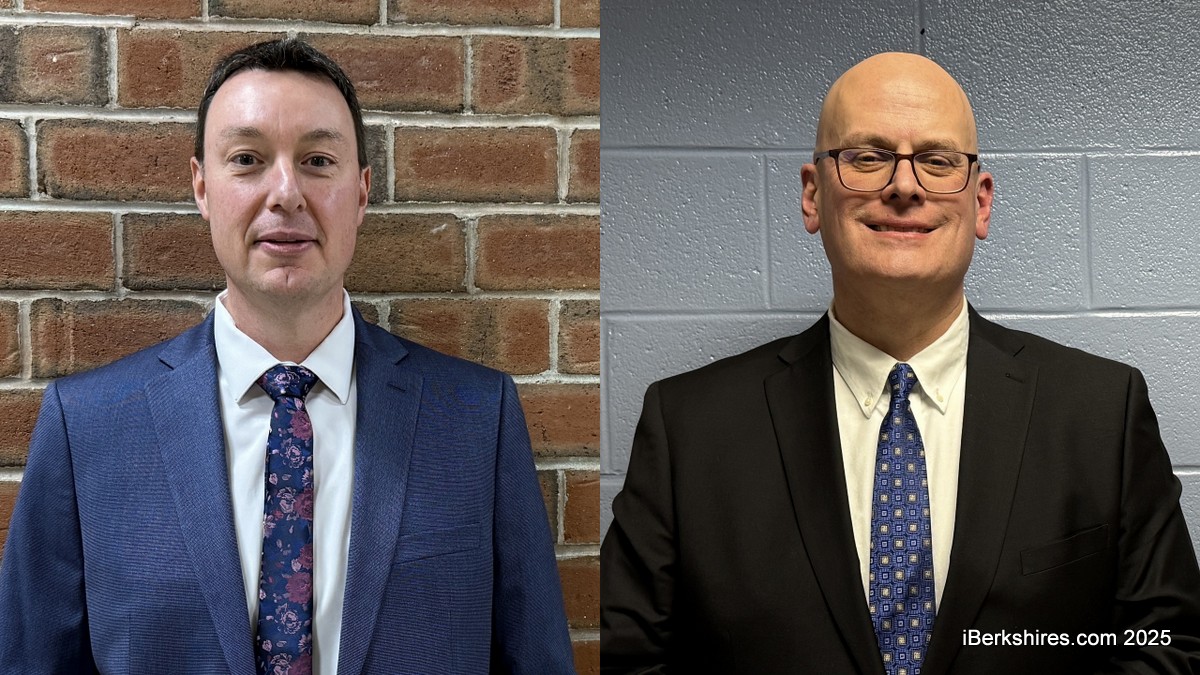
The two other finalists were Matthew Bishop of Pittsfield Public Schools, left, and John Franzoni of NBSU.
"Yes, he is brilliant in curriculum and instruction, but that doesn't mean he's not brilliant in other things. We haven't seen that because he hasn't been superintendent, but he is bright, capable, and engaging."
The board first narrowly voted to hire Bishop as the superintendent, but the motion failed 6-7.
Several committee members said they liked Bishop's personality, experience in student program advancement, and ideas to build career readiness in students at low or no cost.
Board members also emphasized the extensive experience Franzoni has as a superintendent for the North Berkshire School Union, where he has been working with towns of similar sizes.
Henault, pending contract negotiations, will replace Leslie Blake-Davis, who is retiring after 14 years with the district, the last five as superintendent.
Tags: CBRSD, superintendent,