Hoosac Valley Students Experience Air Force's ECHO VR Training
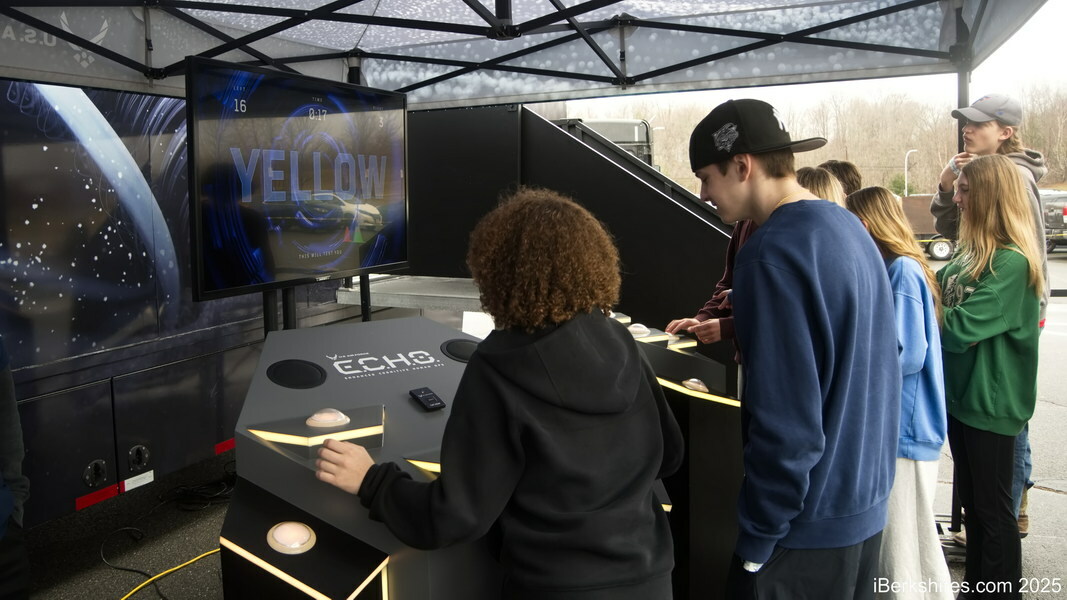
Students did some warmups on the ECHO training tools.
"It is a cognitive experience, and it gets the kids out here doing something different, especially during the school day," Air Force Tech Sgt. Lacey Dixon said about the recruitment tool. "It gets them out of the classroom to see some of the cool things the Air Force is doing. Maybe it is something they want to do in their future."
The ECHO program is a training tool developed by the Air Force that challenges participants' cognitive and decision-making skills in real-time, high-pressure situations.
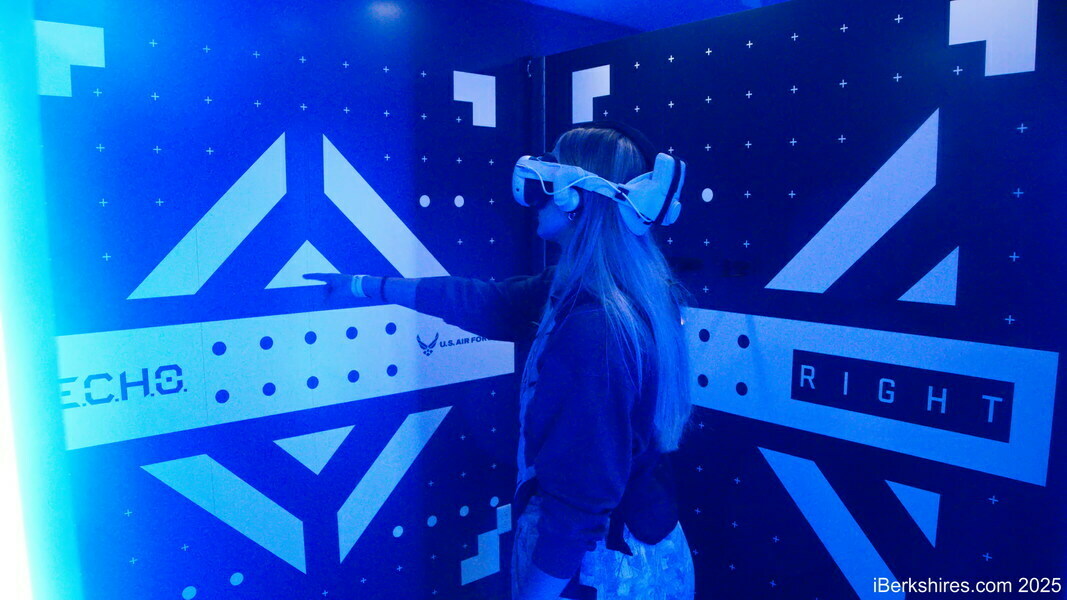
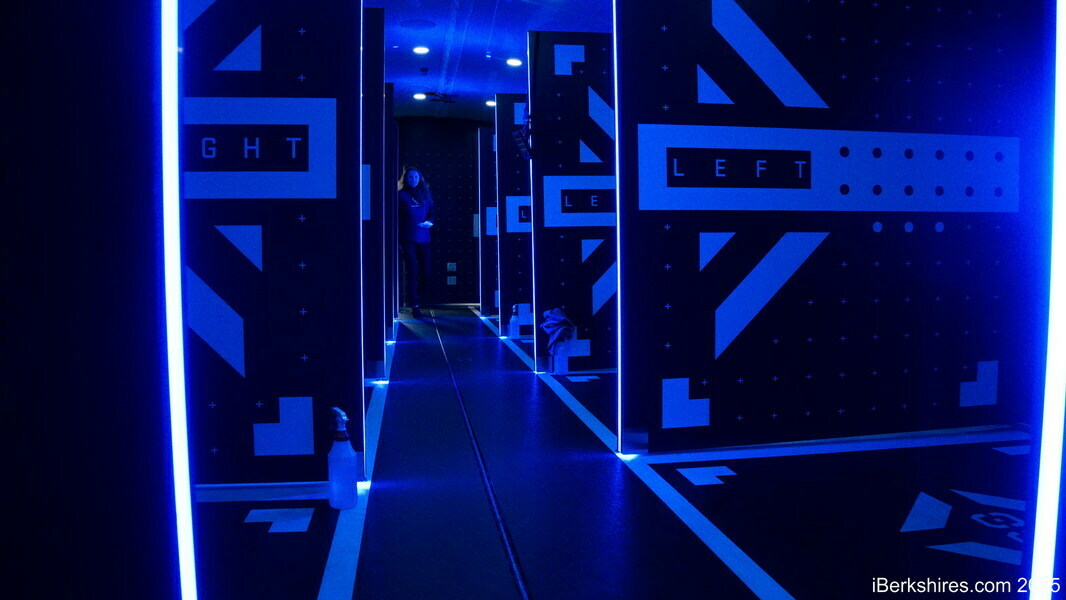
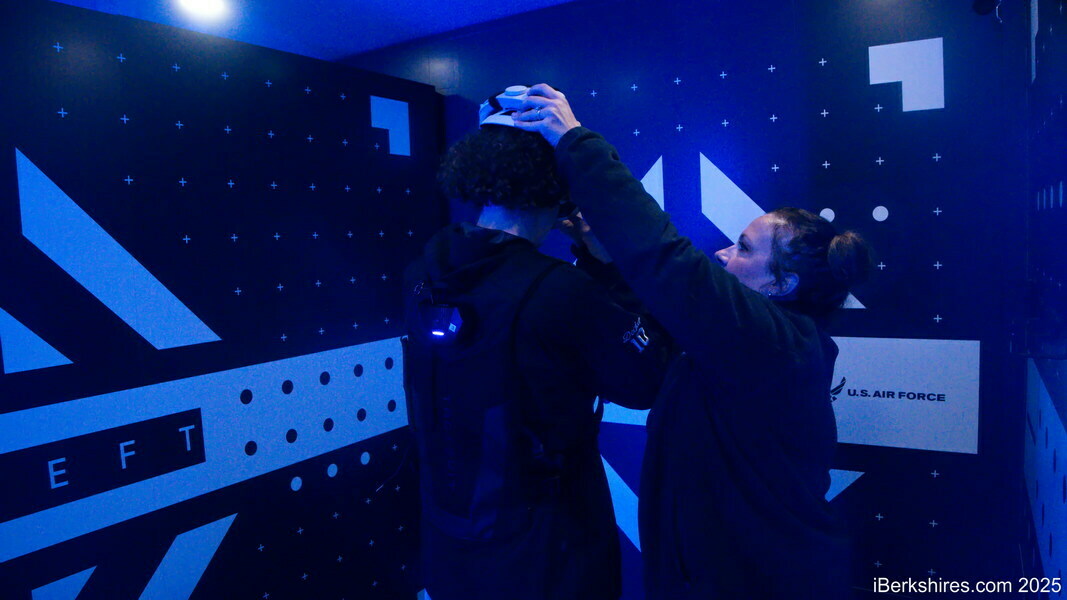
Inside, the ECHO trailer features 10 separate booths, framed by blue neon, where participants can safely engage in the VR missions.
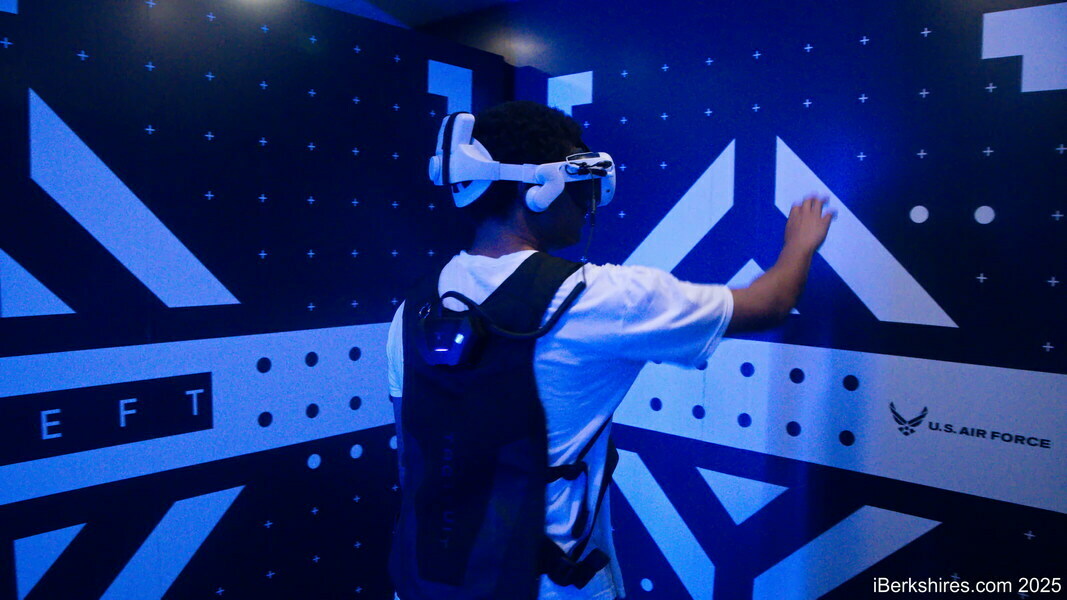
Students wear Meta Quest 3 VR headsets, haptic vibrating vests and noise-canceling headphones, for total immersion in two different cognitive skill tests. These experiences test accuracy, reaction time, comprehension, focus, and composure.
In the first mission, called "Track and React," students stand in a virtual space that looks like a vortex. In VR, they have one light hand and one dark hand. They are challenged to catch light spheres with the light hand and dark spheres with the dark hand. Between levels, an airman will announce a four-digit number sequence, which the students then have to trace in the correct order as numbers appear in the VR environment.
In the second mission, students play a cybersecurity defense game. They stand in a virtual mesh network that looks like a brain, where "bases" are connected by a series of "veins." When a base is under attack by a virus, it flashes red, and students have to select the base and trace a pattern to eliminate the virus.
After completing the tests, students received a total score on their cognitive skills, which is displayed on a leaderboard.
Director of Student Services Erica Girgenti said the ECHO program aligns perfectly with Hoosac Valley High School's mission to support students in becoming well-rounded, competent individuals prepared for the challenges of the future. She added skills tested and learned mesh with the school's Portrait of a Graduate framework.
Girgenti said it also gives students an opportunity to explore different career paths. When registering, students are asked about their interests. She said the ECHO experience offers a hands-on way for them to gain insights into various professional fields, including technology, engineering, and the military.
"It asks what they are interested in: health care, physical fitness, and all these different questions," she said. "You know, for us, it provides the opportunity for us to show some awareness of what's out there in this particular field."
Upon arrival, students registered electronically on iPads, providing basic demographic information. If a student expresses interest in the armed forces, this information will be shared with a local recruiter.
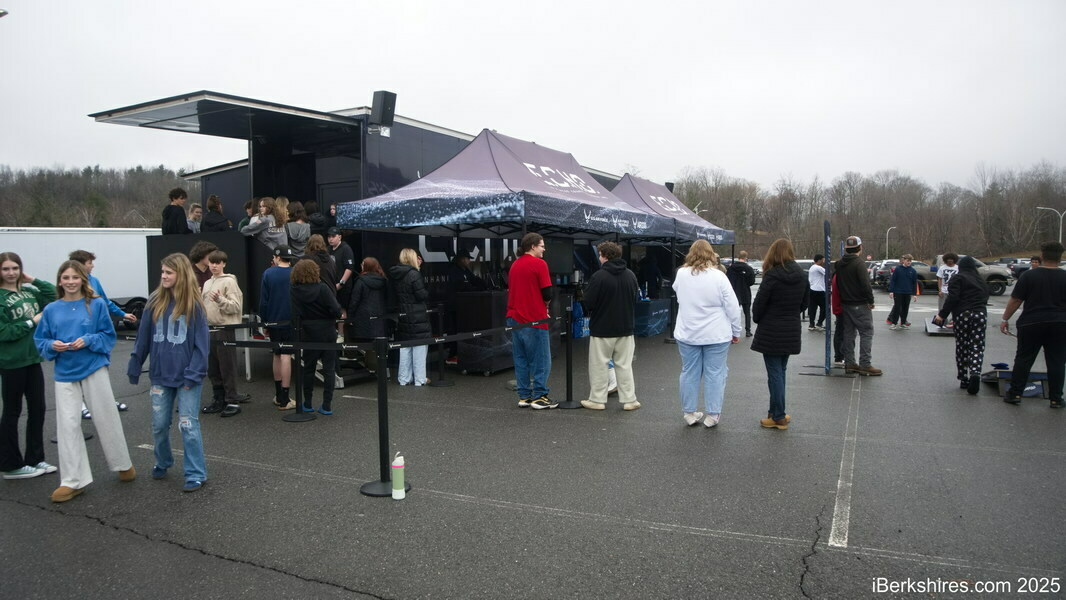
The ECHO trailer travels to events across the country, including sporting and snocross events, NASCAR races, and off-road competitions. Between events, the team stops at high schools.
Dixon and Betty Jo Poulton from the school's counseling office contacted the ECHO team and invited them to the school.
Tags: air force, HVHS, virtual learning,