State Senate to Commission Bust of Elizabeth Freeman
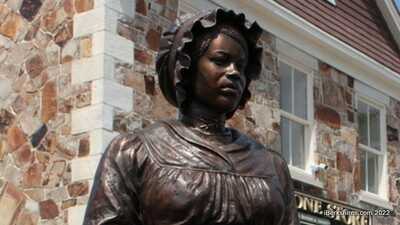 |
| A bronze sculpture of Elizabeth Freeman in Sheffield. |
BOSTON — A bust of Berkshires' freedom fighter Elizabeth Freeman, the first enslaved woman to successfully sue for her freedom in the United States, will be commissioned and placed in the state Senate Chamber.
The Senate will also commission a bust of women's rights leader and presidential adviser Abigail Adams.
They will be the first permanent busts depicting women in the State House, and the first in the Senate Chamber's collection of sculptures.
"The story and spirit of the Berkshires' own Elizabeth Freeman serves as a testament to the promise of equality and freedom that our commonwealth was founded upon," said state Sen. Paul Mark in a statement. "I am so grateful to my Senate colleagues who voted to memorialize this amazing woman with a bust in the Senate Chamber, bringing further equality, inspiration, and representation to our historic State House building."
State Sen. Julian Cyr, chair of the Senate Art Commission, said the selection of the two women "marks an important step in our ongoing work to recognize the women and individuals who have shaped Massachusetts but have too often been
overlooked in our history books."
Freeman, also known as Mum Bett, was born into slavery around 1744. Attorney Theodore Sedgwick of Sheffield represented Freeman in her fight for freedom in 1781 in one of the most important legal cases in Massachusetts history: It helped establish that slavery was incompatible with the state's founding principles.
Freeman and a man named Brom sued for their freedom under the new state Constitution from the man who enslaved them, John Ashley, who was also ordered to pay them damages.
A full-size bronze of Freeman was installed in 2022 in front of the Old Parish Church at 125 Main St. in Sheffield.
After gaining her freedom, Freeman became a respected healer and midwife, later securing her place in history as a trailblazer for civil rights. She died in 1829 and is buried in the Sedgwick family plot in Stockbridge.
Abigail Adams, known for urging the Founding Fathers to "remember the ladies," was an early advocate for women's rights and education. As a trusted adviser to her husband, President John Adams, she managed their household and finances while influencing political discourse through her letters.
Adams and Freeman were the top two choices of the Senate, where members selected them from four finalists chosen by the Senate Art Committee out of a pool of more than 300 nominations submitted by Massachusetts residents. Committee members selected the finalists following a series of public meetings.
The Art Committee will now select an artist to create the sculptures. Freeman's will be only the third piece of art in the Senate honoring a woman leader, joining portraits of Abigail Adams and former Senate President Therese Murray, and the 22nd permanent piece of art honoring a woman in the State House.
The contributions of women have "too long" been absent in State House art, said Senate President Karen Spilka. "Their presence will help us send a clear message to every woman who walks our halls: you belong here. I am deeply grateful to Senator Cyr for his leadership, and to the Senate Art Committee members for lending their expertise to a Senate that strives for better representation."
Tags: elizabeth freeman, historical figure, sculpture, State House,