Neal Touts Federal Aid to Support Renovation of Symbol of Democracy
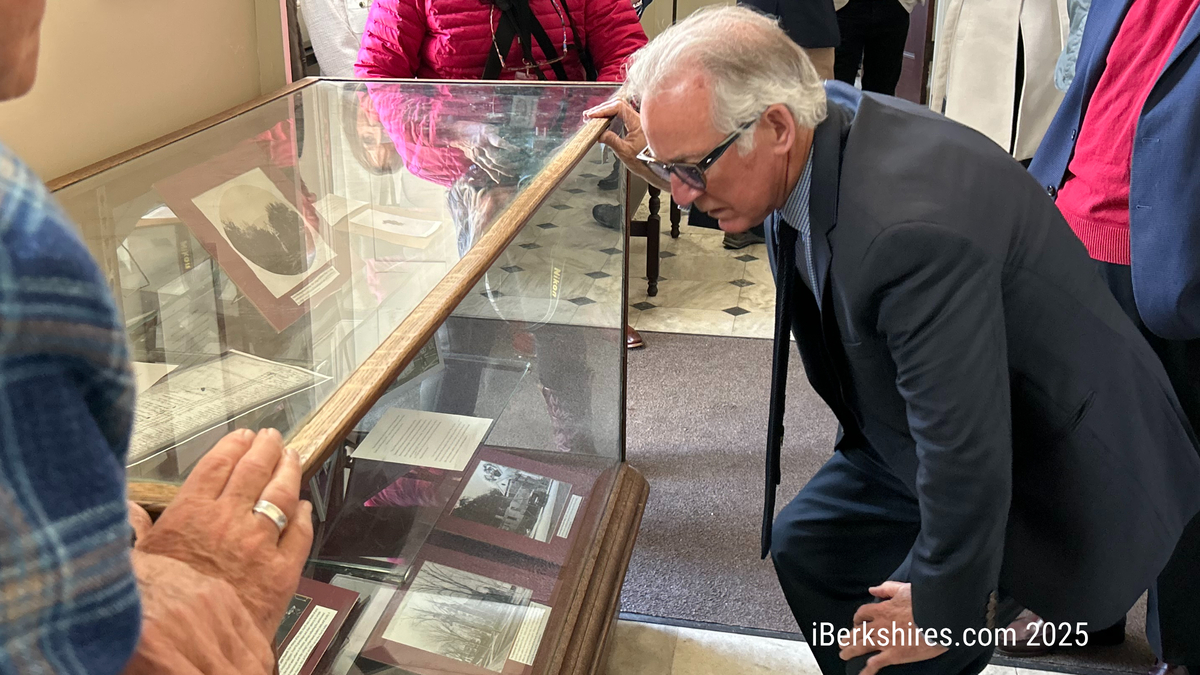
Congressman Richard Neal looks at historic photos of the 19th-century meetinghouse during a tour Thursday.
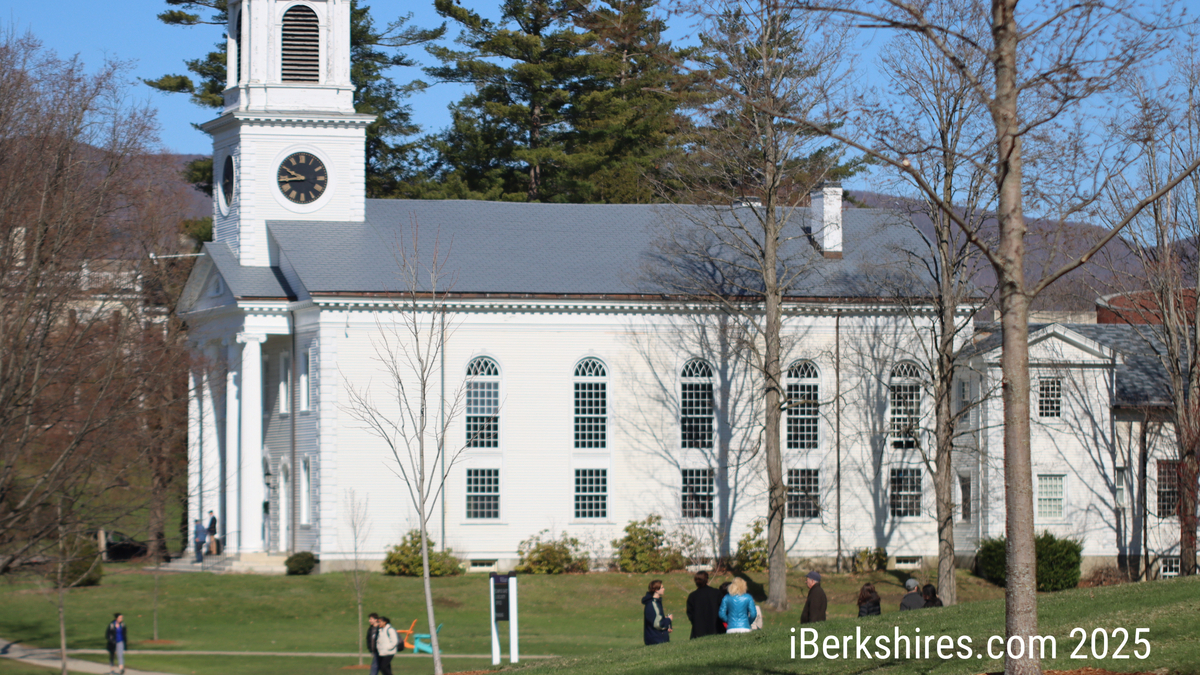
U.S. Rep. Richard Neal, D-Springfield, was in town to celebrate a $500,000 federal earmark to support the renovation of the Williamstown Meetinghouse, a project that will make the iconic structure more compliant with the Americans with Disabilities Act and more accessible to members of the community.
Referencing the 1869 structure's connection to the town's 1765 founding (the first two meetinghouses burned down), Neal drew a line from Thursday's celebration to a much better known party happening at the other end of the commonwealth this week.
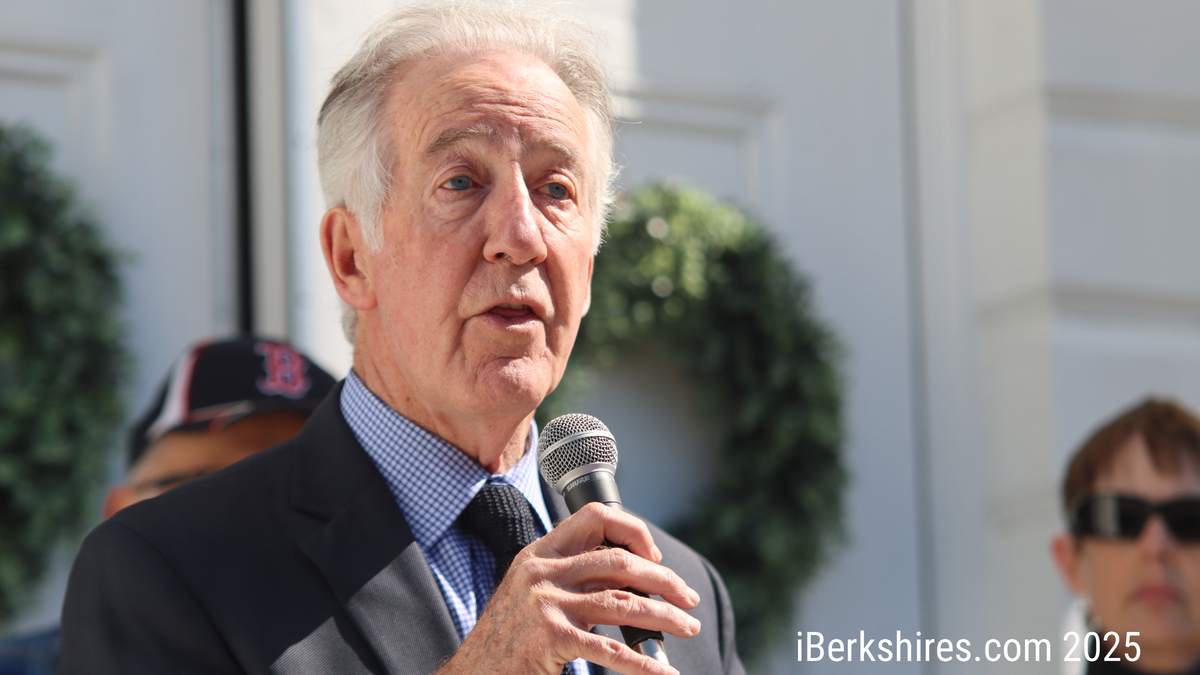
"I hope I'm going to be there on Saturday morning, that's my plan, to be in Concord and Lexington for the acknowledgement of what happened 250 years ago, because that's what we honor with the Meetinghouse: Representative democracy, where people have the right to assemble and petition their government and to make their voices heard," Neal said in prepared remarks on the meetinghouse steps.
"That's what the meetinghouse meant. It was very much in the Puritan history. After a church was constructed, a Congregational church, generally, nearby, there was the library and the meetinghouse. It's all over New England in these beautiful little towns that I represent."
Since 2013, Williamstown has been on that list of towns represented by Neal, a former Springfield mayor who has served in the House of Representatives since 1988. After the 2010 Census, Neal became Williamstown's representative from the newly drawn 1st Congressional District.
On Thursday, he was joined on the meetinghouse steps by state Rep. John Barrett III, D-North Adams, Sherwood Guernsey of the Berkshire Democratic Brigades and Carolyn Greene, president of the Williamstown Meetinghouse Preservation Fund.
Guernsey explained how the meetinghouse, also home to and commonly referred to as First Congregational Church, has a strong non-sectarian place in local history.
"It began as a combination, as it is today — as a meetinghouse and a sanctuary — because that is what was required to incorporate a town back then," Guernsey explained to the small crowd that turned out for Neal's brief visit. "Things have changed, but not the way this building is structured. Yes, there is a sanctuary in the front, but in the back … there will be the opportunity, when we're able to complete the ADA compliance, which we need to do with the North end, the back of the building, so it is accessible to all."
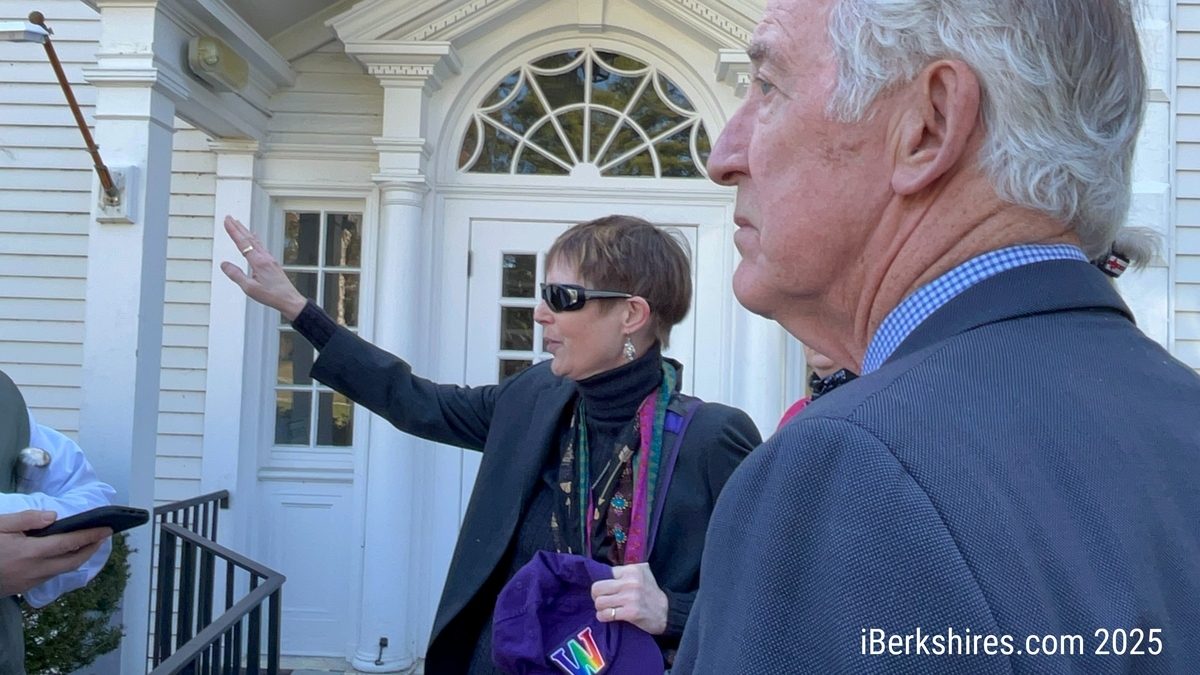
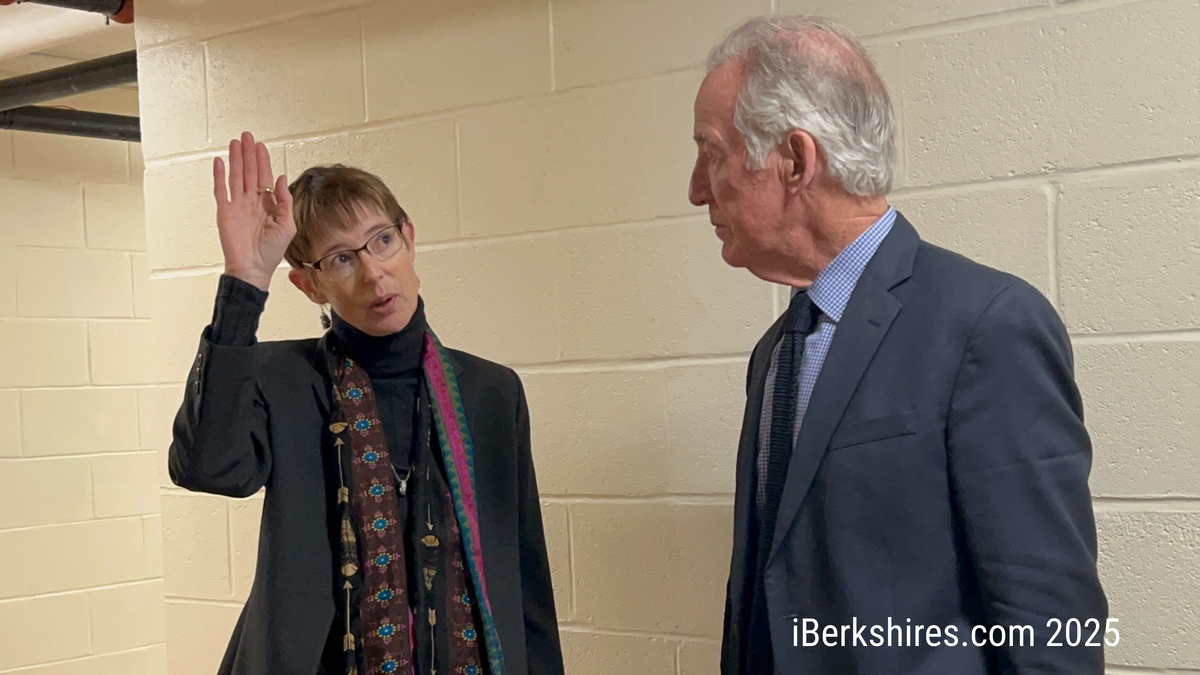
Greene led a tour of the building, where Neal saw not just the sanctuary but the education spaces, the storage for the ABC Clothing Shop thrift store, the commercial kitchen where meals are prepared for shut-ins, the meeting spaces for community groups and the stage for small performances.
Greene also explained the accessibility issues, including restrooms that are not fully ADA compliant and, most significantly, the lack of an elevator.
Since its inception, the preservation fund has done a lot of work to the building's structure already, including a new roof and repairs to the steeple to prevent leakage that was endangering the building below. The non-profit has raised money through private donations, state aid facilitated by Barrett and grants of Community Preservation Act funds from Williamstown's town meeting.
Currently, the board is getting cost estimates for the next phases of the renovation, Greene said. Its priorities include making the main floor fully accessible, adding an elevator to make the basement level accessible and extending that elevator to a third stop on the second floor — in that order.
Greene said the board will apply the $500,000 federal grant secured by Neal as far as it goes toward achieving those goals.
And, speaking one day after it came to light that a culvert restoration project in North Adams lost $144,000 in previously committed federal funds, Greene said the $500,000 for the meetinghouse already is "money in the bank."
"This is money we're working through the [Housing and Urban Development] process, and it will go through the town," Greene said. "That's why I think this announcement is happening now, to assure the community that this money is solid. The money that Rep. Barrett has in the [state] bond issue, which is about $500,000 $100,000, we don't know when that's coming in. It's money we know we have, but it could be in the next five years. It could be in the next 10 years."
Greene told the supportive crowd on the meetinghouse steps that efforts to renovate the 19th century structure and its 20th-century additions will help serve Williamstown in the 21st century and beyond.
"The building is in the heart of Williamstown, it's in the center of Williams College's campus, it has more potential than we even realize to do good for the community, given its place and given the people in this building already," Greene said.
During the tour, Neal lingered over historic photos of the current meetinghouse and its predecessors and chatted extensively about the role of the meetinghouse in New England small towns. In his official remarks, he emphasized the Williamstown icon's place in the nation's history.
"When this request came in, I thought it should be honored, mostly because there's not a better example in America of representative government than what was known as the meetinghouse," he said. "This is where people came together — sometimes, perhaps more assertively than we would like. But, not to miss the point, this is where differences were ironed out, in settings like this."
Tags: ADA, church, federal funds, historic buildings, historic preservation, Neal,