Nearly 5% Budget Increase Proposed For Pittsfield
PITTSFIELD, Mass. — The city's operating budget and water/sewer rates are on Tuesday's City Council meeting agenda.
Mayor Peter Marchetti has submitted an order to raise and appropriate $226,246,942 for the fiscal year 2026 budget, a nearly 4.8 percent increase from the previous year. It includes $86,450,361 for the school department, $11,202,345 for the department of public services, and $15,468,750 for the Pittsfield police.
Marchetti has also asked that $2 million in free cash be applied to offset the FY26 tax rate.
While these items are on the agenda for Tuesday, they are typically referred to the Committee of the Whole, and departments are deliberated on a case-by-case basis.
The city has proposed a 7 percent water rate increase and a 6 percent sewer rate increase based on a 4.40 percent Consumer Price Index Factor. The water rate is based on a 2.60 percent Operational Stability Factor, and the sewer rate on a 1.60 percent OSF.
This would raise the typical two-bathroom house's bill about $70 annually, from $1,097 per year to $1,168 per year. For the average metered four-member household, it will raise less than $50 from about $734 to $781 per year.
"The rate changes proposed support the budget for the Water and Sewer Enterprise Funds and fund increases in salaries and expenses for Utilities system operations, debt service for capital projects, and the build-up of Retained Earnings," Commissioner of Public Services and Utilities Ricardo Morales wrote.
Last year, Marchetti proposed a formula-based approach for water/sewer rates that aims to fairly adjust rates yearly using the Consumer Price Index Factor (CPIF) and the Operational Stability Factor (OSF).
The CPIF is a way to adjust for inflation or deflation and is calculated by comparing the year-over-year change in February of the CPI index for water and sewer, the administration says, and the OSF aims at ensuring enough funding for future capital upgrades, maintenance, and unexpected challenges with a ten percent cap. The council voted to change that to an 8 percent cap, as motioned by Councilor at Large Earl Persip III.
Prior to this, sewer and water charges were established from time to time by the commissioner of public services and utilities and adopted by the City Council. Rates were computed based on the total amount budgeted for sewer works operation and administration, plus equipment replacement, capital improvements, depreciation, and projections of water use and wastewater discharge by system users and other necessary factors.
Marchetti has also requested to borrow an aggregate sum not exceeding $7,016,000 for enterprise fund capital expenditures and an aggregate sum not exceeding $9,727,000 for general fund capital expenditures in FY26.
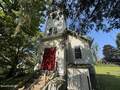
He also submitted an order to transfer and appropriate $75,000.00 from free cash for renovations to the Controy Pavilion located in Burbank Park, which includes interior painting, exterior window replacement, and removal and replacement of old, rotted siding with more durable vinyl siding, and $80,000.00 from free cash for the purchase of new voting machines.
"The machines the City uses presently are 8 years old and in need of upgrading. These new machines are faster and more efficient. Deferring replacement will result in higher costs to the City down the road. Additionally, the instability of the global market will make it difficult to budget for replacement of this equipment in the future," Marchetti wrote.
Other asks include $2,000,000 from free cash for street improvements and $1,000,000 from overlay surplus to a capital account for improvements at Old Town Hall.
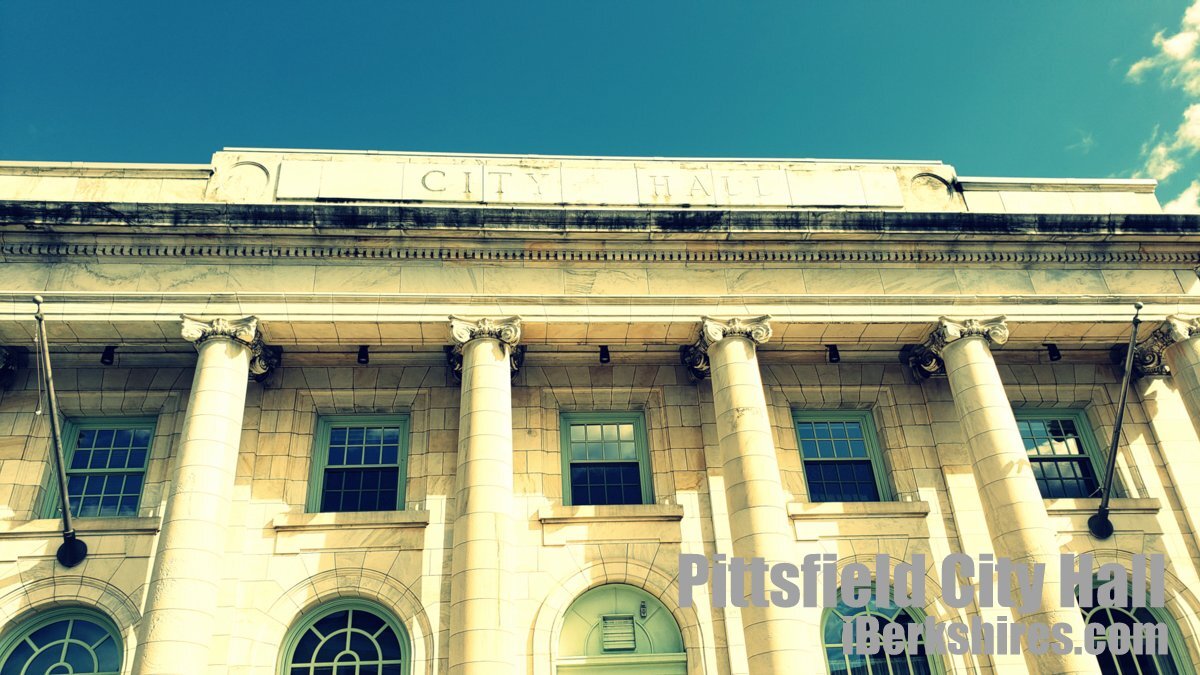
Last year, a request for proposals for office building acquisition to house police personnel was put out, calling for 12,000 square feet of move-in-ready space. The city's 1832 old City Hall building on Park Square was reportedly being assessed for potential use.
Tags: fiscal 2026, sewer rates, water bills,