Pittsfield Now Sisters With Cape Coast, Ghana
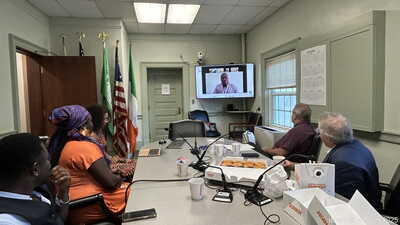 |
| Arthur speaks to the group over Zoom. |
PITTSFIELD, Mass.—The city has a new sister: Cape Coast, Ghana.
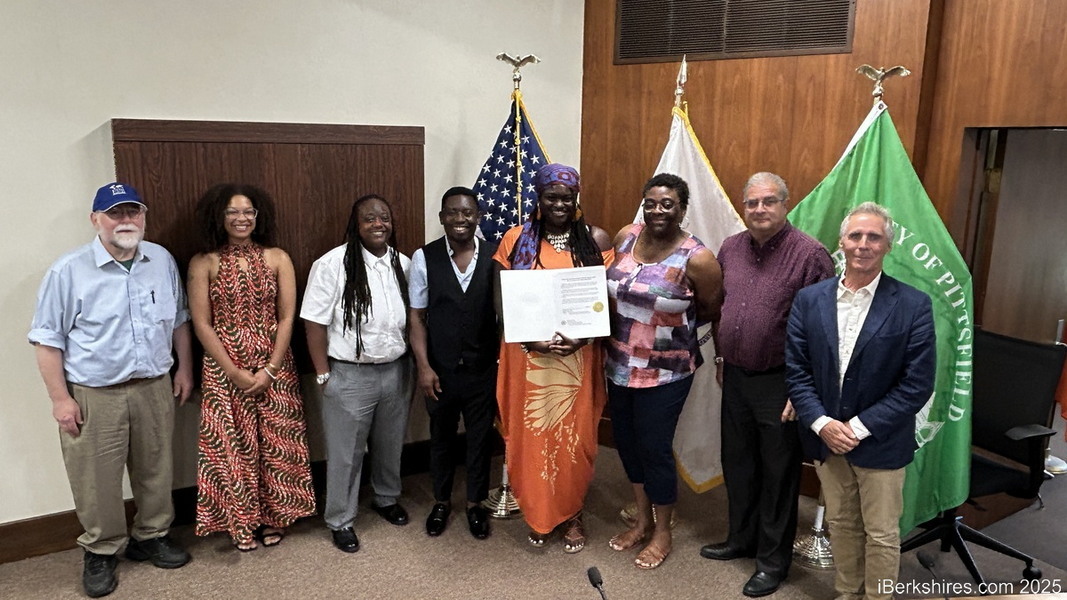
On Thursday, Mayor Peter Marchetti and Metropolitan Chief Executive George Justice Arthur, of the Cape Coast Metropolitan Assembly, made it official with a signing ceremony. The two leaders hope to honor the past and build the future through cultural, economic, and idea sharing.
"As we watch our connection with other sister cities, it provides some real proud moments for folks of our other sister cities and their heritage descent to kind of honor and reflect," Marchetti said.
"And I don't think we have done a new sister city in probably 25 years, so it's exciting for us to begin this journey."
He explained that it was "a very quick turnaround" after Teeashia Scott, chair of the Cape Coast Sister City Committee, came to him with the vision, and he let her run with it. Part two of the ceremony will take place in November in Ghana, as the committee has planned a group trip.
"Honestly, it started as an idea for just an annual Ghanaian celebration here in Pittsfield," Scott explained. "We do have a lot of Ghanaians. There's a large Ghanaian population here."
She said that all aspects of being a sister city are exciting.
"But I would say just developing deeper connections, in general, throughout Ghana is probably the most exciting piece, because we all offer so much in so many different areas and we can be a true support to each other," Scott explained.
Cape Coast is the former national capital of Ghana and is considered an educational hub and tourist destination. In 2021, it had nearly 190,000 residents.
Arthur, joining over Zoom, touted the region's deep roots in football, historical landmarks, and senior high schools.
"It is a city that can actually inform partnership and sister city relations with Pittsfield, so I'm happy, and I'm elated to hear about that," he said.
"We are fortunate to have this opportunity."
He said the two communities will make the relationship last "very long" so that nothing can prevent them from helping each other, adding, "It is indeed a moment of history. It is indeed a moment of recollecting our past glories and the histories that we actually shared together."
During the ceremony, representatives from each sister city outlined what they hope to see come out of the partnership.
"I think we had some great points about the economic partnerships that we can develop, the social partnerships, the cultural partnerships," Marchetti said.
"For me, it's an opportunity to learn and one of the things I've learned since being mayor is that we do have a large Ghanaian population here in Pittsfield, so it would be nice to be able to explore and educate the folks in Pittsfield of the culture and history and our connections."
Committee member Samuel Abora, who is from Ghana, said these are two great cities and countries with wonderful people, and this is an opportunity for them to learn from each other. He called the partnership a "bright light that we all enjoy."
"I think these kinds of opportunities allow us to unlearn certain things about each other and then relearn them," he said.
"We can broaden our horizons and then have new knowledge about each other, and then enjoy life. Life is short. So I'm happy to be part of this."
Mildred Vanderpuije of Sister Cities International reminded the group that the goal is to create sister city diplomacy, "whatever that looks like."
"We are all citizen diplomats. We are all advocating for sister cities' citizen diplomacy," she said.
"No matter what you're doing, even if you just have a small idea in bringing it to the table, you are a part of citizen diplomacy. If you're on this line today, you are a part of citizen diplomacy."
Scott wanted to take a moment to thank the entire committee: Samuel Abora, Keytoria Jenkins and Sadiya Quetti-Goodson. She also thanked city leaders including the mayor, Andy Kelly and Pat Gormalley.
Tags: sister city,