Pittsfield Council Sets FY26 Tax Rate
PITTSFIELD, Mass. — The City Council has set the fiscal year 2026 tax rate: $17.50 per $1,000 of valuation for residential property and $36.90 for commercial, industrial, and personal property.
While the rates are 54 cents and more than a dollar less, respectively, than fiscal year 2025, bills will rise with property values.
The average single home, valued at about $315,000, will increase by $220 per year, and the average commercial property $325 annually. This rate uses a residential factor of 0.8299 at a shift of 1.75 toward the commercial/industrial side.
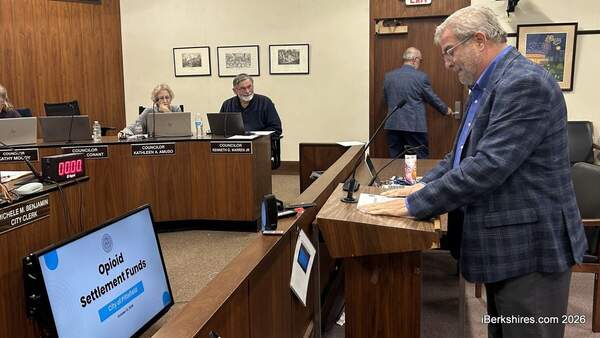
"We are at the highest we can. We cannot give residents any bigger break than we've been able to because we're at the highest, 1.75. We started last year at 1.75 and this year, so the last two years, we're at the highest," Ward 1 Councilor Kenneth Warren said.
"There's nowhere to go. We can go down, but that would increase the tax bills for the residential."
He said many focus on the tax rate, but they should really be looking at the city's levy and the valuation of their own home, explaining, "Even if the rate was cut in half, but your valuation went two times, we still have to raise the same amount of money."
The FY26 levy limit of $119.5 million includes more than $2 million in tax revenue from new growth, and there is about $389,000 in excess level capacity. Pittsfield's real and personal property valuation is $5,650,879,534, more than $380 million higher than the previous year.
The value of the average single-family home has increased by more than $20,000 from $295,291 last fiscal year to $315,335 in FY26, and with the proposed tax rate, will be assessed $5,518.36 in taxes per year. This represents a $220.84 increase.
The city expects to raise more than $240 million in FY26.
Warren suggested considering a residential exemption to promote owner-occupancy. It shifts the tax burden from lower to moderately valued owner-occupied homes to higher-valued properties and those not occupied by the owner.
"You have to remember that we spent six months talking about how we are dealing with people in the city of Pittsfield who are disadvantaged, one paycheck away from being homeless," he said.
"I would tell you that my ward is a lot of retirees, and I can tell you a lot of retirees who worked hard and long all their life to achieve what they've achieved don't have the income to pay the taxes for the house that they live in, and so a residential exemption would deal with that basically."
Councilor at Large Alisa Costa reported that she was also looking into the exemption, and asked Finance Director Matthew Kerwood to share what he told her. Kerwood reported that they did a deep dive into the numbers and found that the residential exemption would increase taxes for nearly 43 percent of single-family homes.
Costa added that they should look for different options or support an effort through the Finance subcommittee.
Tags: fiscal 2026, property taxes, tax classification,