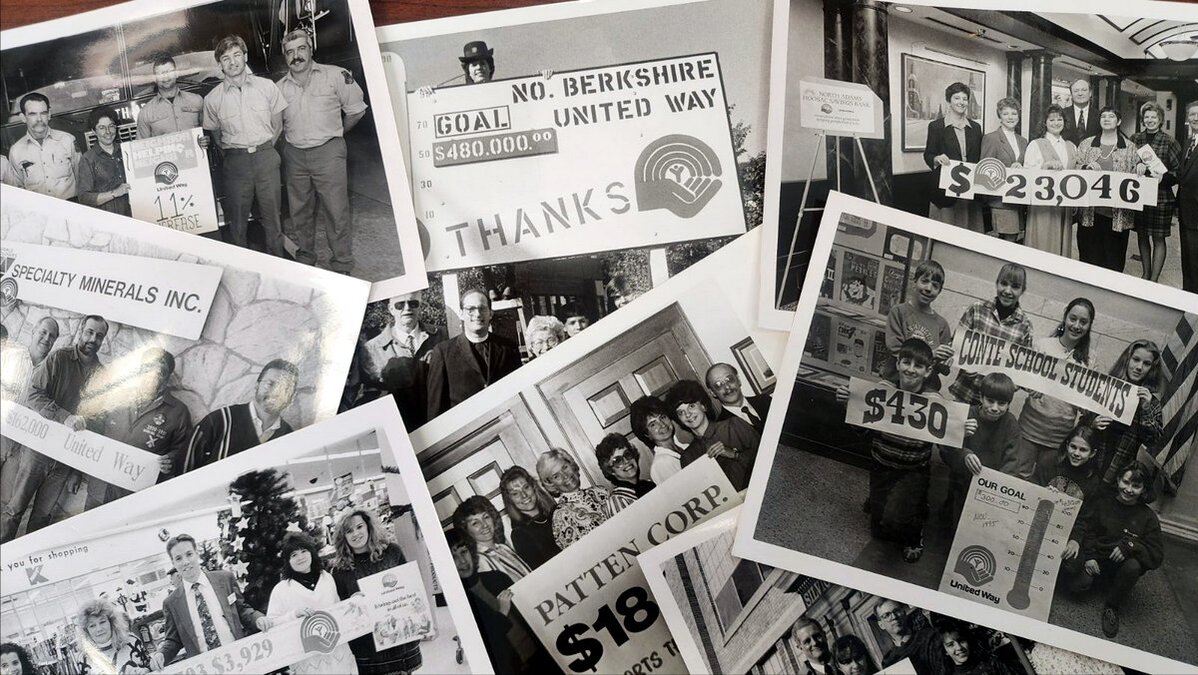
Northern Berkshire United Way: Founding in the Depression Era
Northern Berkshire United Way is celebrated its 90th anniversary this year. Each month, will take a look back at the agency's milestones over the decades. This first part looks at its founding in the 1930s.
.jpg)
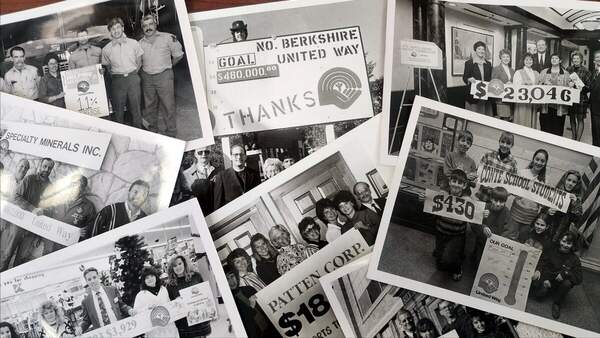
Northern Berkshire United Way has scrap books dating to its founding, recording the organization's business and the work of the agencies it has funded.
The idea wasn't new; community chests had been established by the hundreds across the country in the years following World War I. Even President Franklin Roosevelt had promoted the concept, calling on communities to pool their resources during the hard times.
North Adams had been discussing a charity fund at least since Pittsfield had established one a decade earlier.
It was late 1935 when the North Adams Chamber of Commerce finally moved forward, with some of the city's most notable businessmen leading the way.
The North Adams Community Chest wouldn't be formally organized until January 1936. Over the next 90 years, it would raise millions of dollars to support families, public health, child care, social services as the Northern Berkshire United Way.
Herbert B. Clark, inheriting the presidency of North Adams Hospital from his late father, would be the impetus to transform talk into action. One of his first actions was to inform the board of directors that the hospital would not run its annual appeal — and that it was all in with the new community chest.
Citizens were being dunned yearlong by charities soliciting for monies, a situation that could put these agencies in competition for scarce funds.
The city was filled with great good will of agencies working together, said Earl Getman, a local attorney who chaired the first campaign.
"The Community Chest is simply asking us to do at one time what we heretofore done piecemeal," he said at the first meeting. "Let us answer the call — not only promptly but liberally."
That informal meeting on Nov. 14, 1935, led to the first campaign drive to raise $39,910 for nine agencies through weekly pledges.
The founding of the fund and the weeklong drive were covered extensively by the North Adams Transcript. Mayor William Johnson declared the first week of December as Comunity Chest Week, calling it "a real civic undertaking."
"It's aim is the good of all. To the hundreds of men and women who are giving their time to the campaign, we owe our gratitude," he said.
More than 200 people volunteered to sign up more than 6,500 pledges and a month later they filled the YMCA gymnasium to cheer and applauded as the final figures were tallied up on a chalkboard — more than $41,000.
In comparison, about 1,600 people had supported local agencies in the years prior. The Community Chest brought in small weekly donations from employees in businesses across the community, including Clarksburg.
In that final dash to the finish, employees at the Blackinton Mill doubled their pledges and all 26 members of the Fire Department pledged $5 each.
"They underestimated the number which, in the end, joined in this new movement and represented a new way of financing charity and the community service works in North Adams," the Transcript wrote at the drive's conclusion on Friday, Dec. 13, 1935.
Who benefited? The chamber had spotlights of each of the nine agencies published in the Transcript to convey the importance of each within the community.
They included the Boys Scouts and Red Cross, and the Salvation Army, which distributed clothing and 131 Thanksgiving and Christmas baskets and 3,000 pies and loaves.
The North Adams Hospital, which reported 18,000 patient visits in 1935 and 254 births. The average cost per patient was a whopping $4.32 in 1934. "The hospital is in very sense a community institution, open to all, regardless of race, religion or ability to pay."
North Adams Visiting Nurse Association, organized in 1911, made 2,181 visits to 250 patients. As 80 percent of those visits were not billed, a "consideration of this point makes it evident why the support of the community is essential it the vital work of this association is to continue."
The Massachusetts Society for the Prevention of Cruelty to Children, established in 1916, which aided in 14 "active family problems" and made 384 home visits in 1935.
The Child Welfare Association, which was supported more than 100 children suffering from infantile paralysis in the years before the polio vaccine, as well as providing milk to undernourished famiies, eyeglasses and tonsillectomies.
The Young Men's Christian Association, with an attendance of 55,000 in its activites and hosting 246 tournament or league basketball, volleyball, tennis and softball.
And finally, the newly established North Adams Girls Club with its 60 members.
The Community Chest organized in January 1936 with Edward Wilkinson as permanent chairman and board members including Frank Bond, George B. Flood, Hugh P. Drysdale, Donald E. Hewat, James A. Hardman, Samuel Shapiro, George Larkin and Mrs. Harvey A. Gallup. Offices were obtained on the fourth floor of the Kimbell Building.
Secretary Estelle Howard took command in developing a social index, based on one used in Pittsfield, listing the names of individuals and families in need. This was opened to the chest's agencies to prevent duplication and streamline their efforts.
"I like to think of the Community Chest as a toolbox in which we have placed and from which we take the implements needed to build a better city," said Wilkinson in inspiring campaign workers for 1936 drive. "The first implement, obviously, is the money needed to finance our human service agencies. The second is efficiency and the third is civic co-operation."
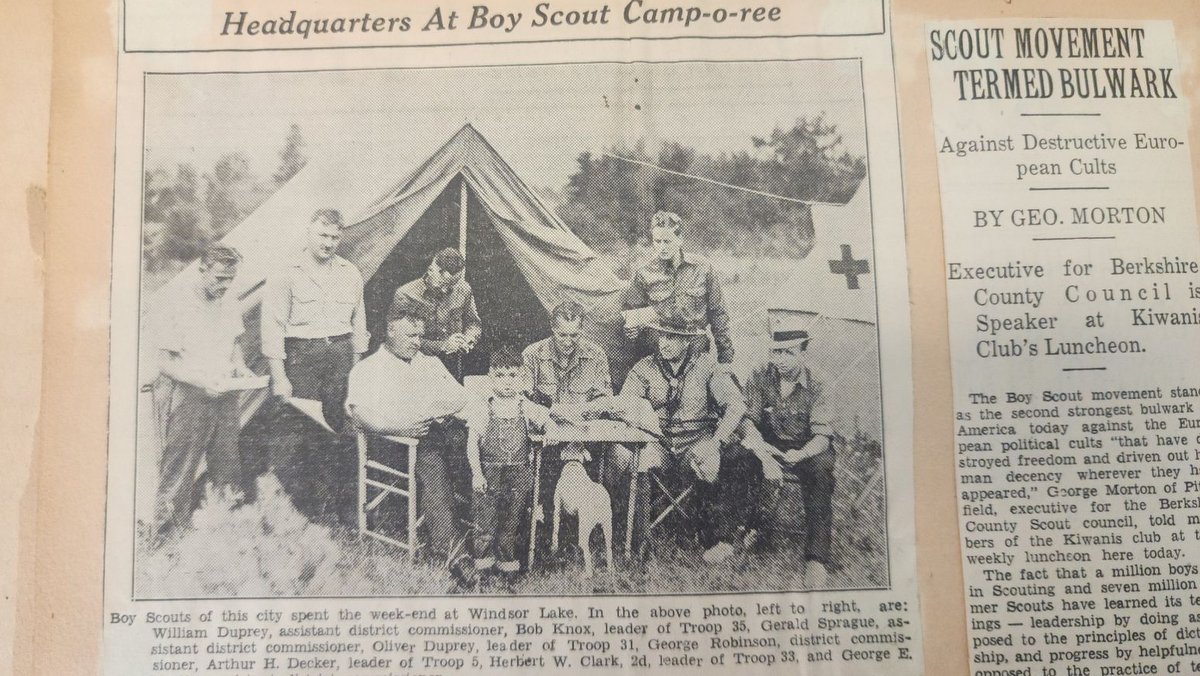
The Boy Scouts were a founding member of Northern Berkshire United Way, when it was established as the Community Chest.
And a 20-foot long and 8-foot high sign built by "Chad" that was posted in front the now demolished Sibley building on Main Street.
Some 34 percent of the population subscribed to the 1938 drive. Like the two campaigns previous, the goal was exceeded, though not to the extent of the inaugural campaign.
The agencies were paid out once a month, with allocations determined by the budget committee based on agencies' requests. The hospital, not surprisingly, received the most at $14,929 and the Little Wanderers the least at $320.
"They are not self-supporting and they cannot be when they operate as we want to operate," said James Wall, president of Wall-Streeter Shoe Co. "They rightfully look to us for so that they may serve efficiently."
The year 1939 saw a change in leadership as Wilkinson, Hewat and Getman had died and Wall took the chairmanship.
The Girl Scouts were added (the Girls Club having dissolved), the campaign motto was "Good Americans are Good Neighbors" and subscribers received a green feather.
With the Nazis on the march in Europe, Wall called the campaign drive "no finer opportunity to prove our love of democracy exists." Driving the point home, speaker Roger Holmes told canvassers to ask them those who declined to participate "if they aren't glad this year that they are living in America."
The community responded with more than 8,400 subscriptions to raise $39,600.
Tags: NBUW,